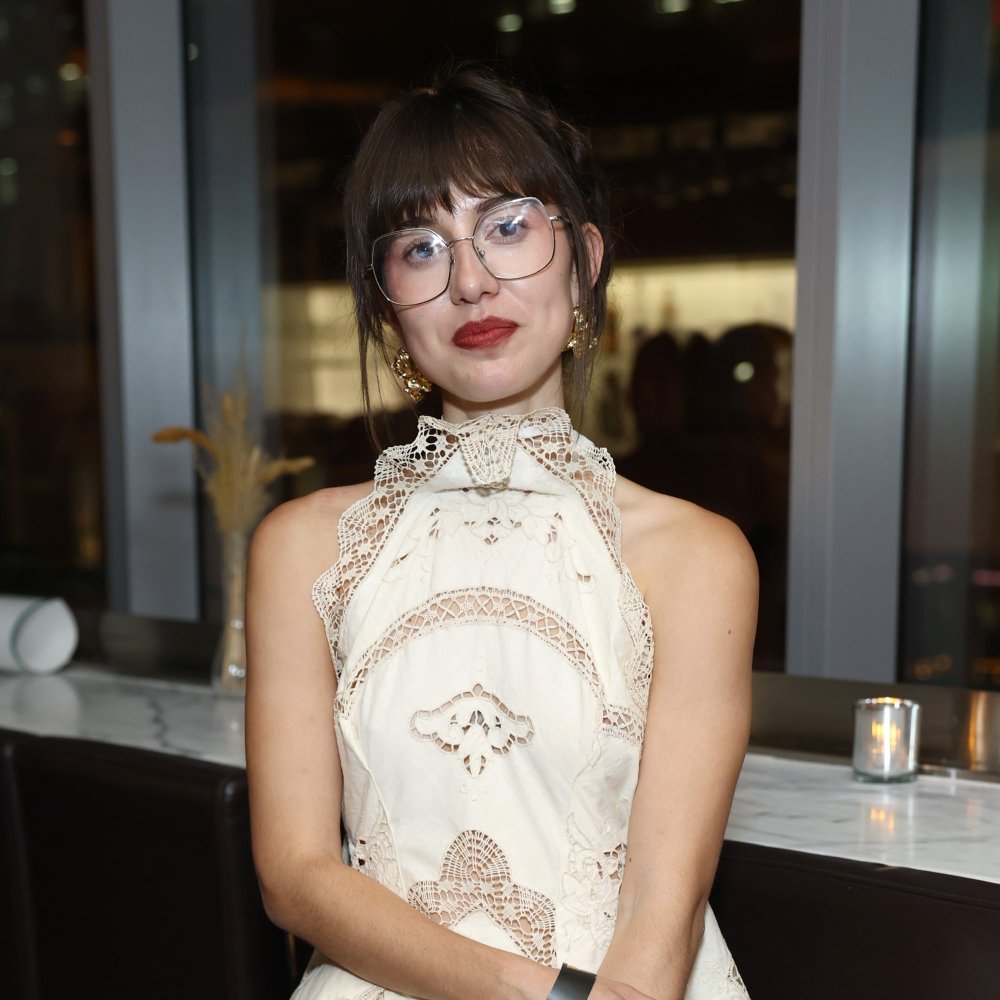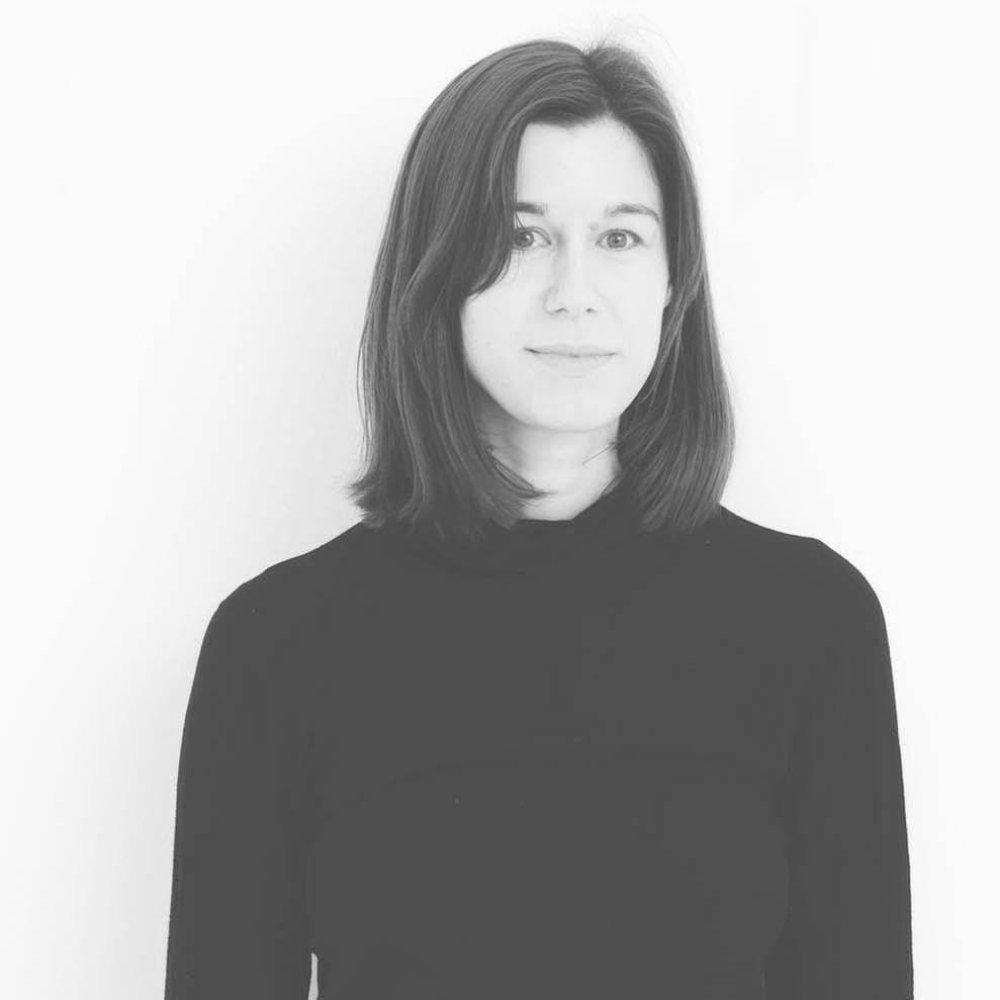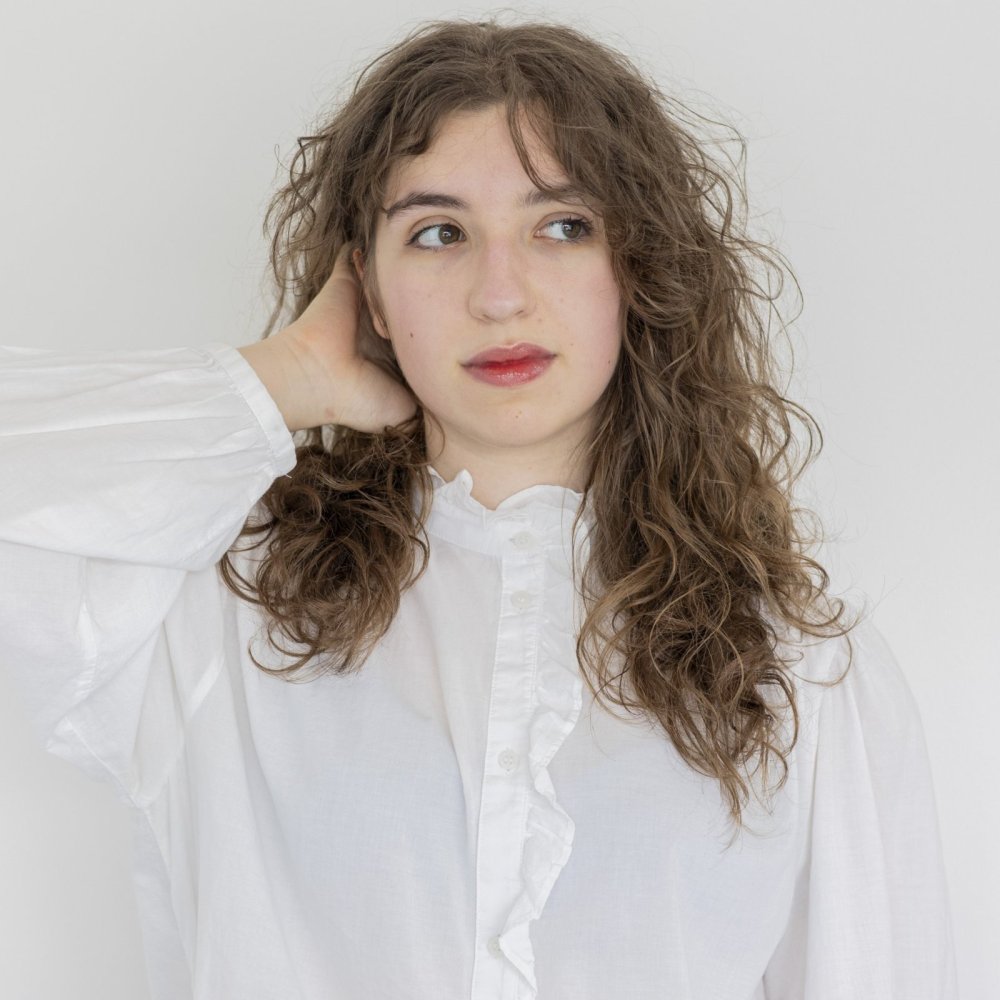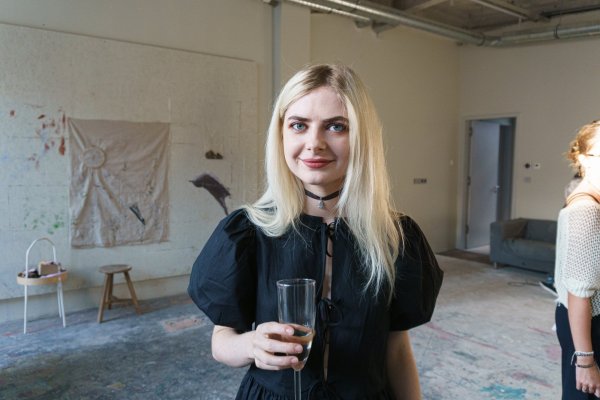
Margarita Ivy (b. 1998) is a Ukrainian multimedia artist living and working in Prague. She studies in the Studio of Free Art III at UMPRUM (the Academy of Arts, Architecture and Design in Prague), and her work spans object, installation and film. Her practice long explores themes of death, memory, loss and the transformation of personal experience into a broader collective narrative. Her work is particularly known for epoxy objects containing preserved animal bodies, which she connects with personal symbolism, childhood memories and Ukrainian family traditions.
Her relationship with Telegraph is primarily associated with her 2024 residency, during which she created part of her new works that she subsequently presented in the exhibition Confession. The exhibition continued her long-term exploration of mortality, the preservation of the body and the memory of place. She is currently also working with film and personal research into memory; in her diploma project, The Foal, she returns to her hometown of Zaporizhzhia and to themes of home, loss and return.
You’re currently preparing a multiple for Telegraph — a work that, unlike most of your previous objects, will not exist as a single piece but as an edition. How did you choose the specific motif?
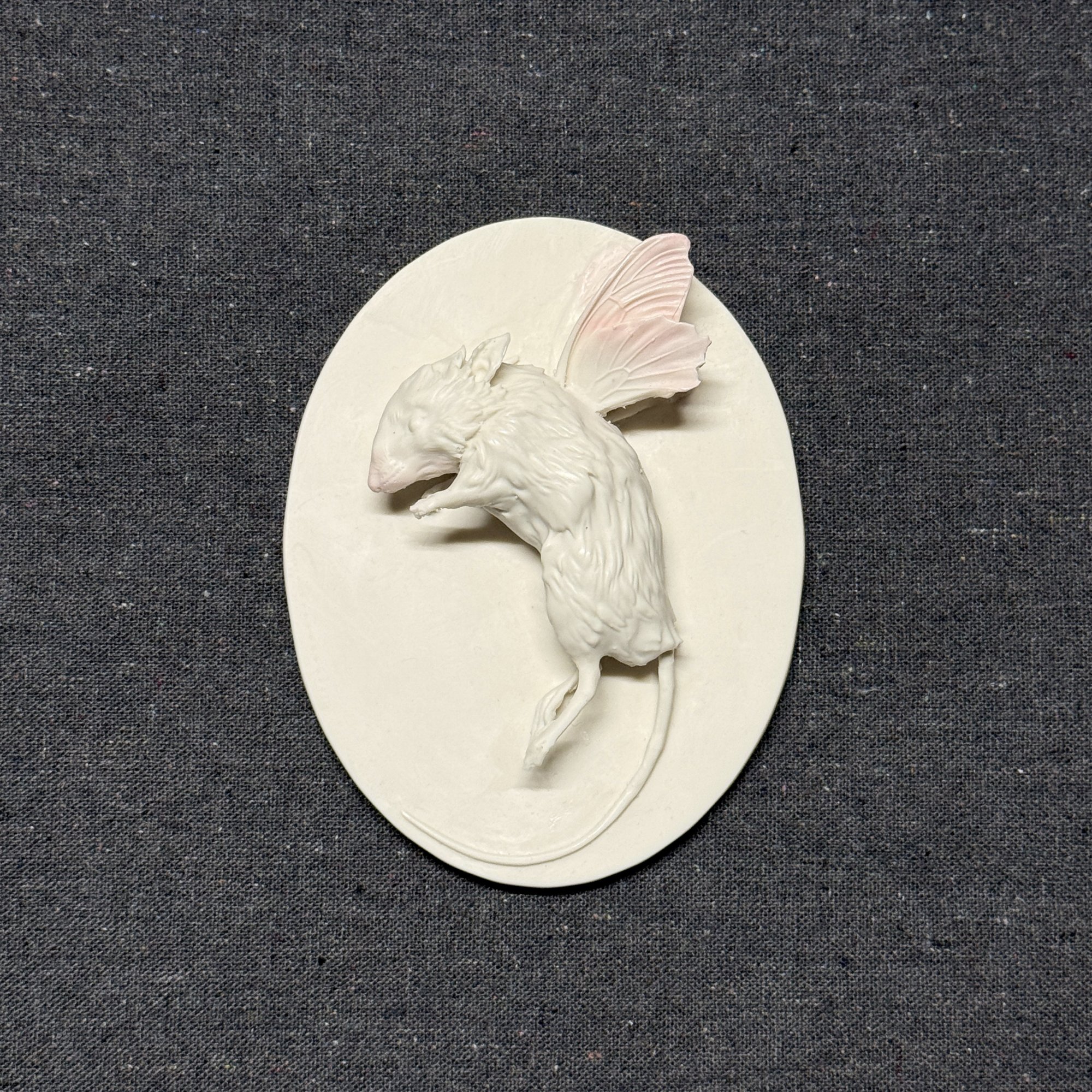
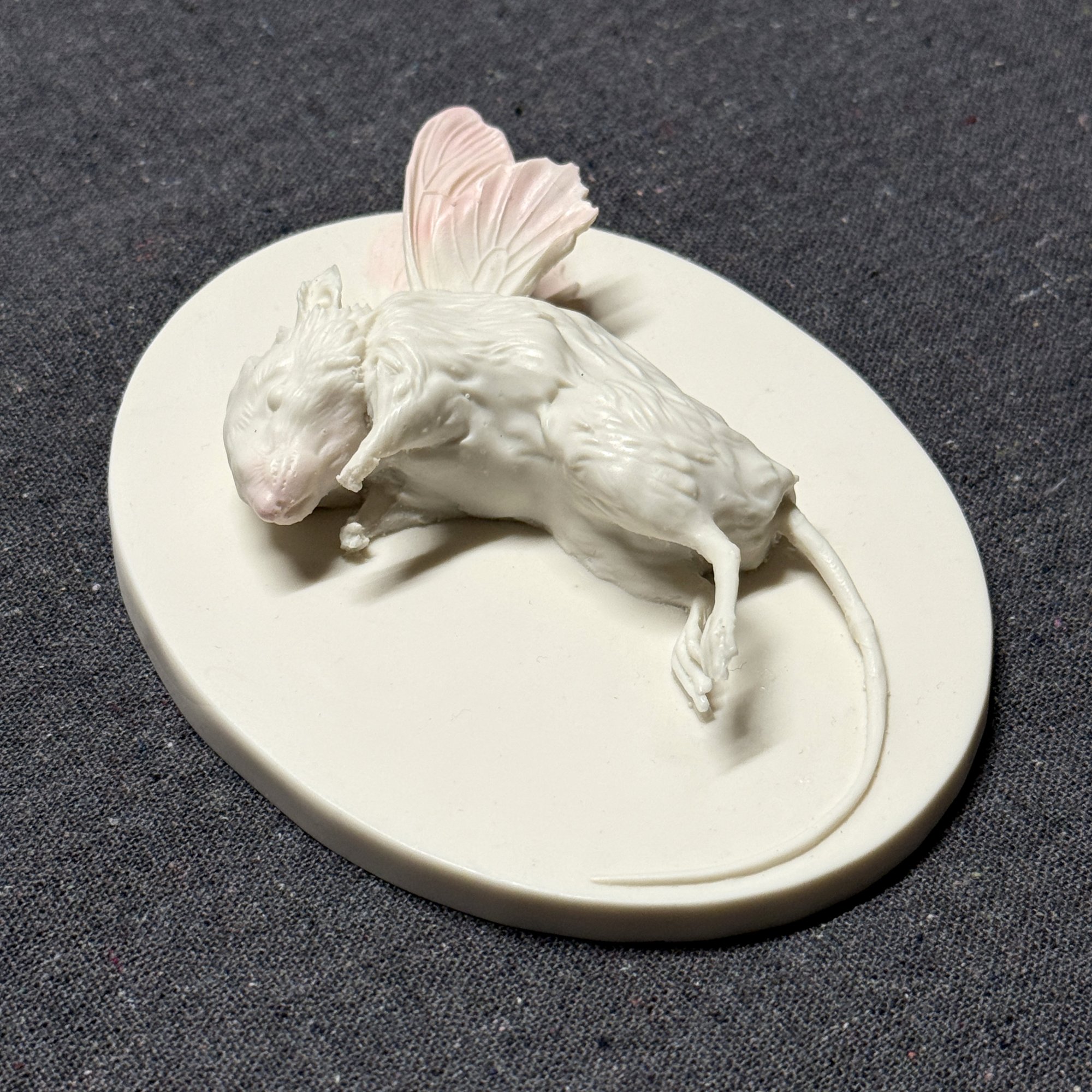
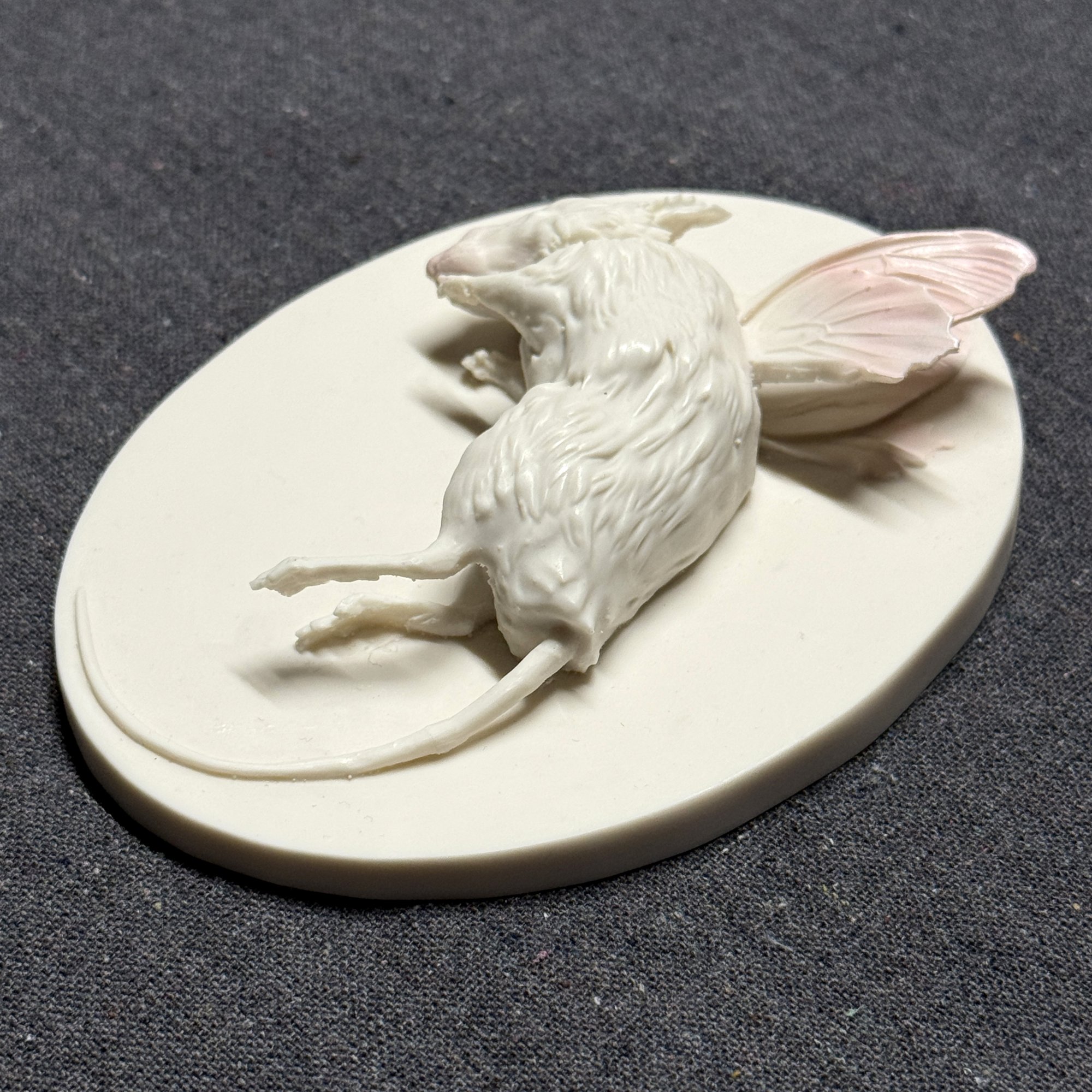
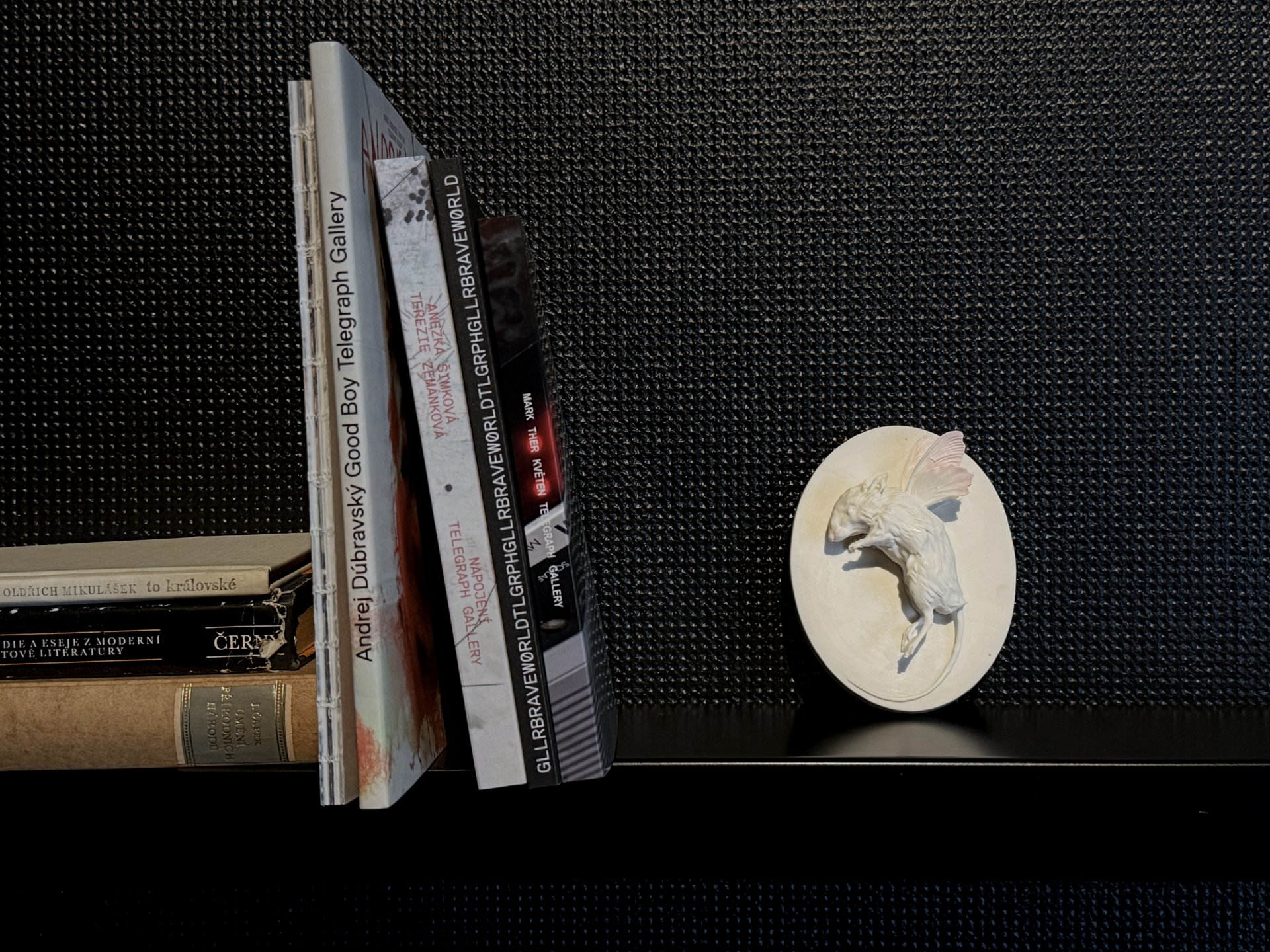
With multiples, I wanted to work with a motif that had already been present in my practice for some time, while also shifting it into a new situation. I chose a mouse because I keep returning to this animal and feel a very close connection to mice. To some extent, I identify with them. They are part of different areas of my life and have gradually become a deeply personal motif for me. This time, I didn’t want to preserve just a single body. I was interested in what happens when a motif begins to repeat itself, when one body becomes a whole series of similar bodies. I also added wings to the mouse. Wings recur in my work as a kind of posthumous signifier. This particular little mouse has a story of its own, too. It’s a mouse that Michal Pěchouček brought me to one of our meetings. His cat, Nataša, had brought it to him as a “gift”.
Your work often stems from a desire to preserve a particular body — to halt its decomposition and preserve its story. With multiples, however, several almost identical versions of a single motif suddenly emerge. What do you think happens to the intimacy of a work when it is no longer unique?
The “imprint” of a real mouse is still important to me here. Each piece carries its trace. At the same time, I have to admit that for myself, I informally call them “mouse icons” as a working term.
Can you describe how a multiple is made technically? What remains an imprint or cast of a particular body, and what becomes a newly created sculptural form?
Technically, I started working directly with the body of the mouse itself. I added little wings and then had it scanned. A print was subsequently made from the scan, and a silicone negative mould was cast from it, followed by epoxy positive casts. What matters to me is that they are not all identical. I step into each one with a minor adjustment or refinement of detail — some have wings that are broken in different ways, and I deliberately preserve these differences in the “imprint”. That is what makes them unique to me.
Transparency is often important in your epoxy objects: you can see inside them, almost as if you were looking into a specimen jar or a reliquary. Here, by contrast, the form is considerably more solid, at least at this stage. Does this also represent a change in how you want viewers to relate to the object?
Transparency creates a certain distance between a person and the body, while also allowing them to observe it very closely. Here, the situation is reversed. The body is not enclosed within a transparent material; it lies directly on the surface. It is much closer to a relief. I think this changes the way we look at it, too. We focus on the surface, the texture of the fur, the body itself and its outline. Perhaps it is less about observing a preserved body and more about observing its imprint.
The multiple is also intended to be a work that someone can actually take home. Do you think differently about an object when you know it won’t remain in a gallery but might end up in someone’s bedroom, library or study?
I feel that most of my works eventually find a new “home”. A few friends who saw the multiples while they were being made told me they could imagine them hanging above their beds at home. I think that’s a fitting place for them. 🤍
You spent two months in residence at Telegraph in the summer of 2024, during which the exhibition Confession took shape and some of the works were created directly during your stay. Looking back two years later, what has stayed with you from that residency?
I think the residency mainly gave me the space and time to delve deeper into myself. Alongside making physical works, I also spent a lot of time thinking about concepts that only took shape much later. During the residency, I also created Memories, an imprint-based object made from one of my childhood dresses for the first time. I’m currently working on a series of casts of my own clothing.
You’re currently exhibiting with Bystrík Klčo at Karpuchina Gallery in the exhibition You Can’t Return, You Are Here. Alongside death, memory, childhood and the objects people leave behind come increasingly to the fore. Do you feel that your work is gradually shifting away from the body itself and towards the traces it leaves behind?
I think this has simply become more relevant to me at this point in my life. Given my circumstances, I often try to “archive” something that no longer exists, or something that has transformed into a different form in my memory. The exhibition also offers a perspective in which things that evoke nostalgia are transformed in surreal ways. One example is the work I created with Bystrík, in which a baby’s cot also functions as a cage…
As I write these questions, you’re in Ukraine filming your diploma project, The Foal. In your crowdfunding campaign, you described it as a “documentary fairy tale” about returning to your hometown of Zaporizhzhia, where a horse moves through a city and a landscape scarred by war. How did your original idea for the film change once you arrived and began filming?
I tried not to think about what I would find here or how I would feel. But that didn’t help me at all. Even after several years, I was still dreaming about specific places. Now that I’m here, I’m experiencing so many emotions that the whole experience can be overwhelming, sometimes even paralysing. Filming requires planning, control and concentration. At the moment, it’s very difficult for me to take on the role of a director. After several discussions together, we decided to change our approach, and now we’re allowing ourselves to be guided much more by chance. The work has also become more documentary in nature as a result. It has also become clear that I need much more time here to gather all the material I need. At the beginning, because of the danger, we planned very intensive filming days and wanted to leave as quickly as possible. Now it’s exactly the opposite. The filming process is long and slow.
You raised money for the film through crowdfunding. Was it difficult to ask the public to support a project that is so personal and is being made in such logistically and security-wise challenging circumstances?
It was, and I probably wouldn’t have gone ahead with it if Bystrík hadn’t helped me. I received a great deal of support, not only financial but also a tremendous amount of personal support. I’m very grateful for it.
In your bachelor’s thesis, you explored Ukraine’s collective and transgenerational trauma through your family’s stories. Now you’re physically returning to your hometown and filming what it is like today. Is The Foal a continuation of the same story, or do you feel that your approach to home and your own past has changed completely over the past three years?
I think it is definitely a continuation of my journey, to some extent. Previously, however, I worked more with family archives, oral memory and autobiography. Now I’m working with material that I collect here, material that I see and experience firsthand. But my approach remains similar: through my own feelings, I try to make sense of broader events and the reality around me.