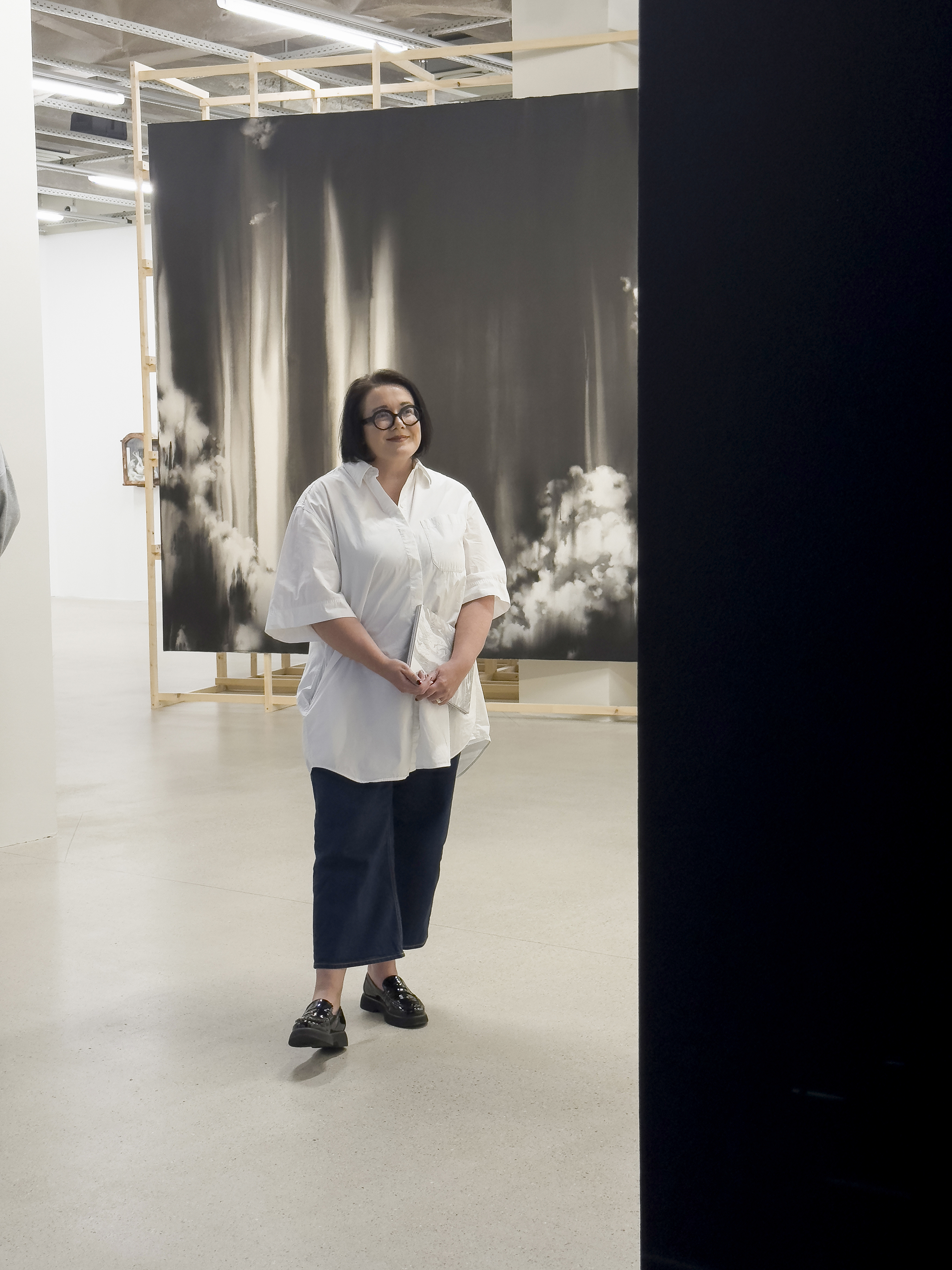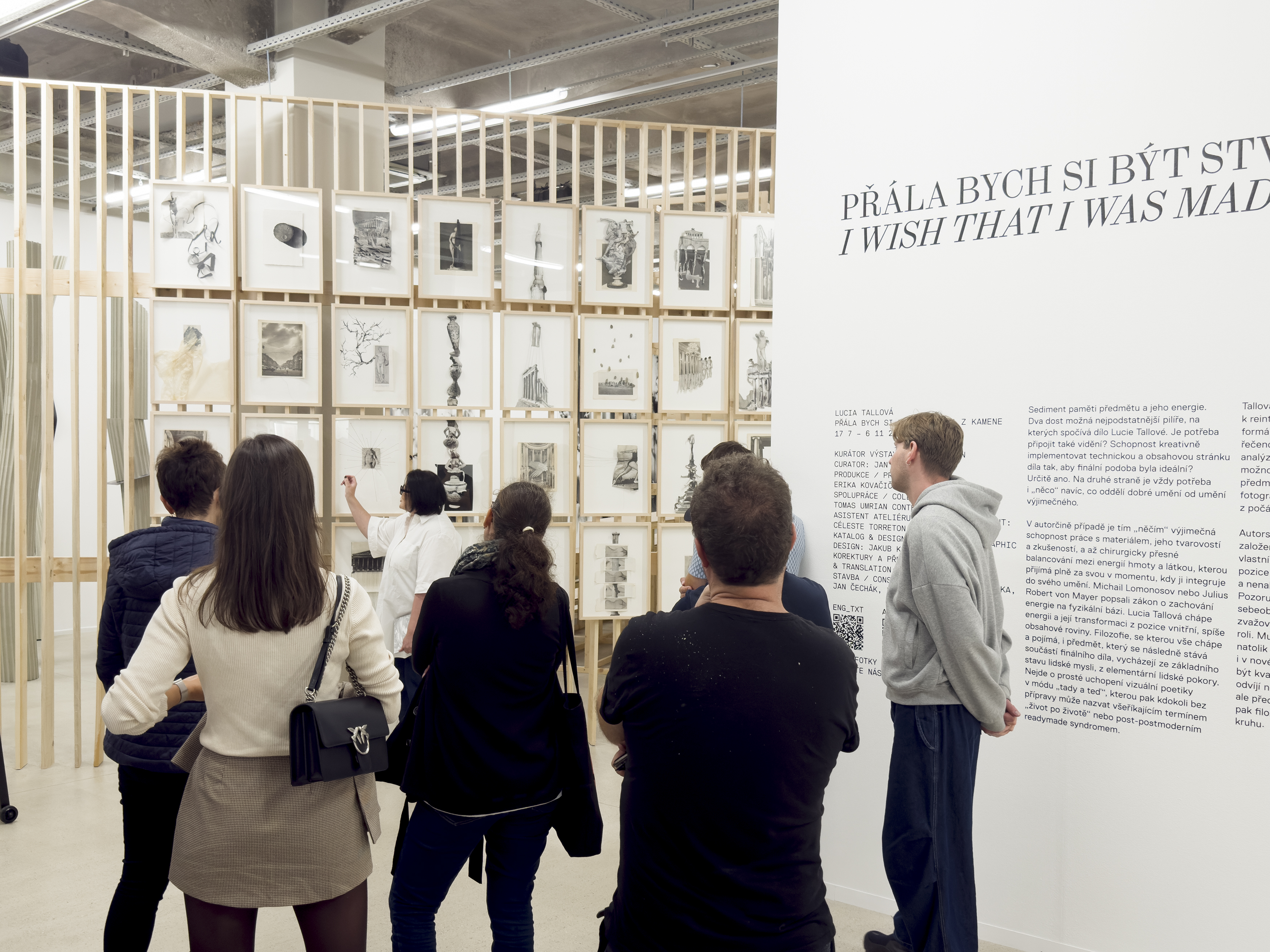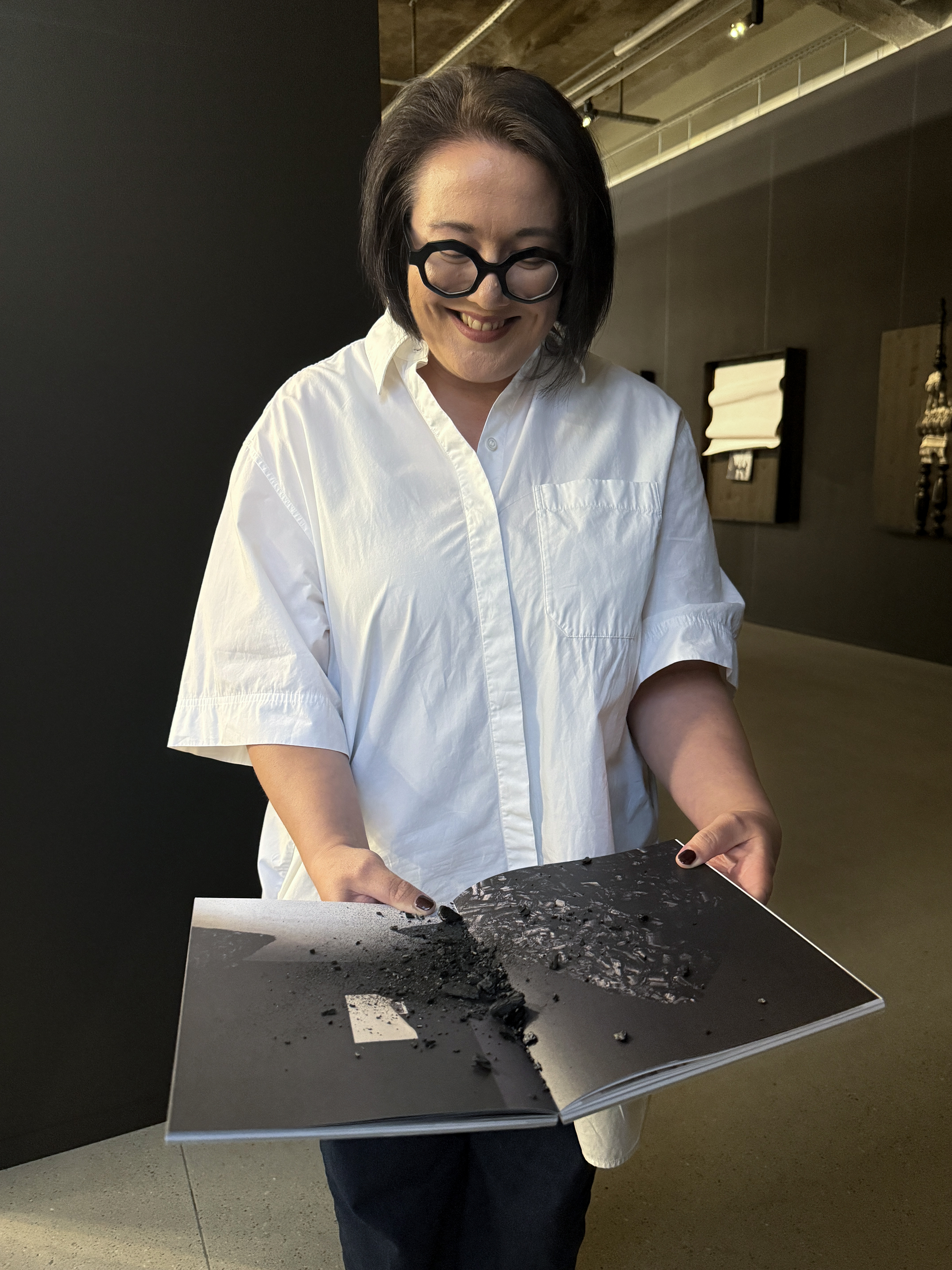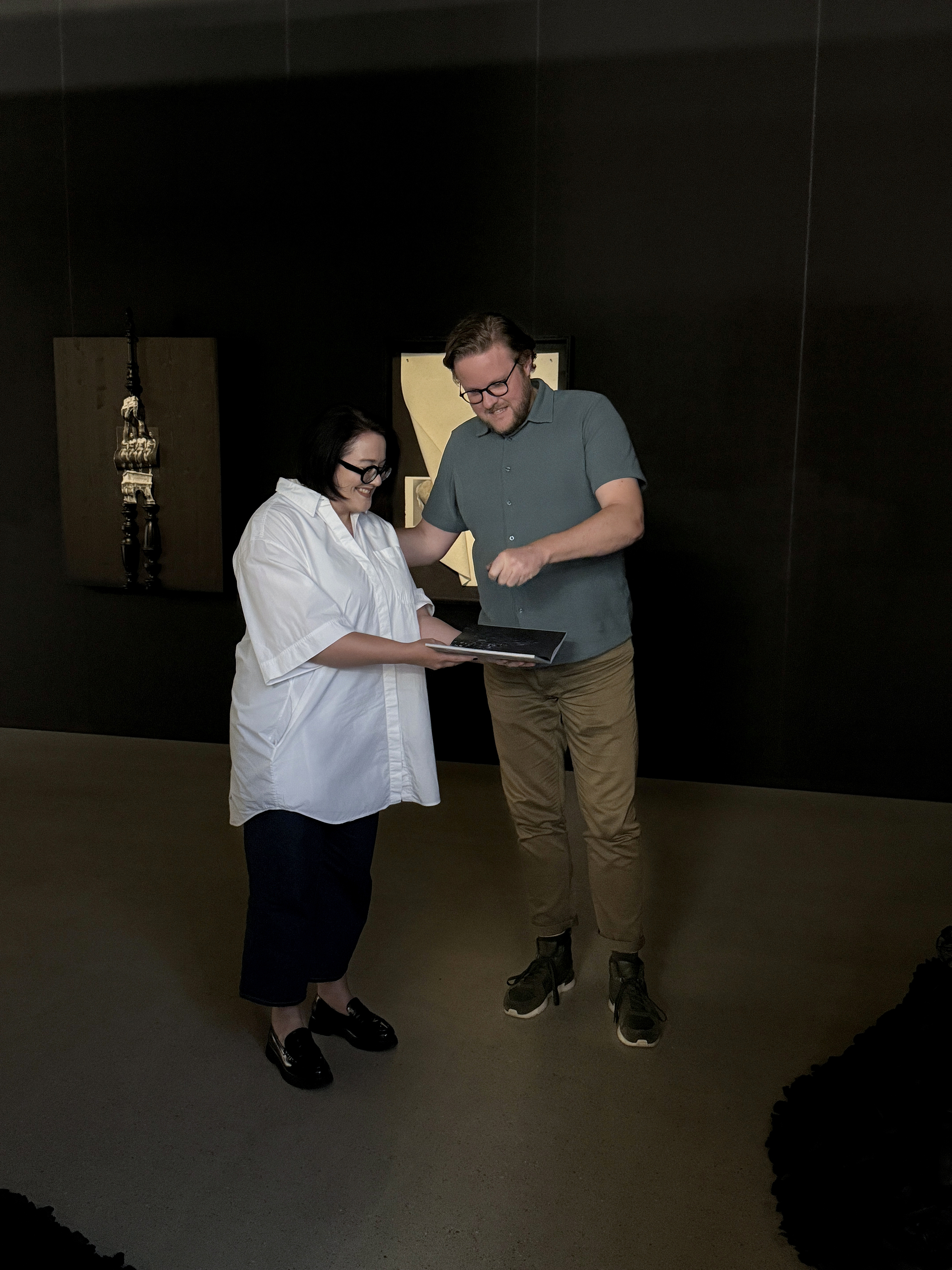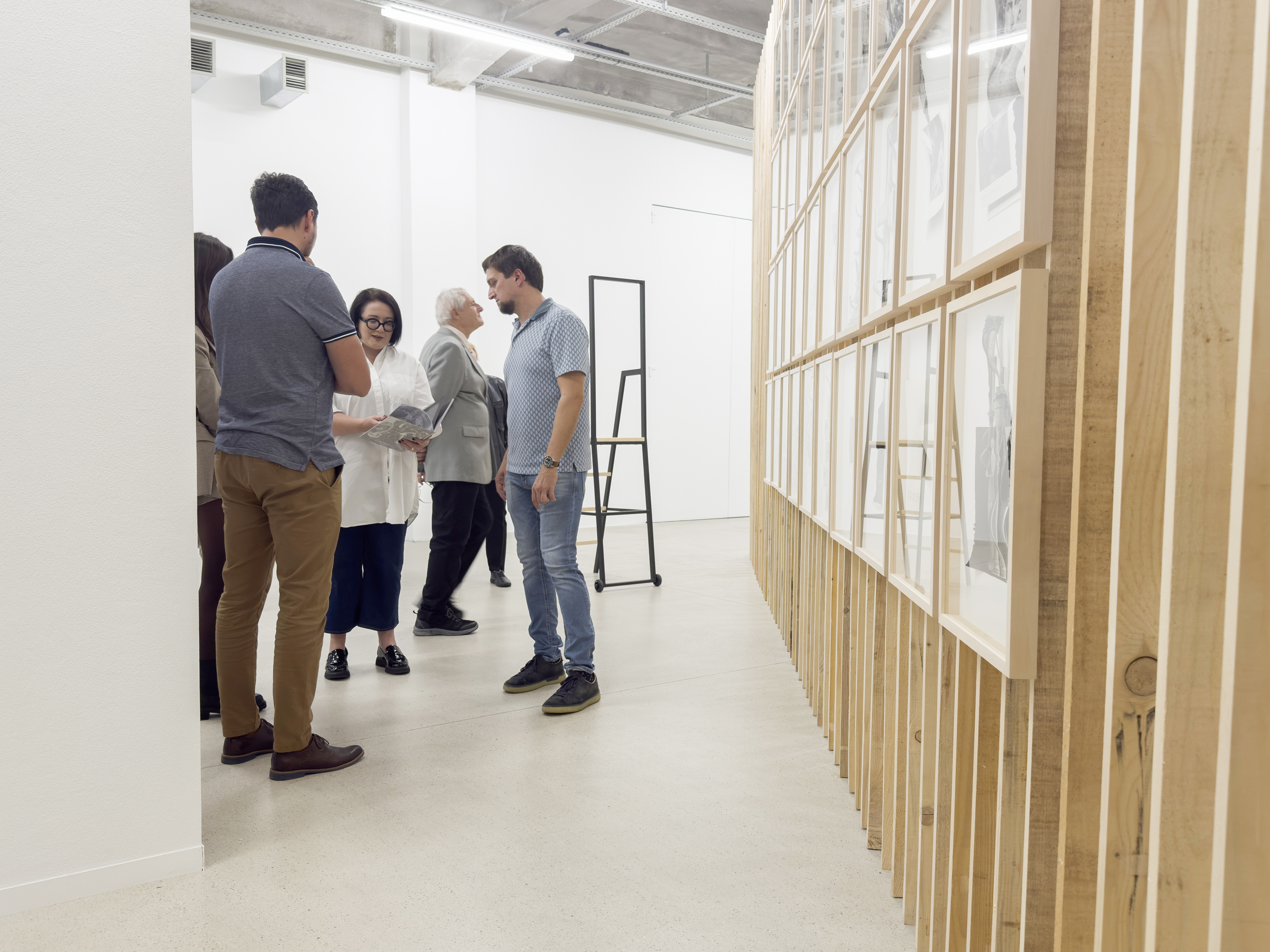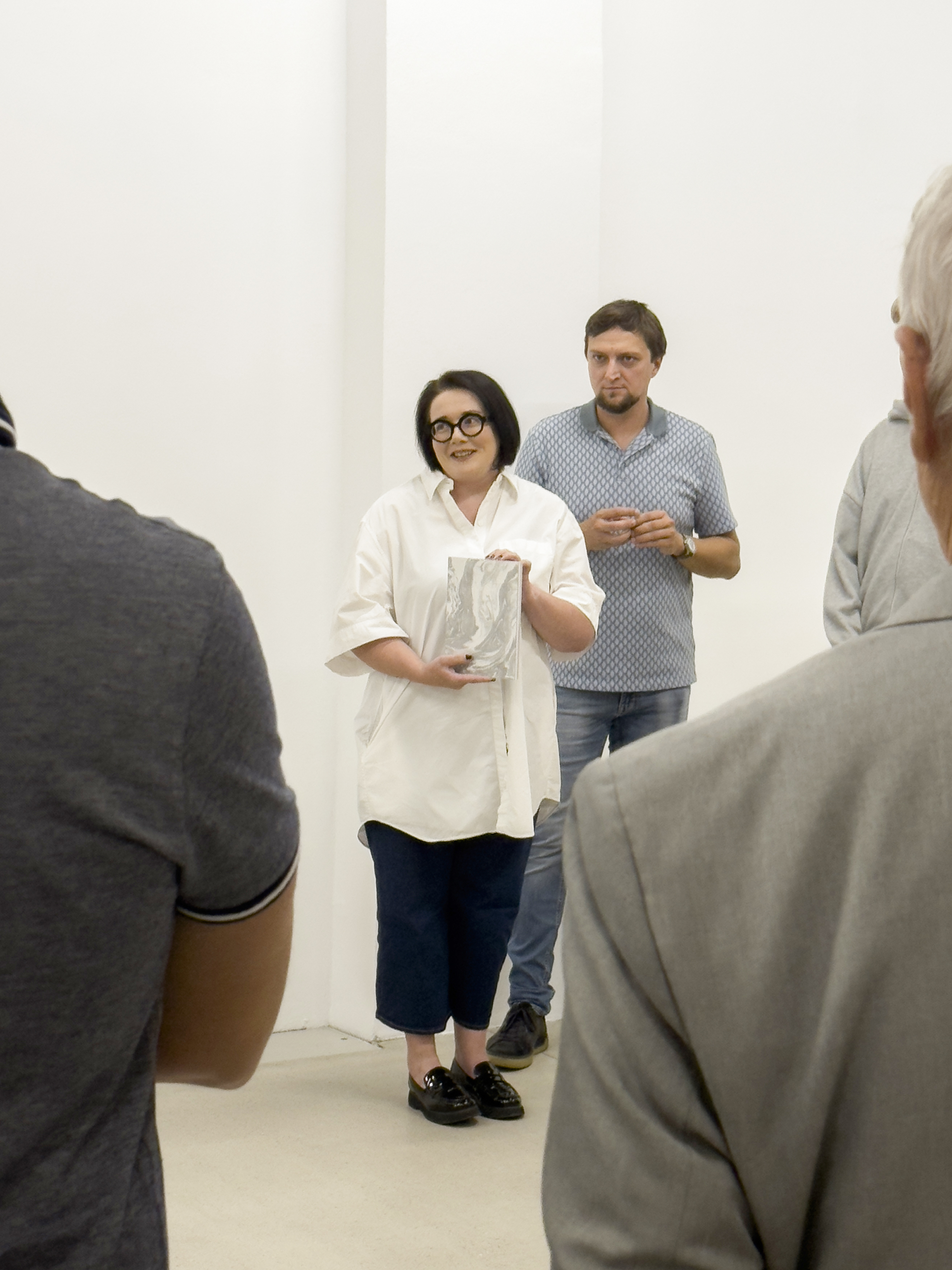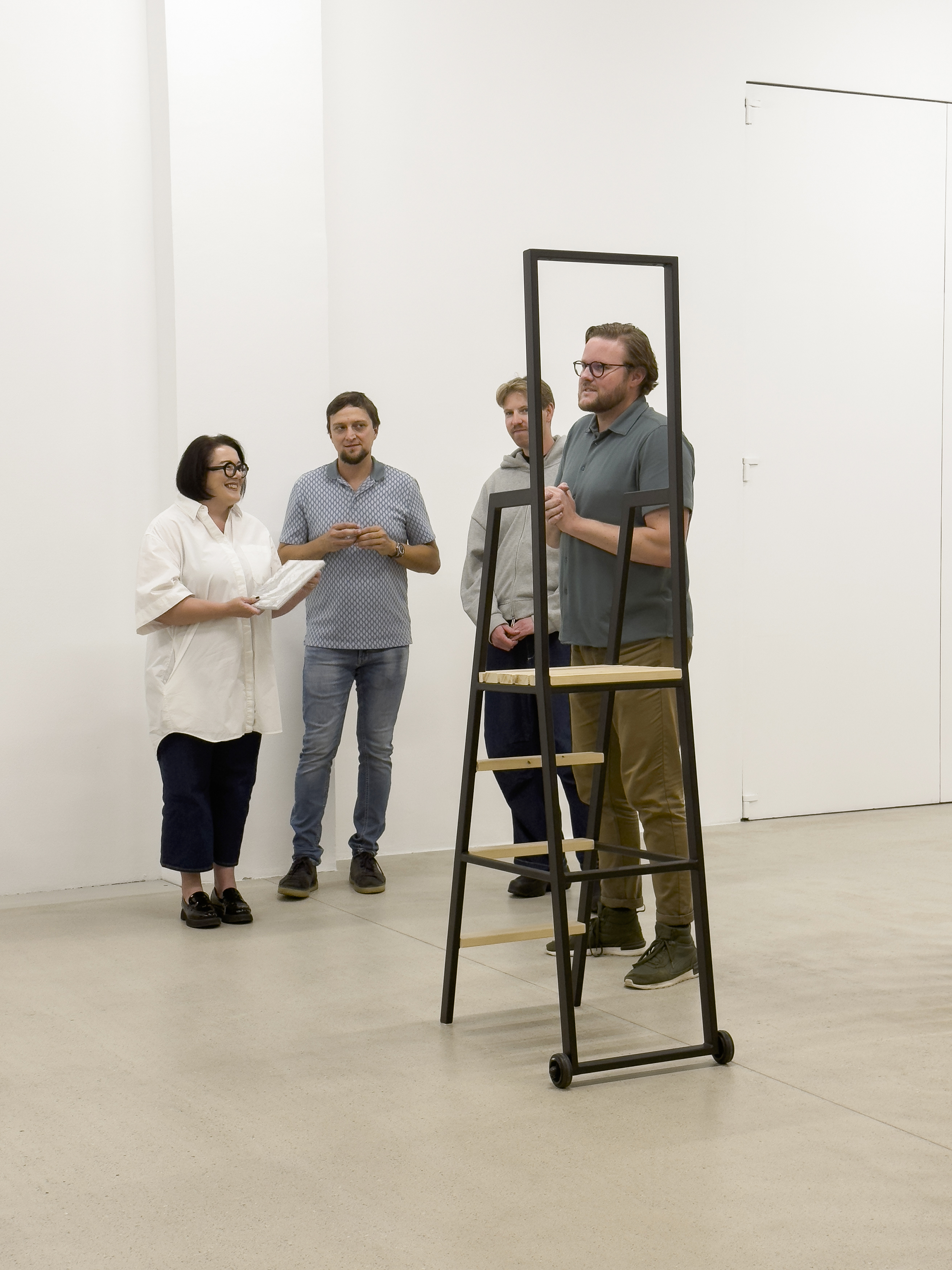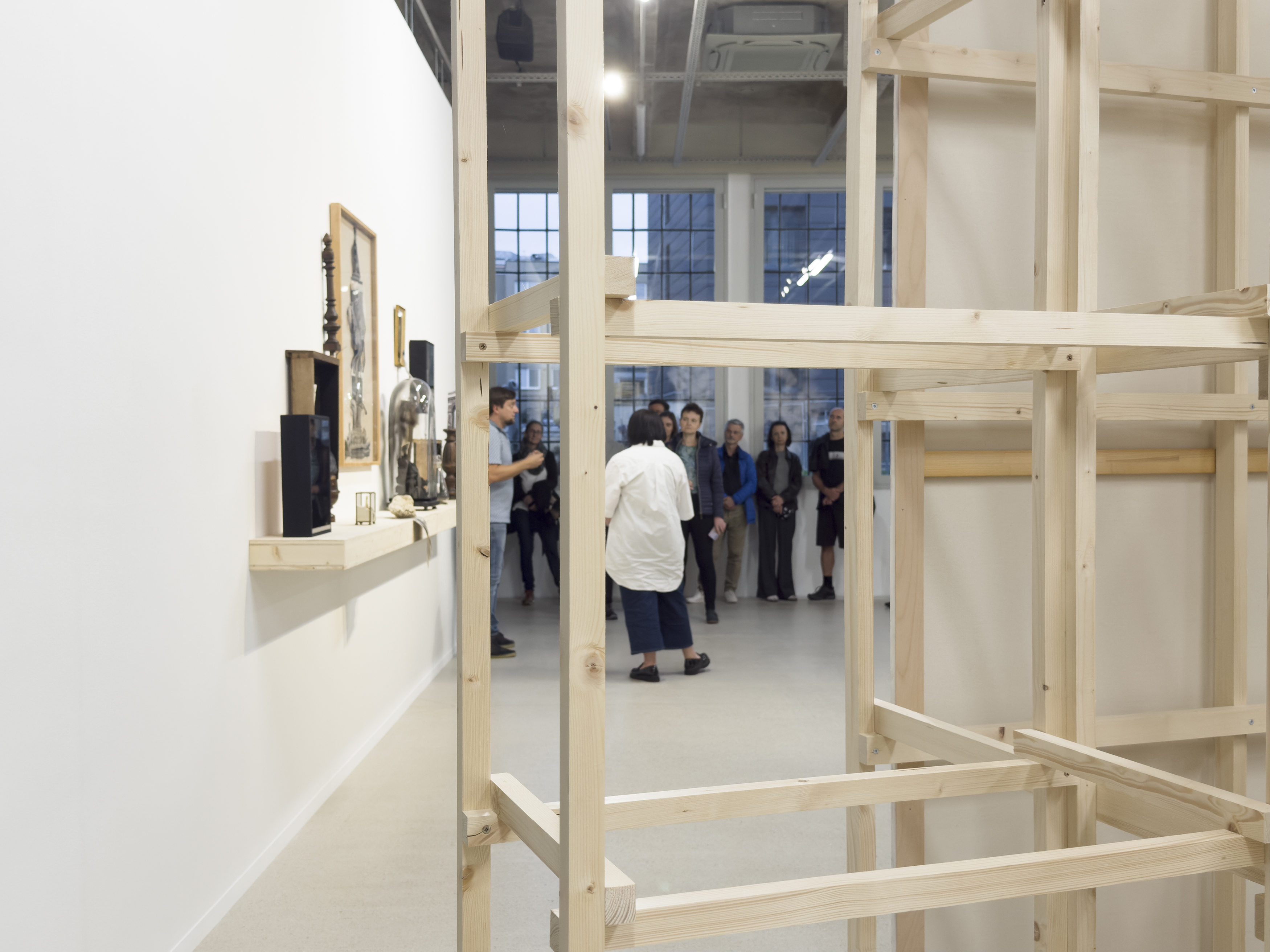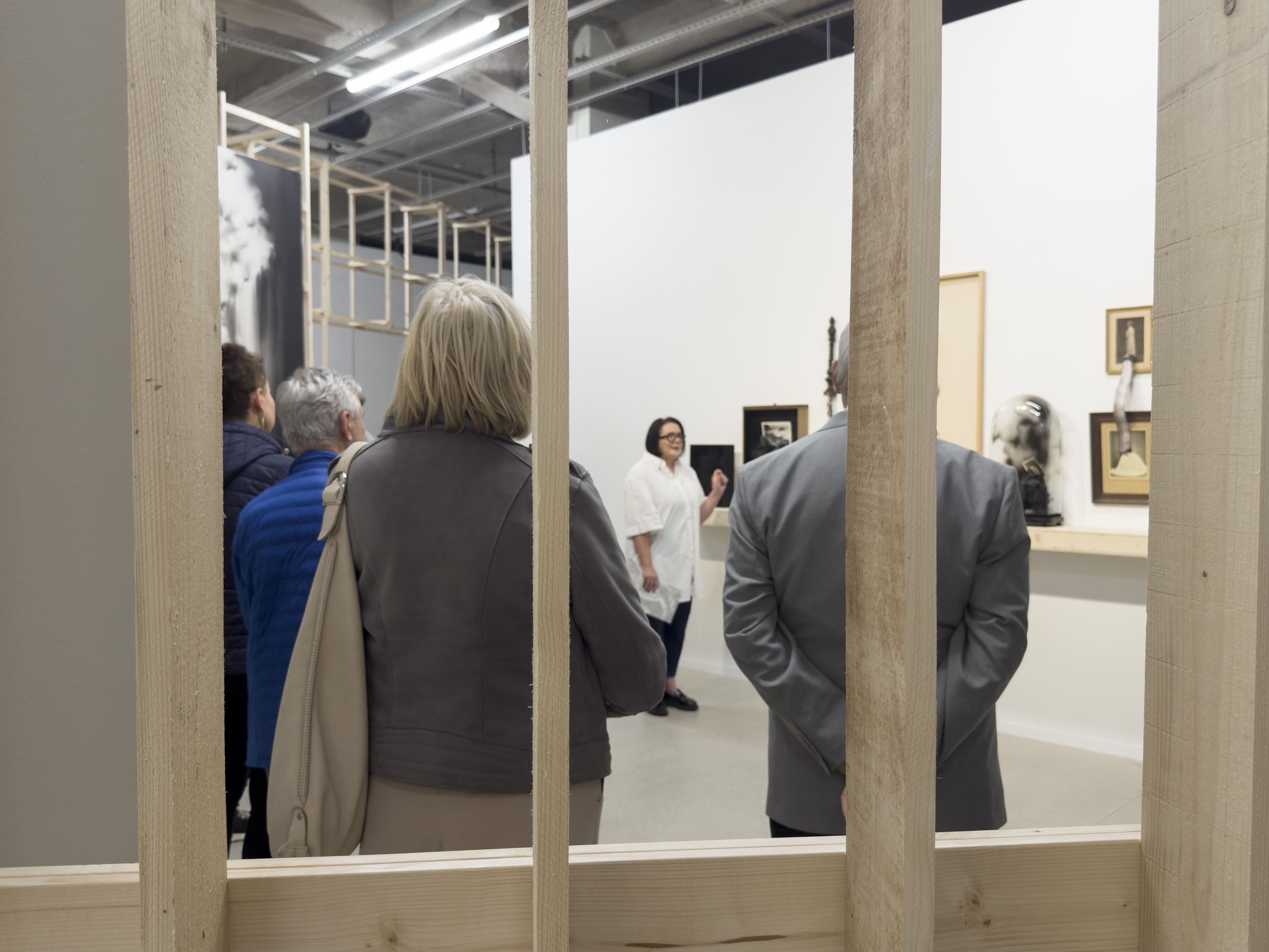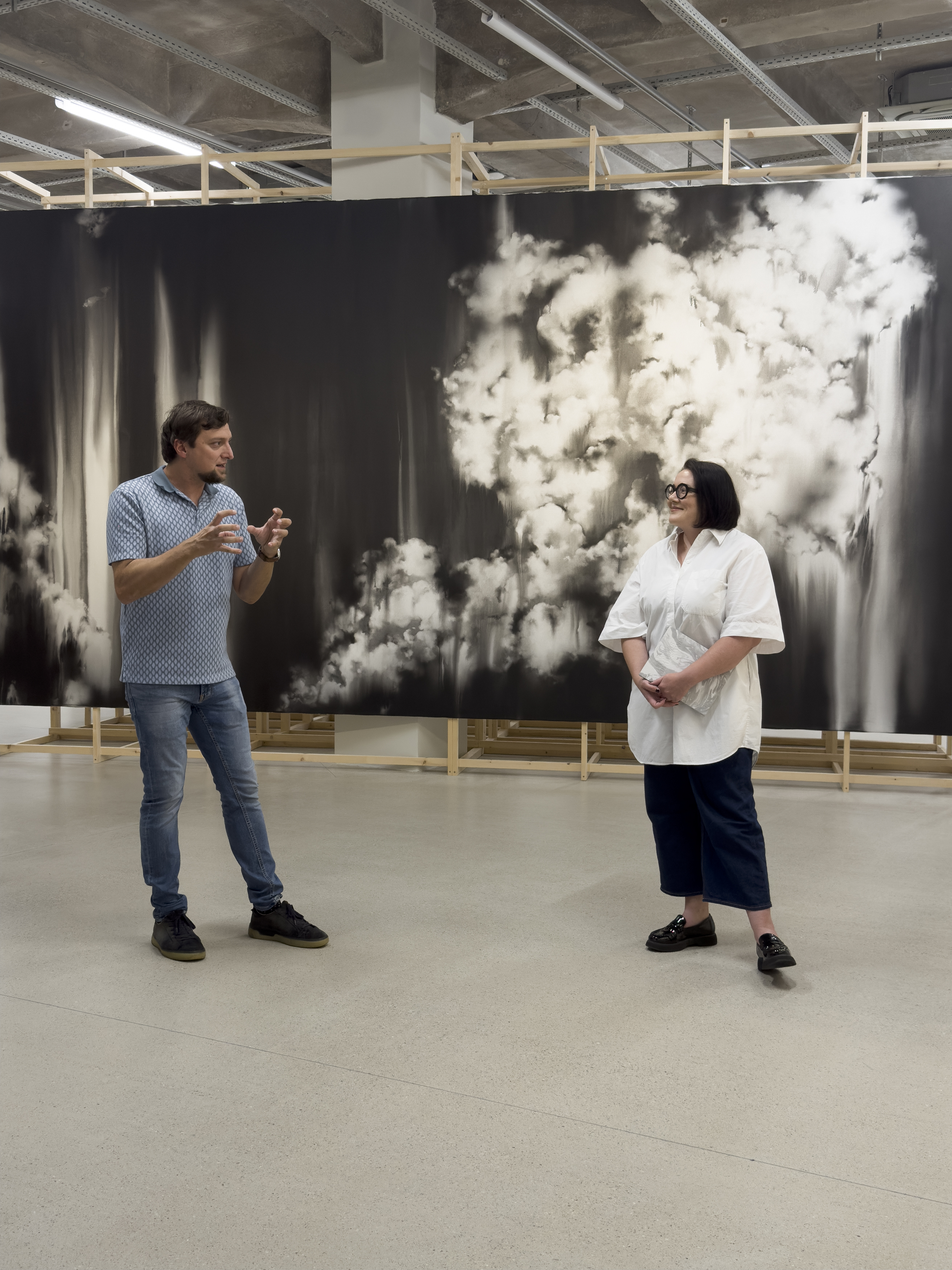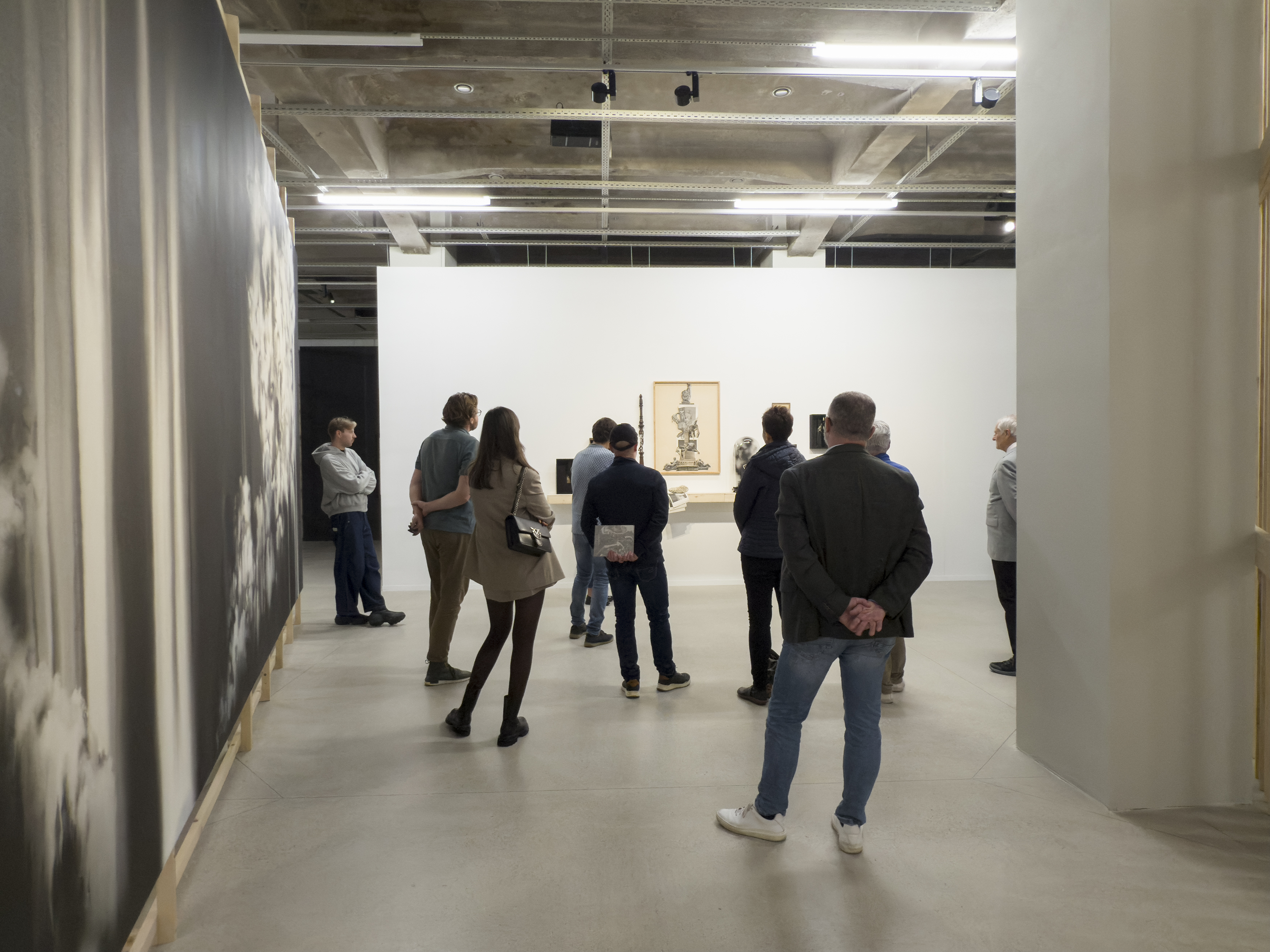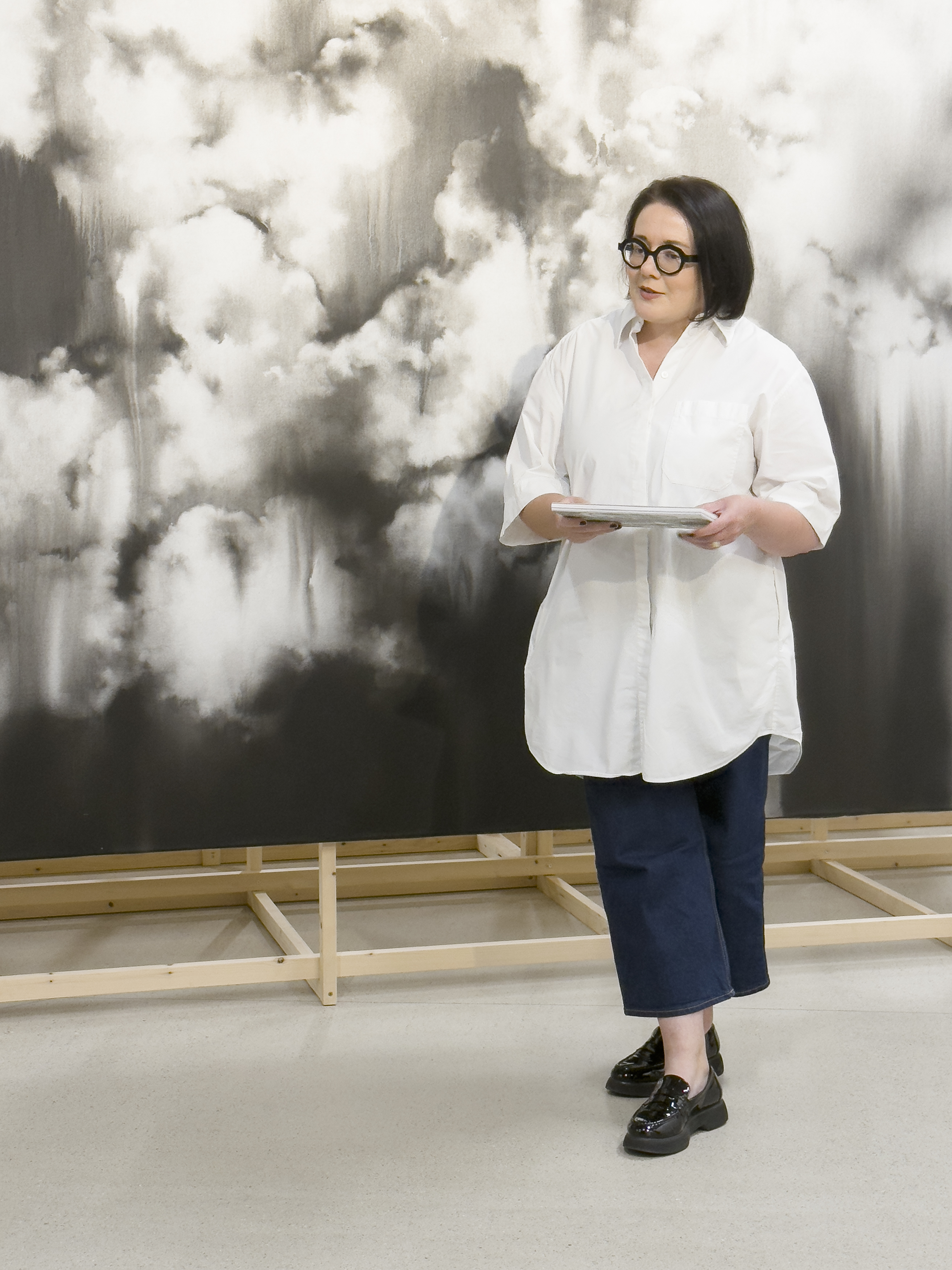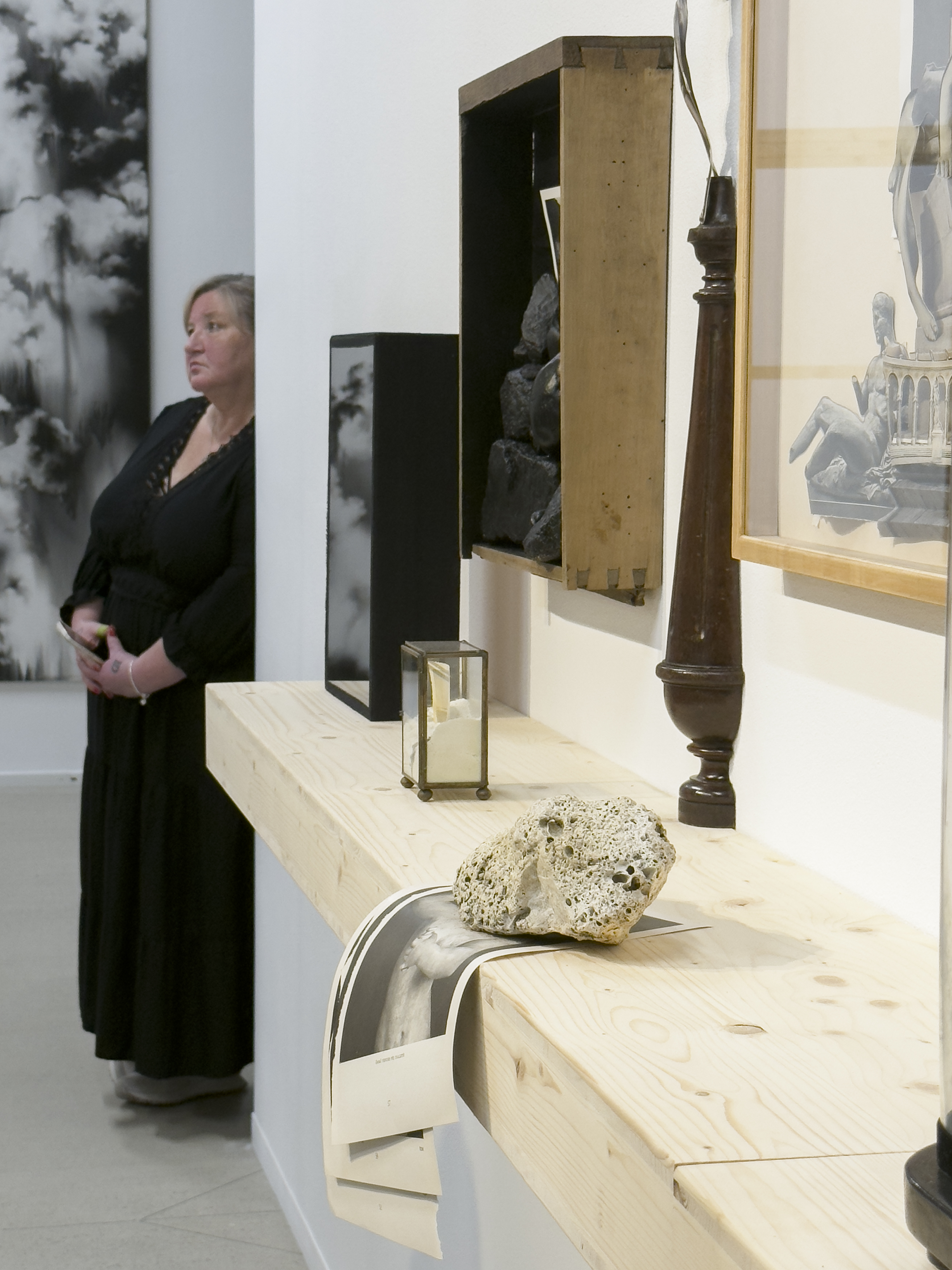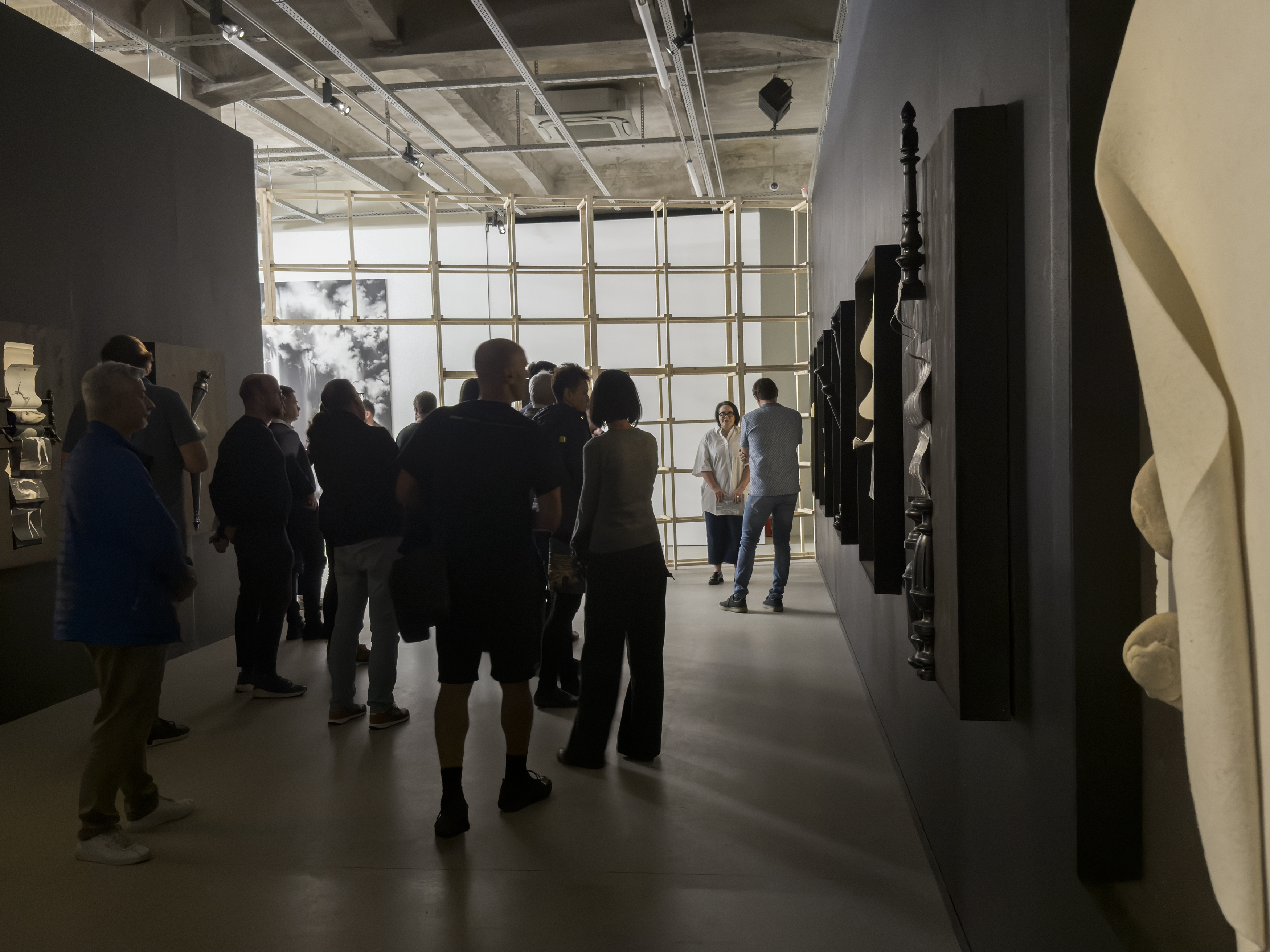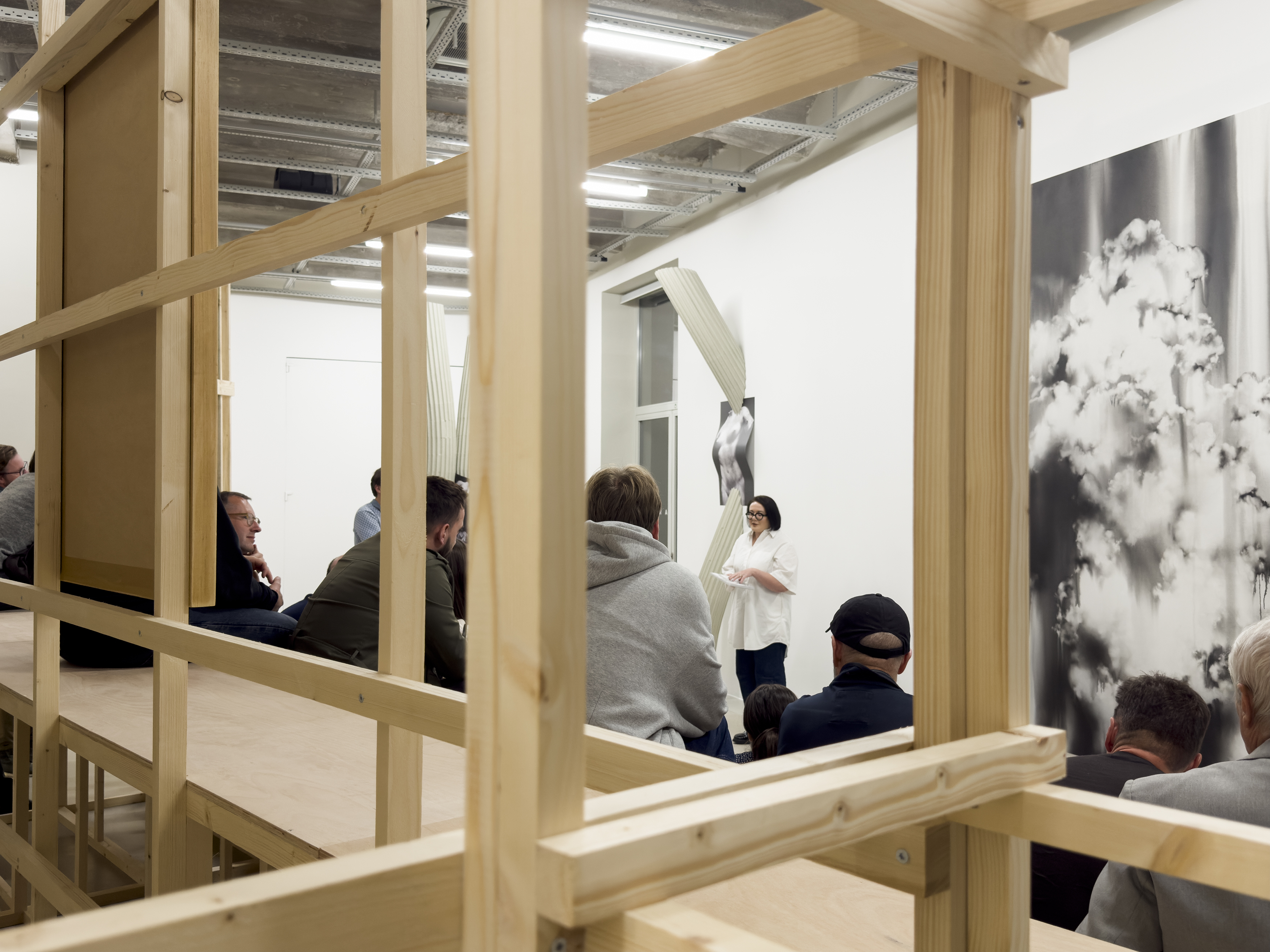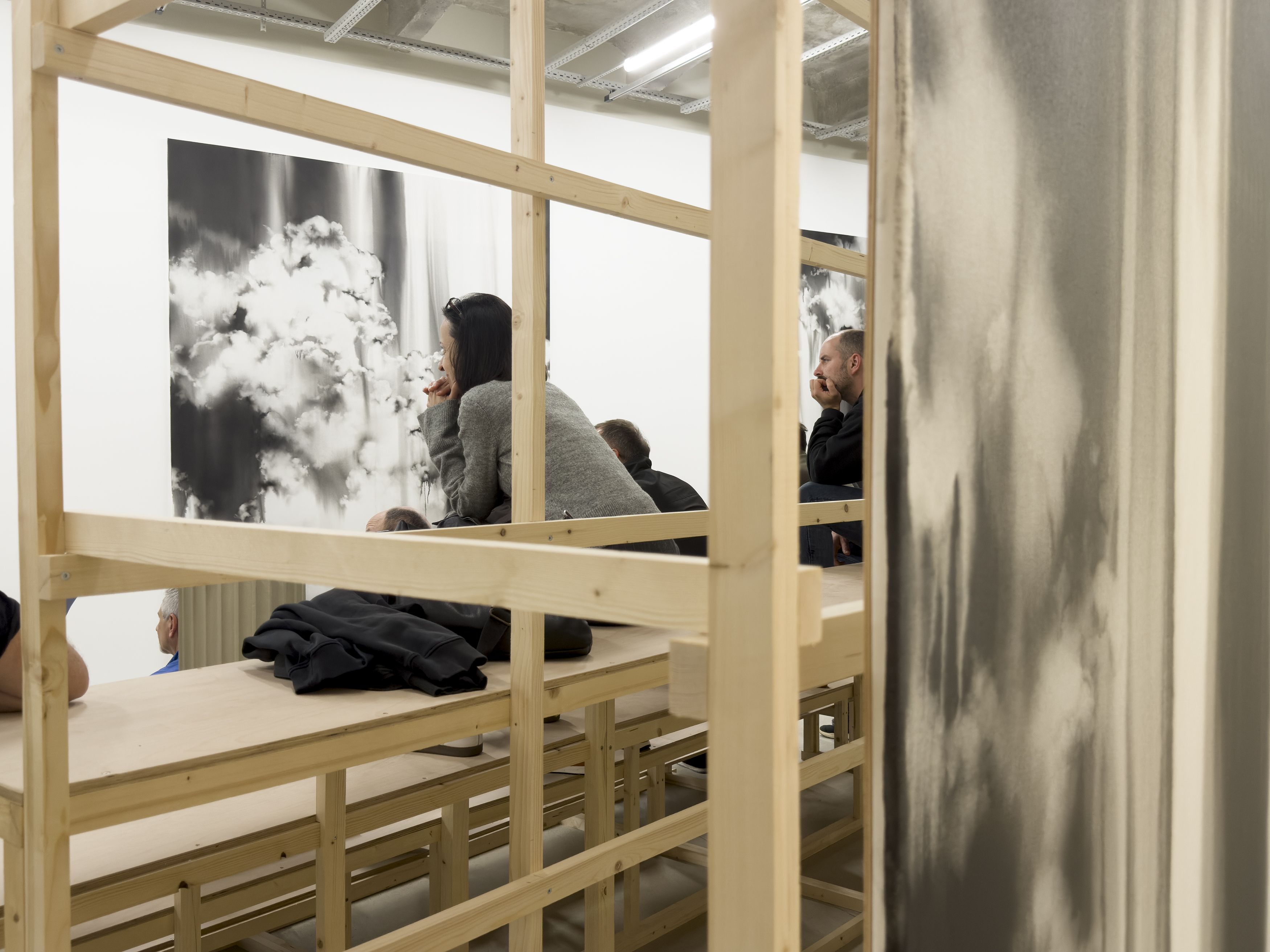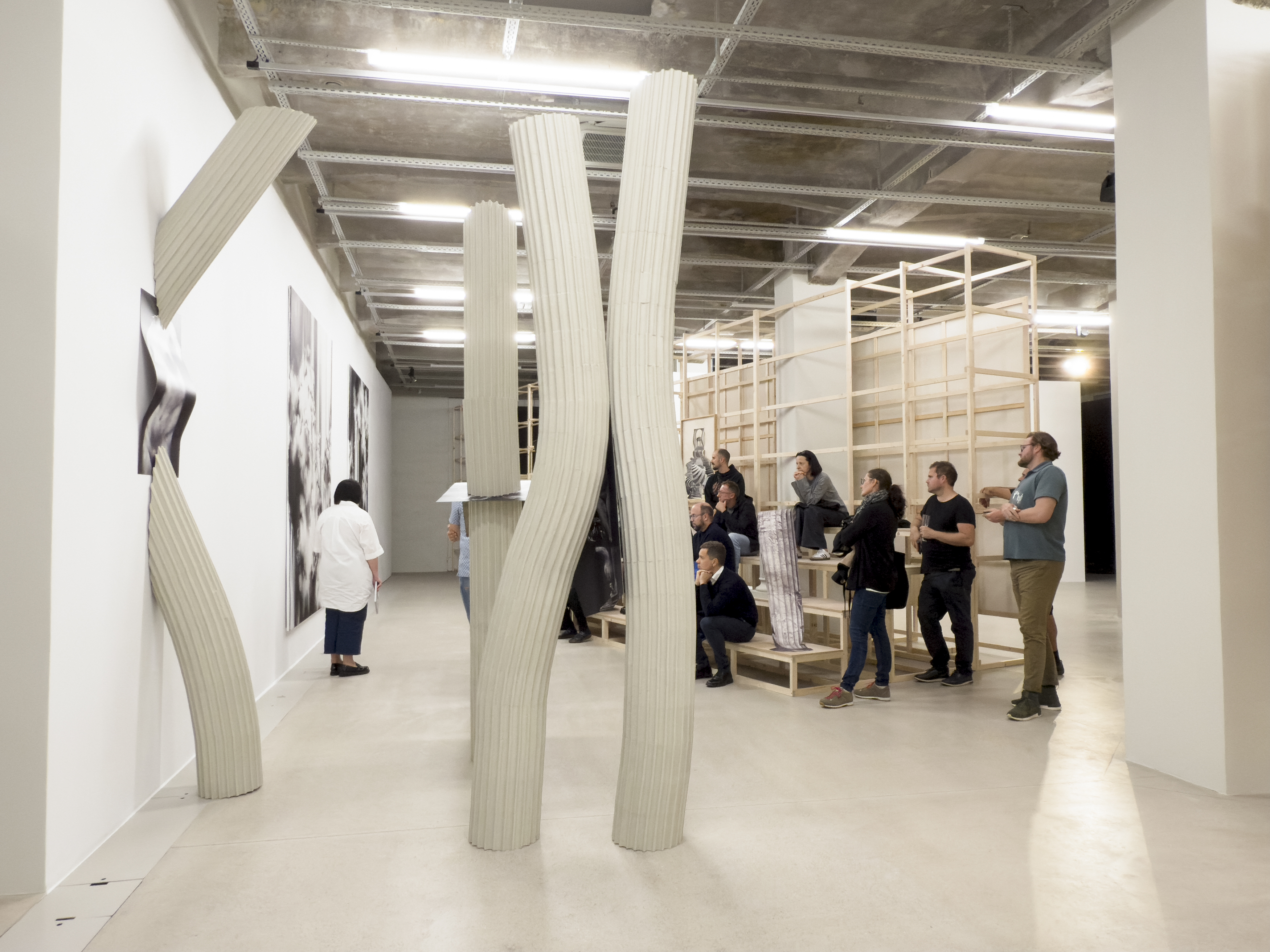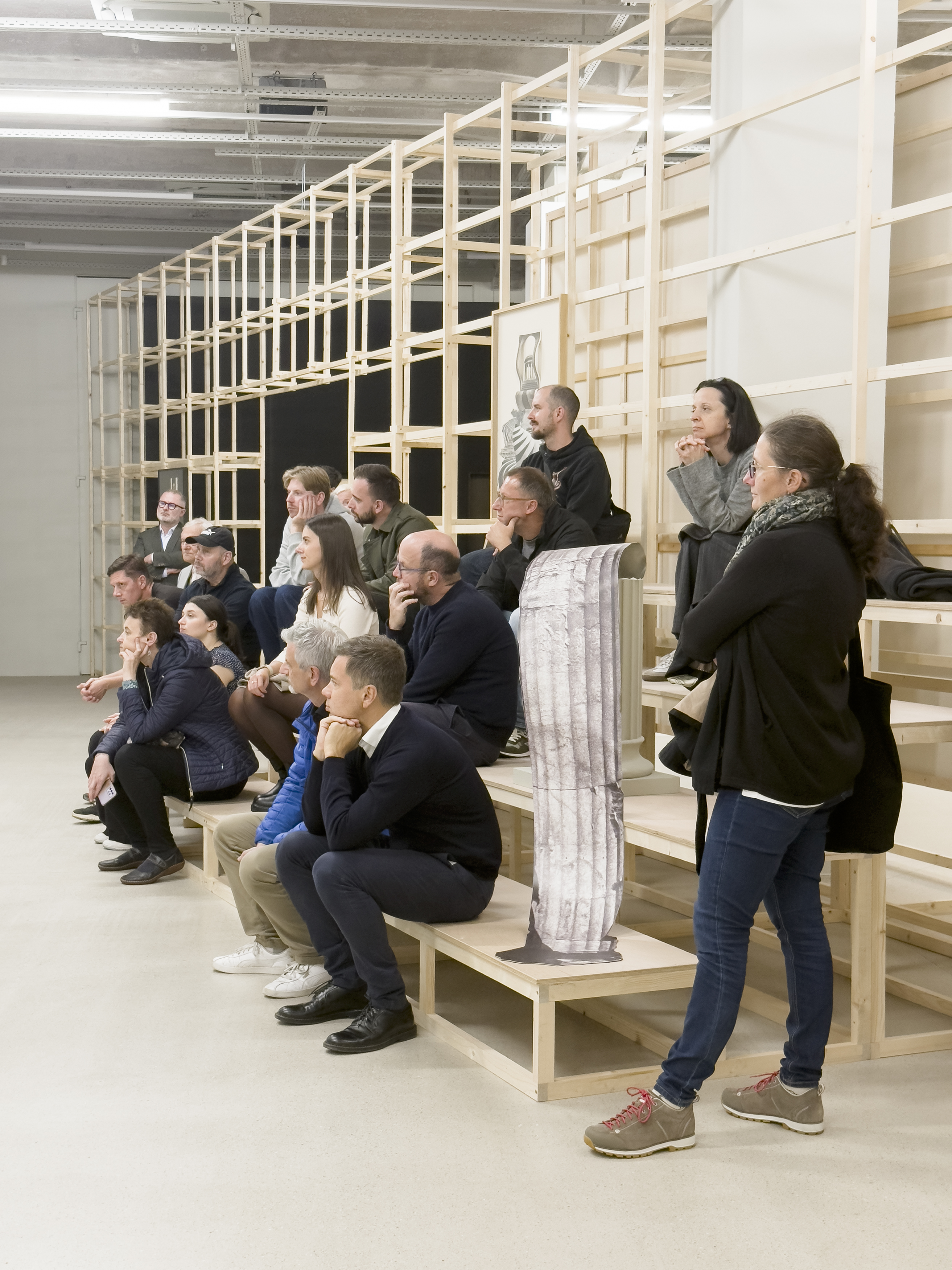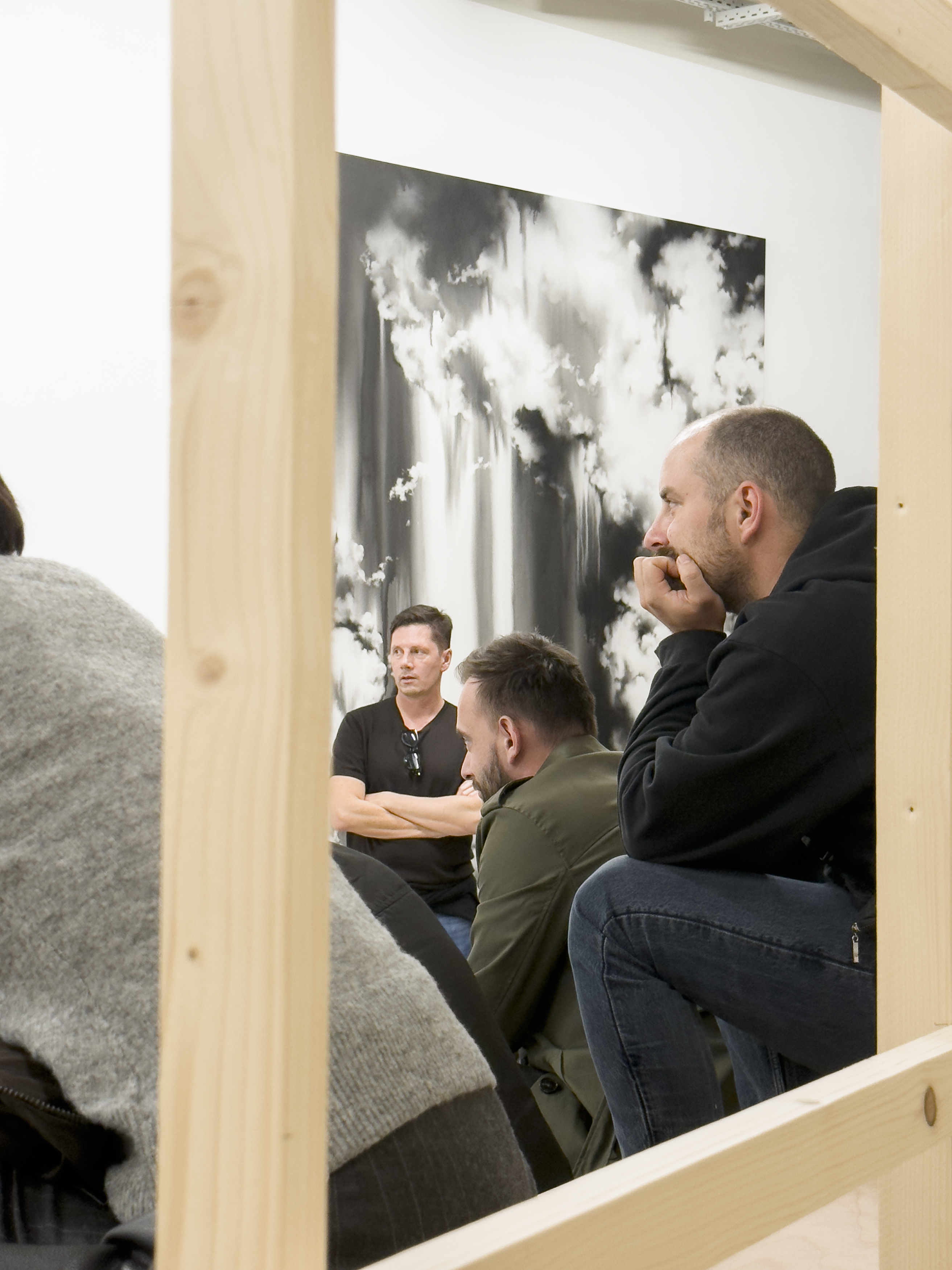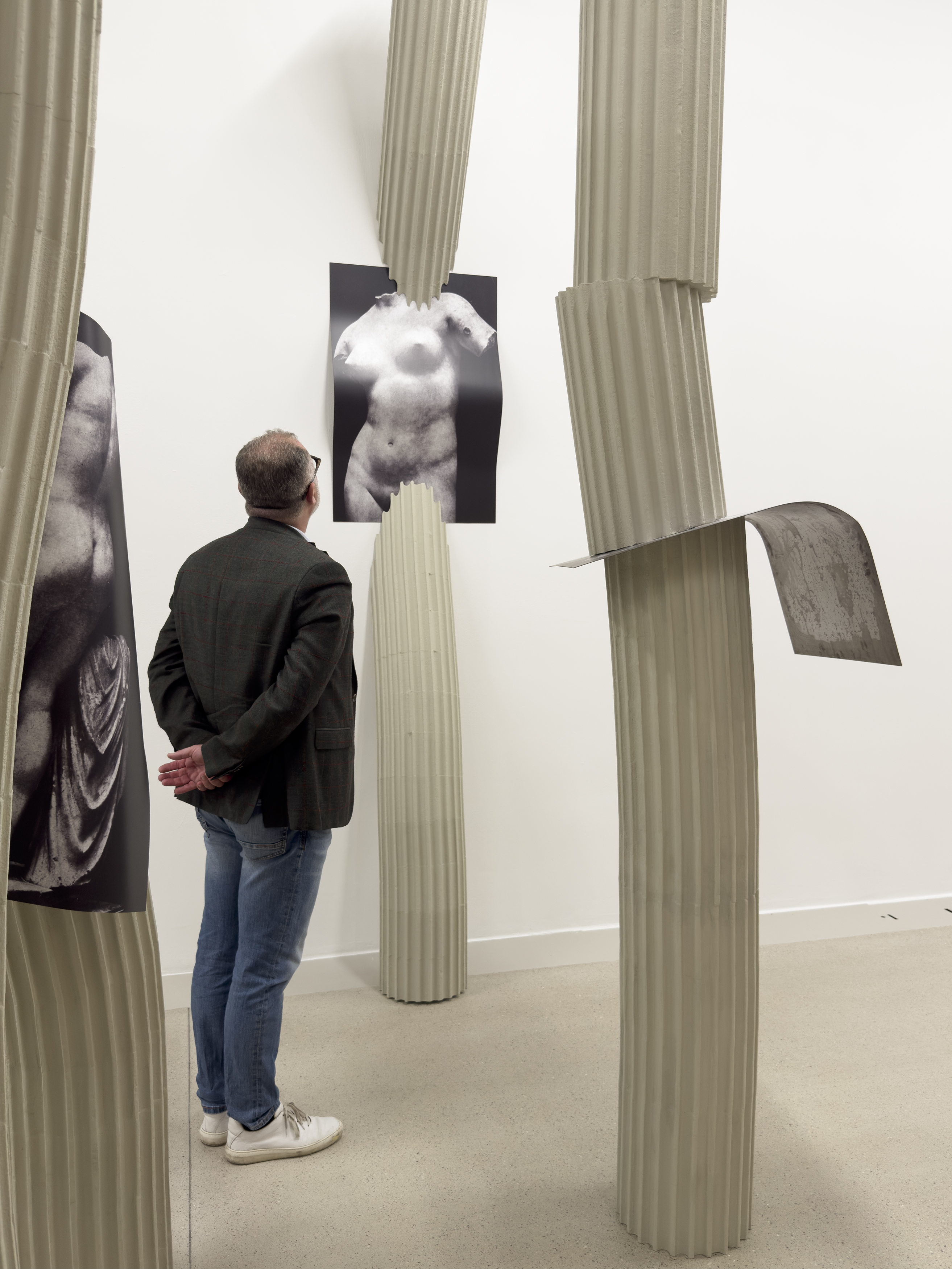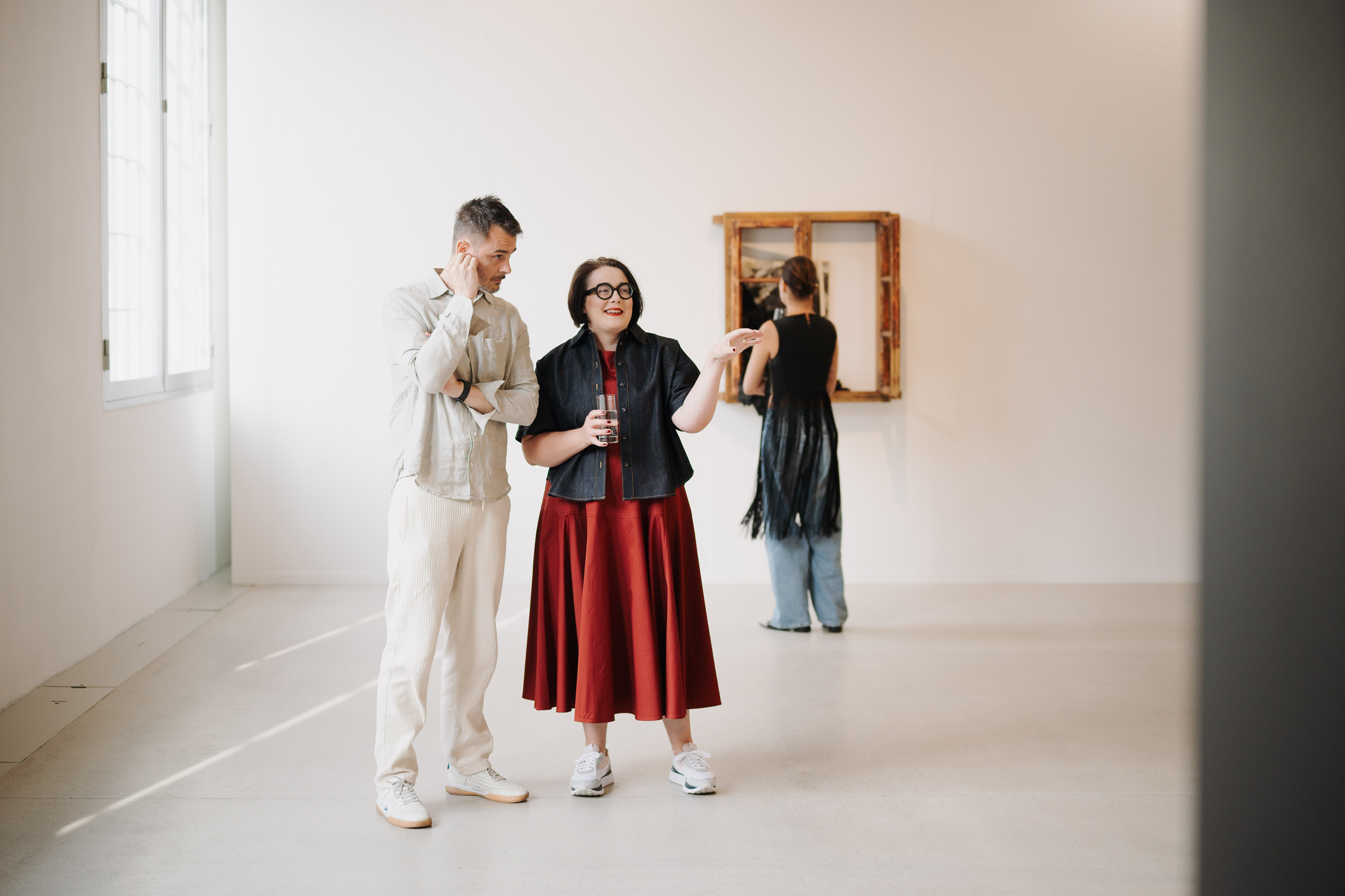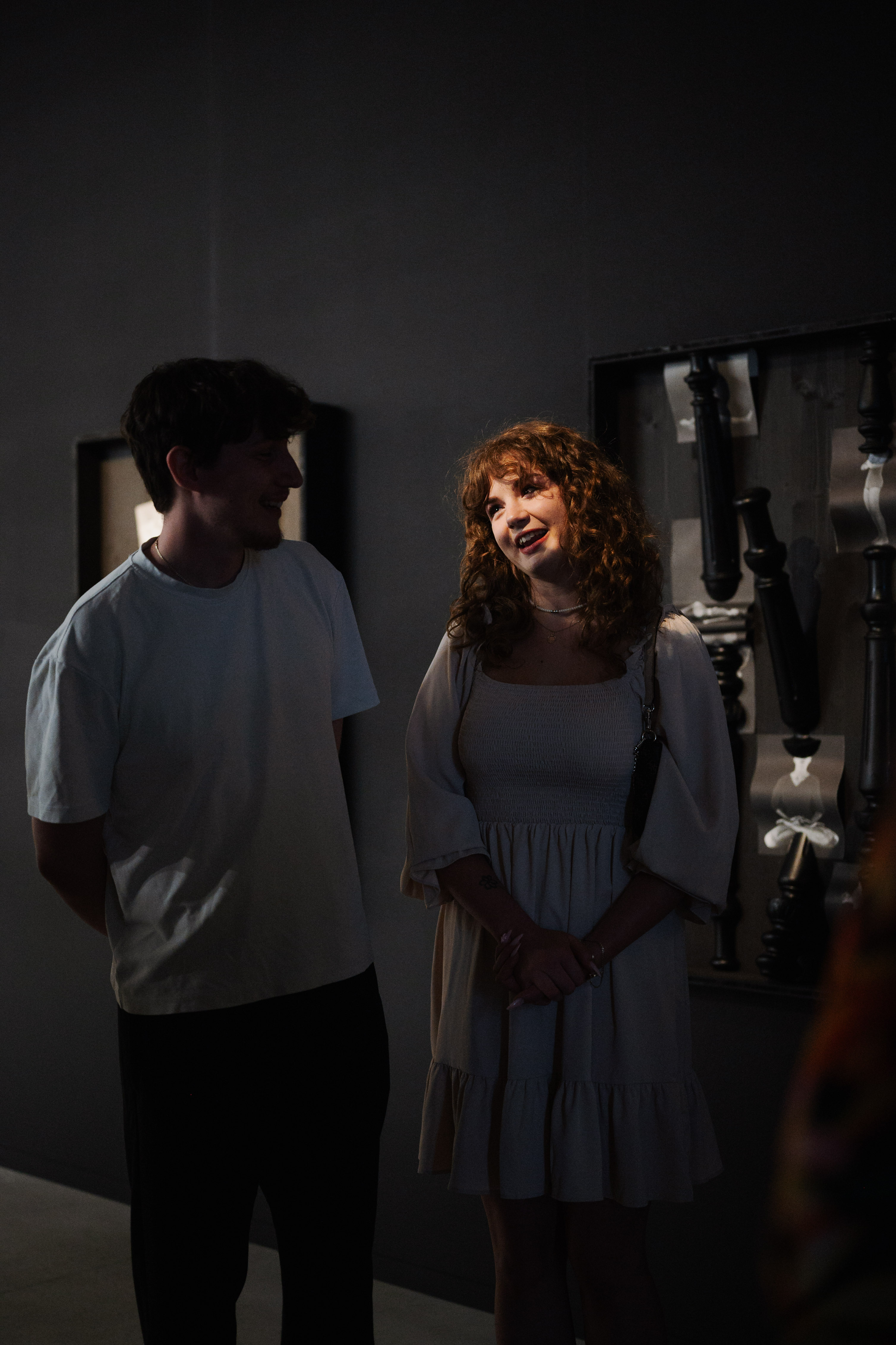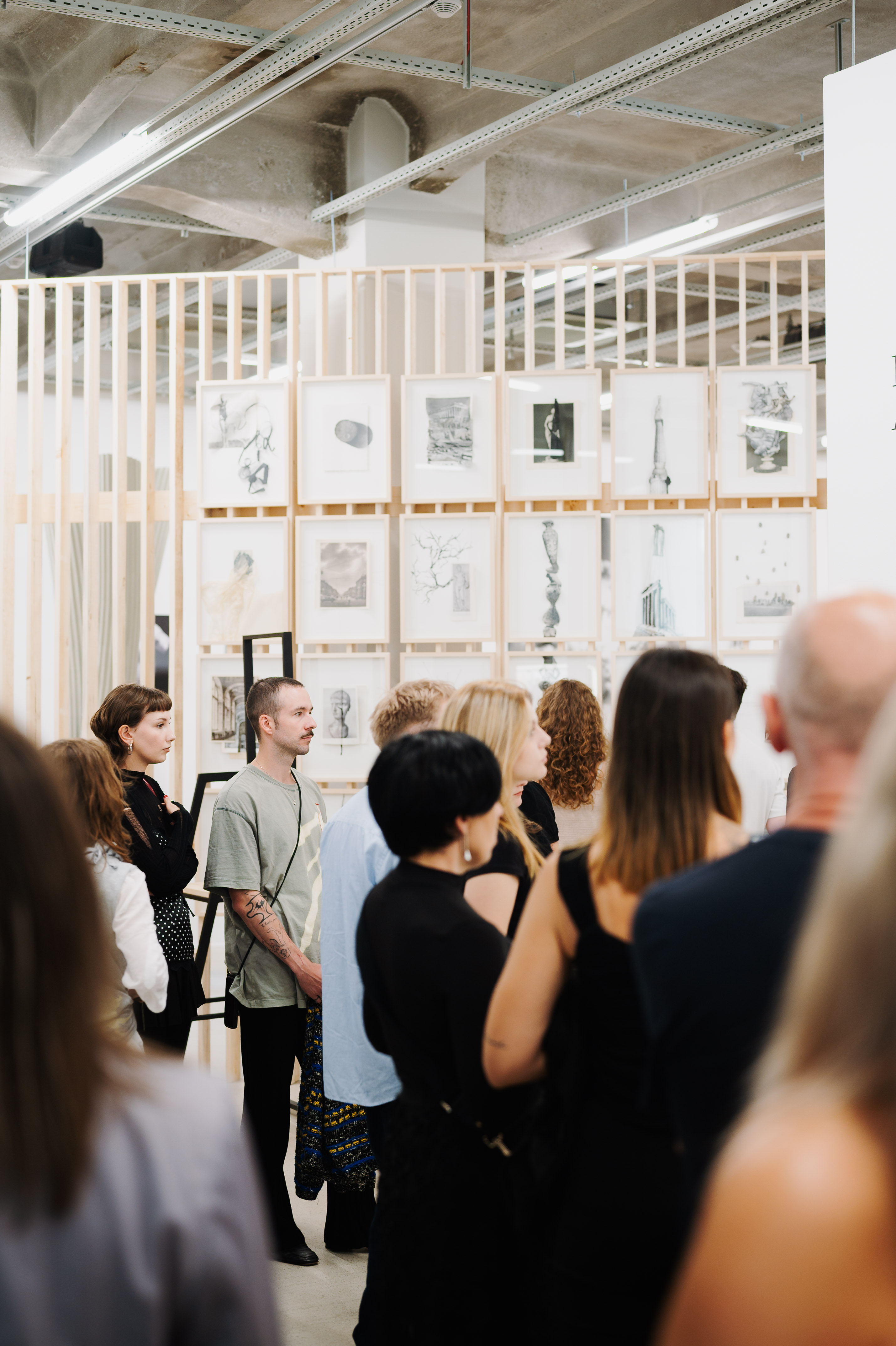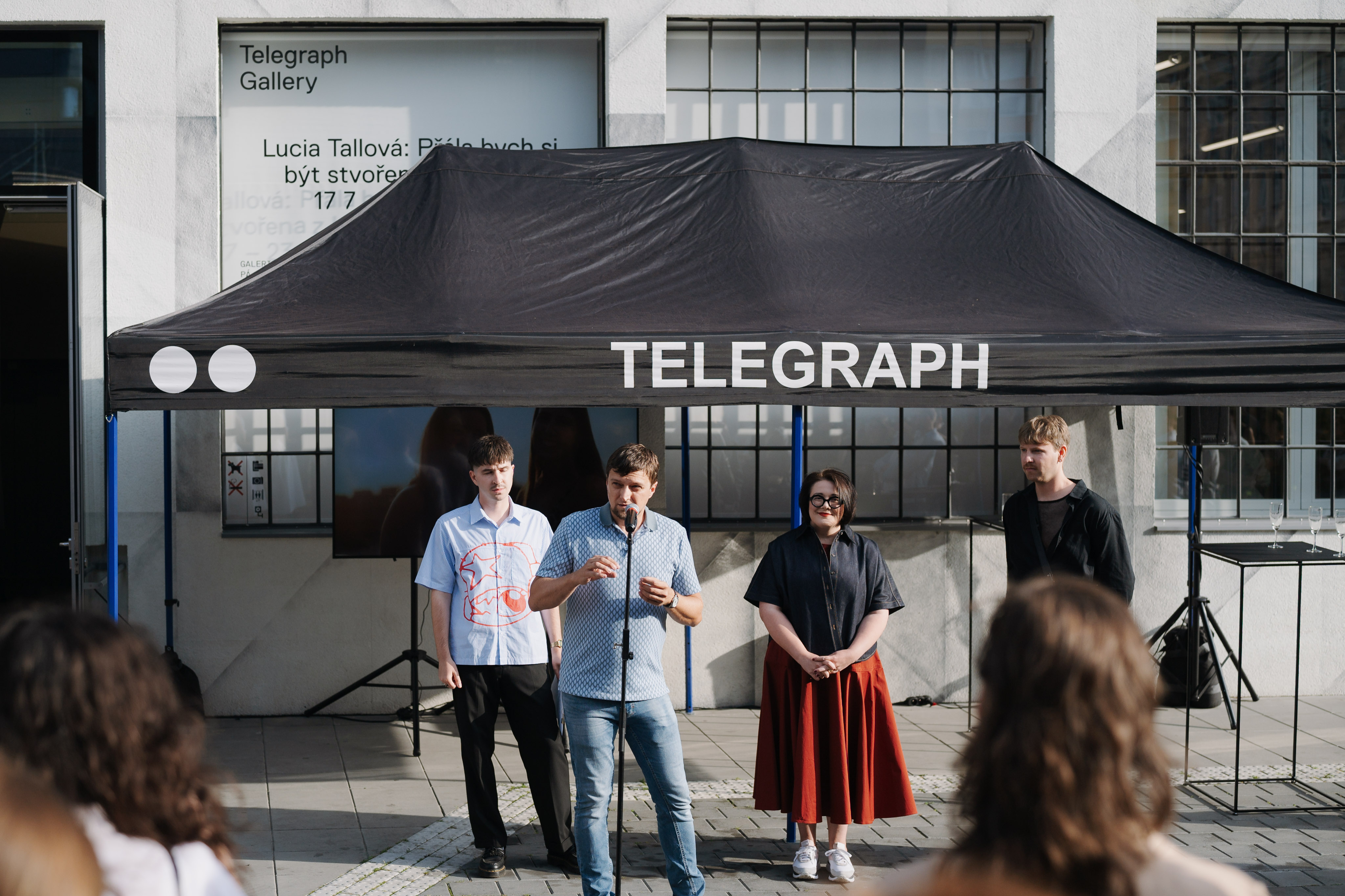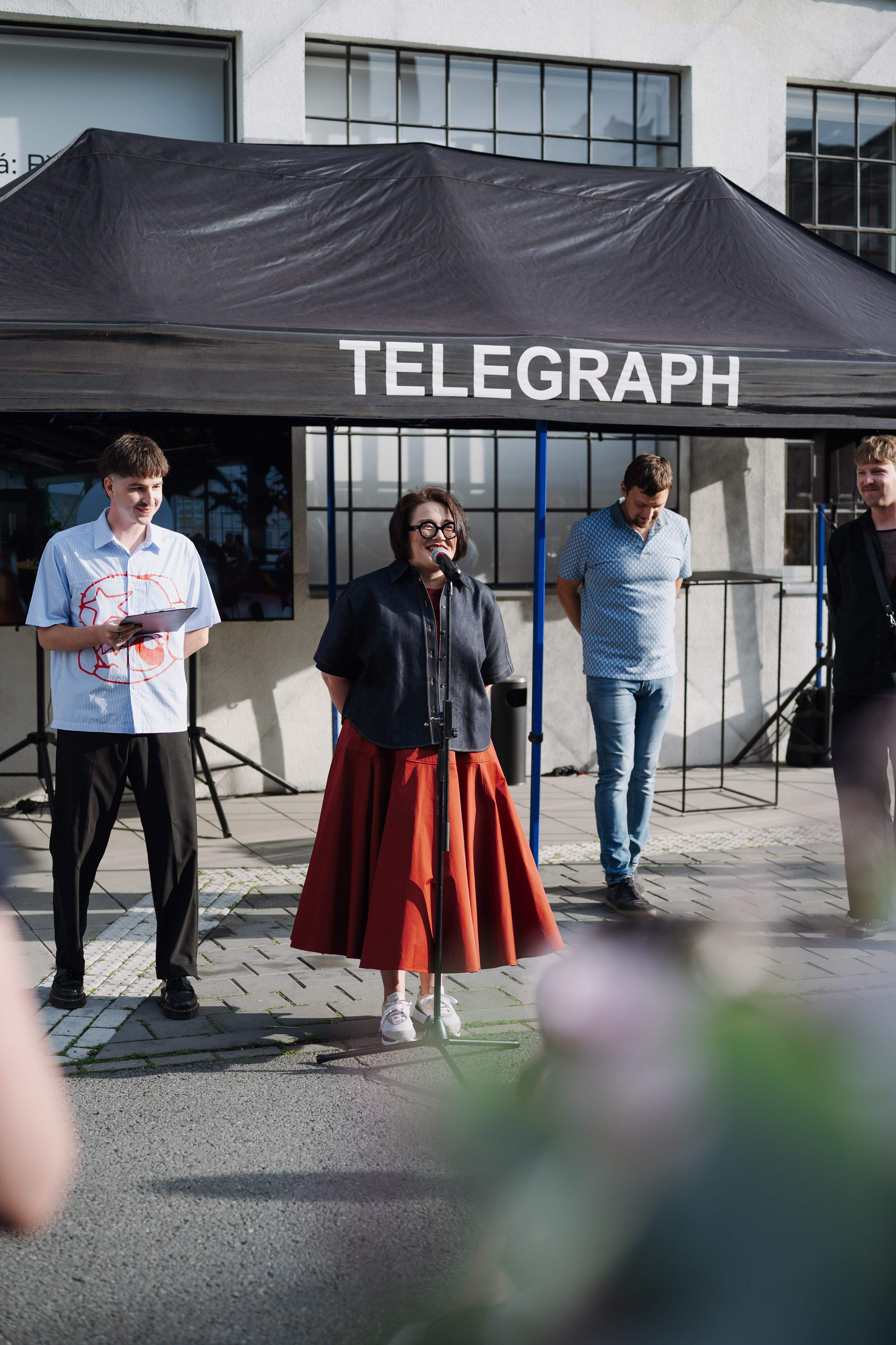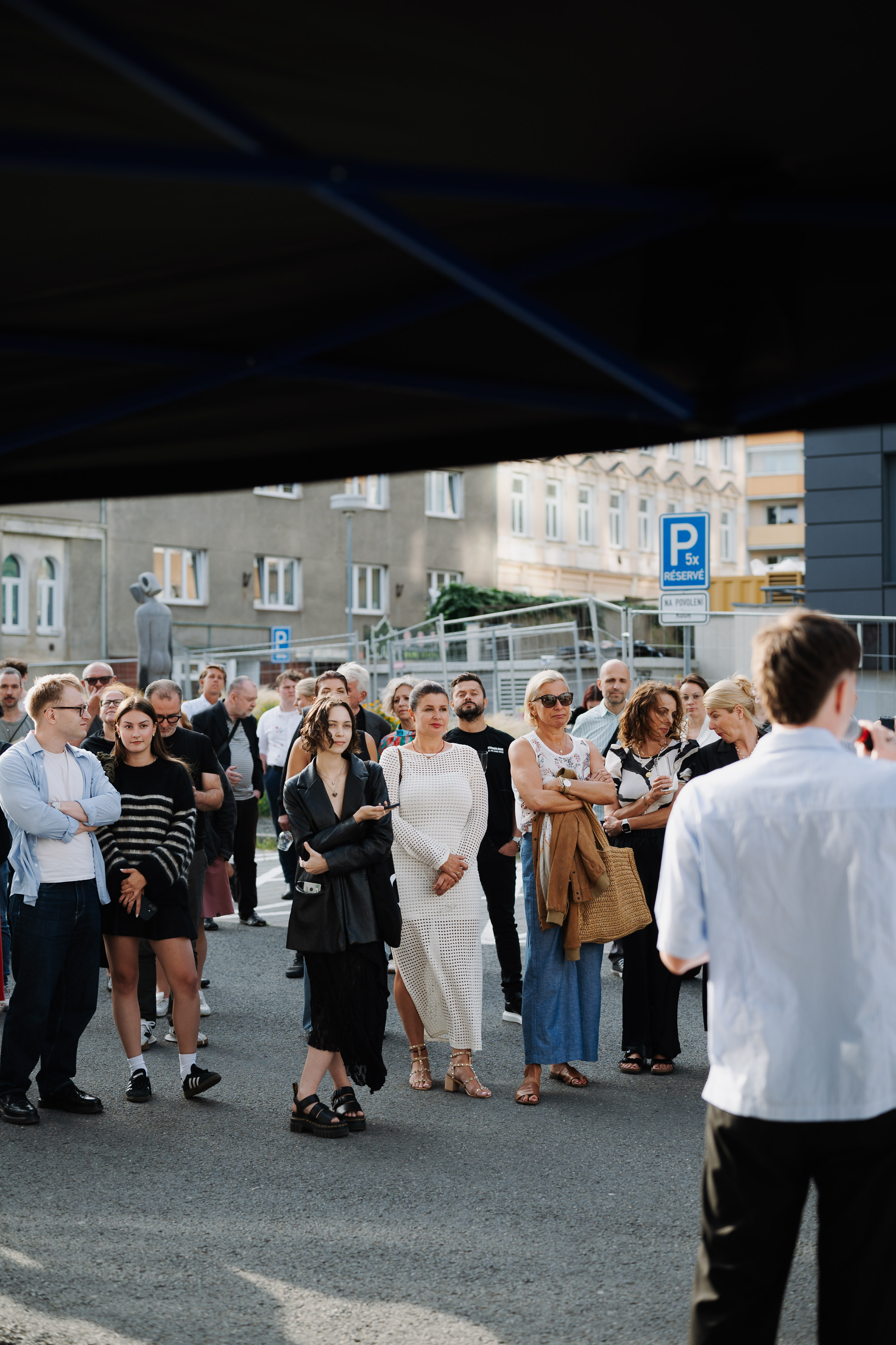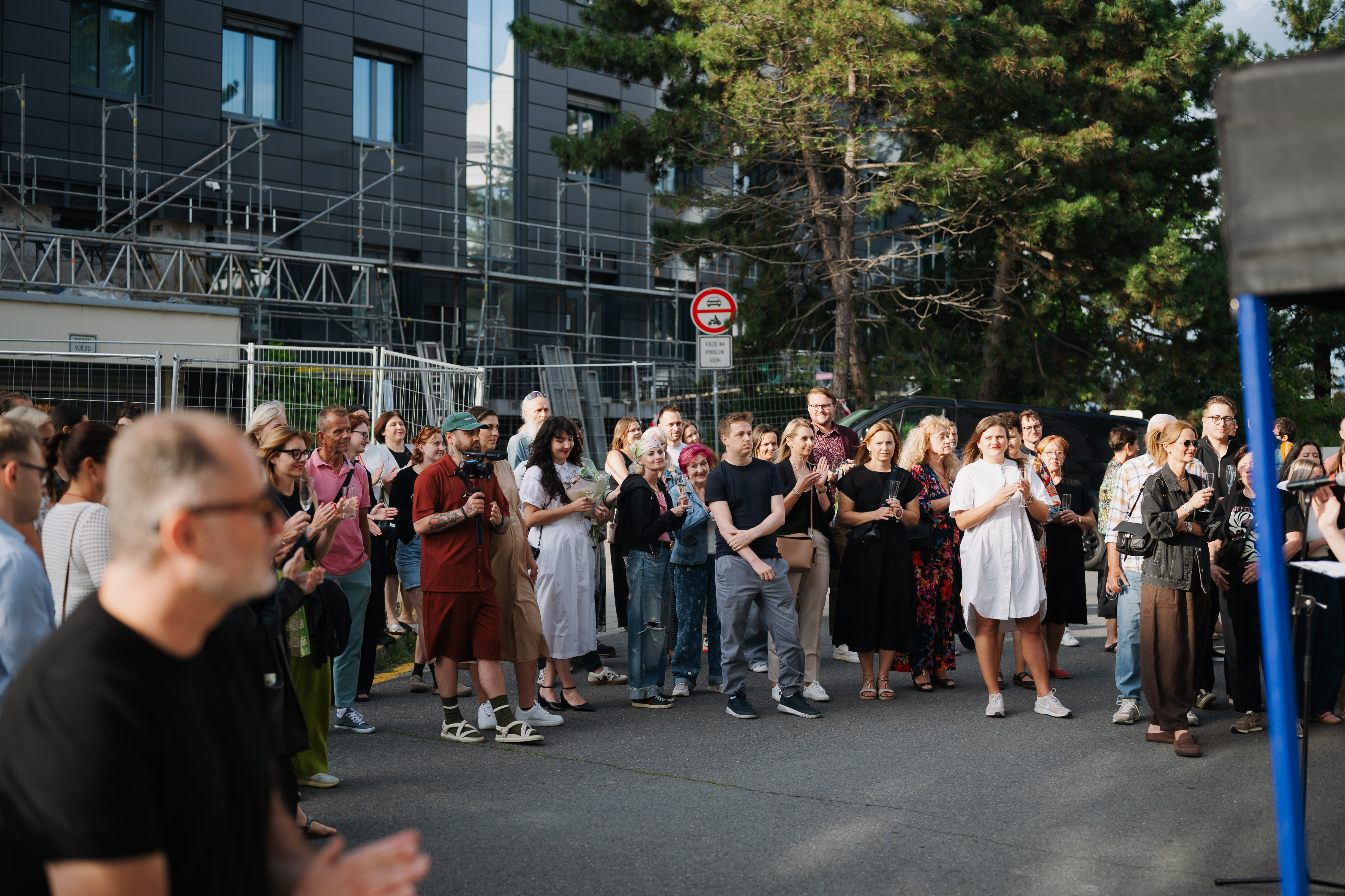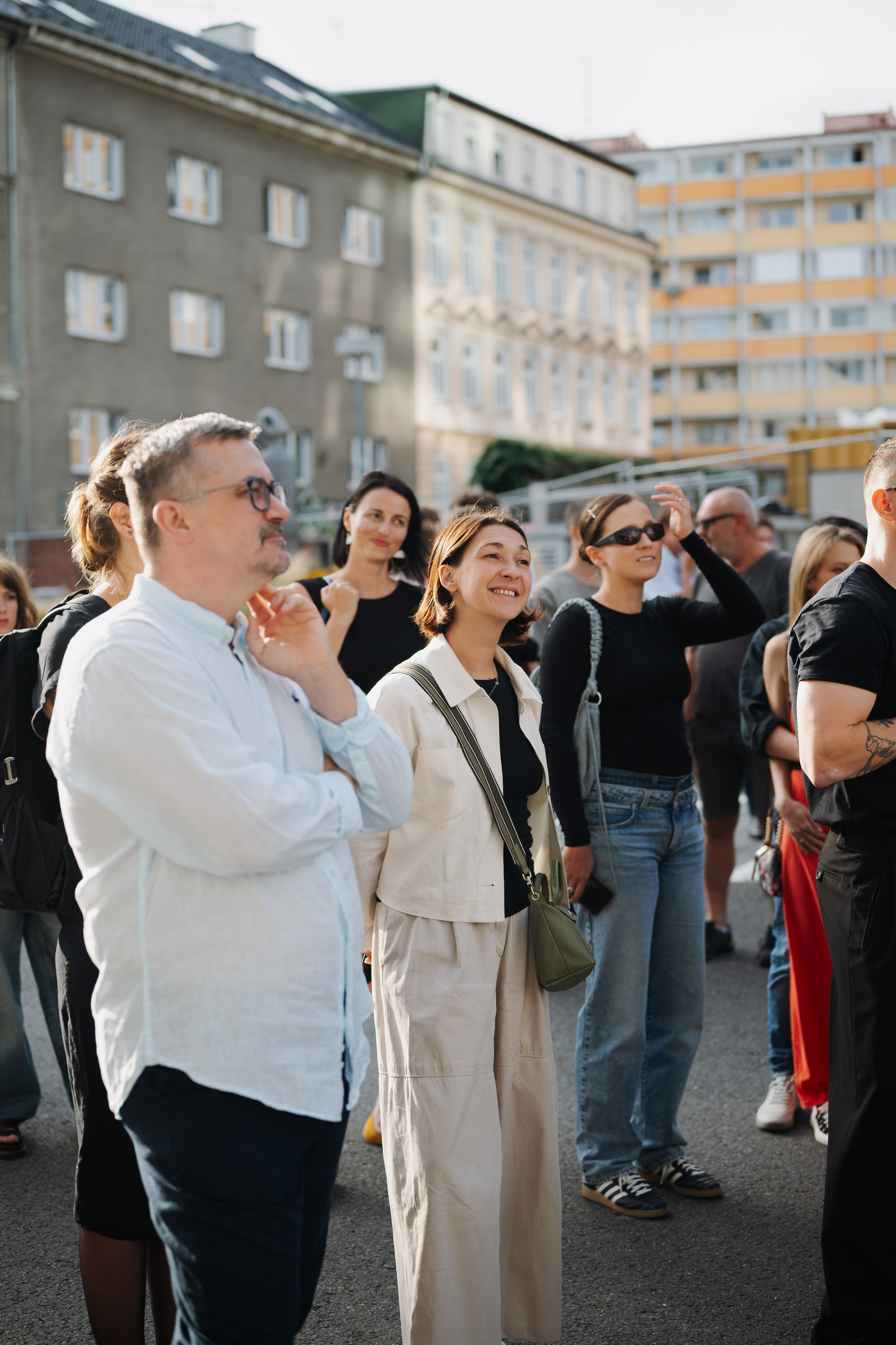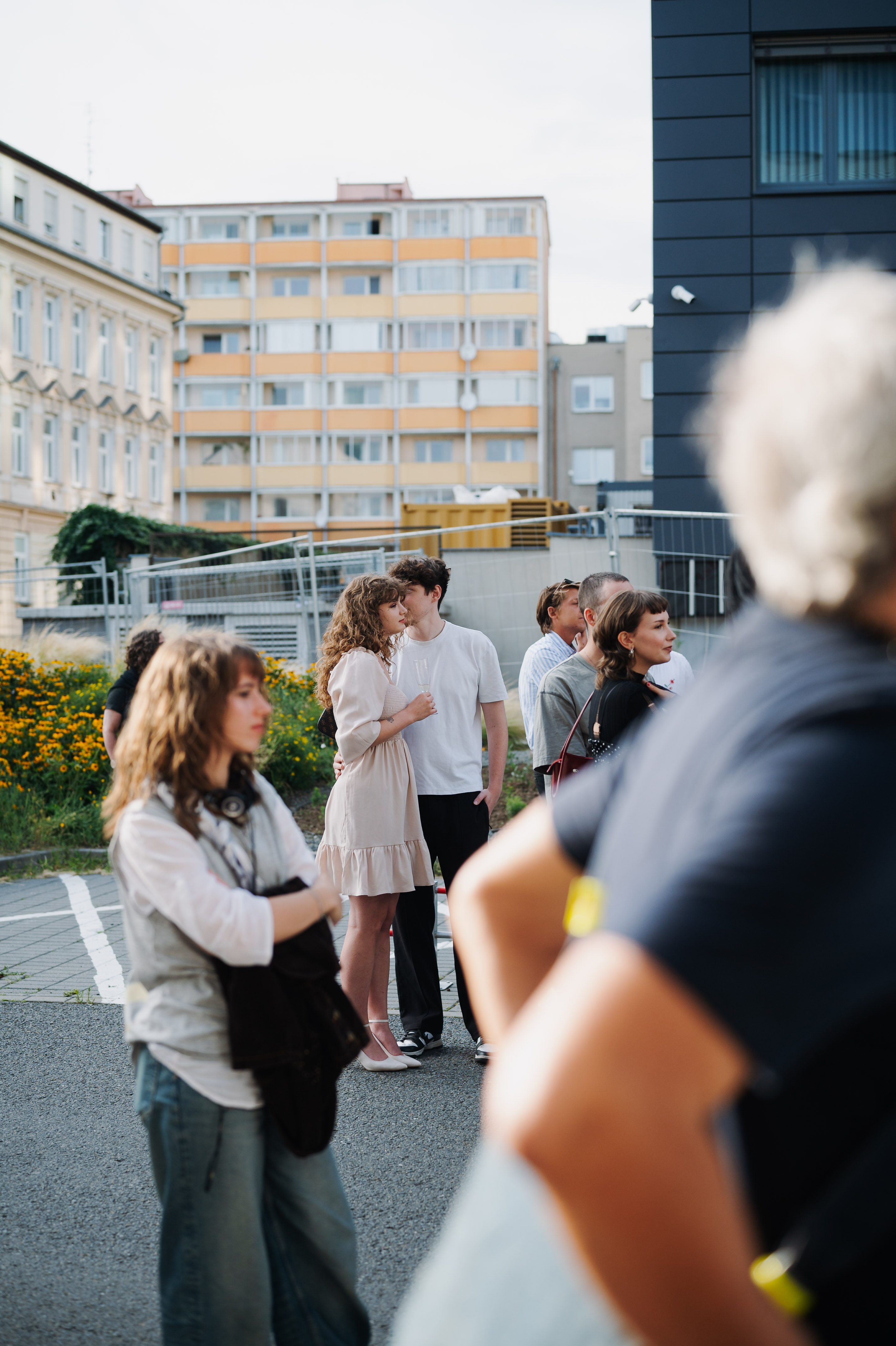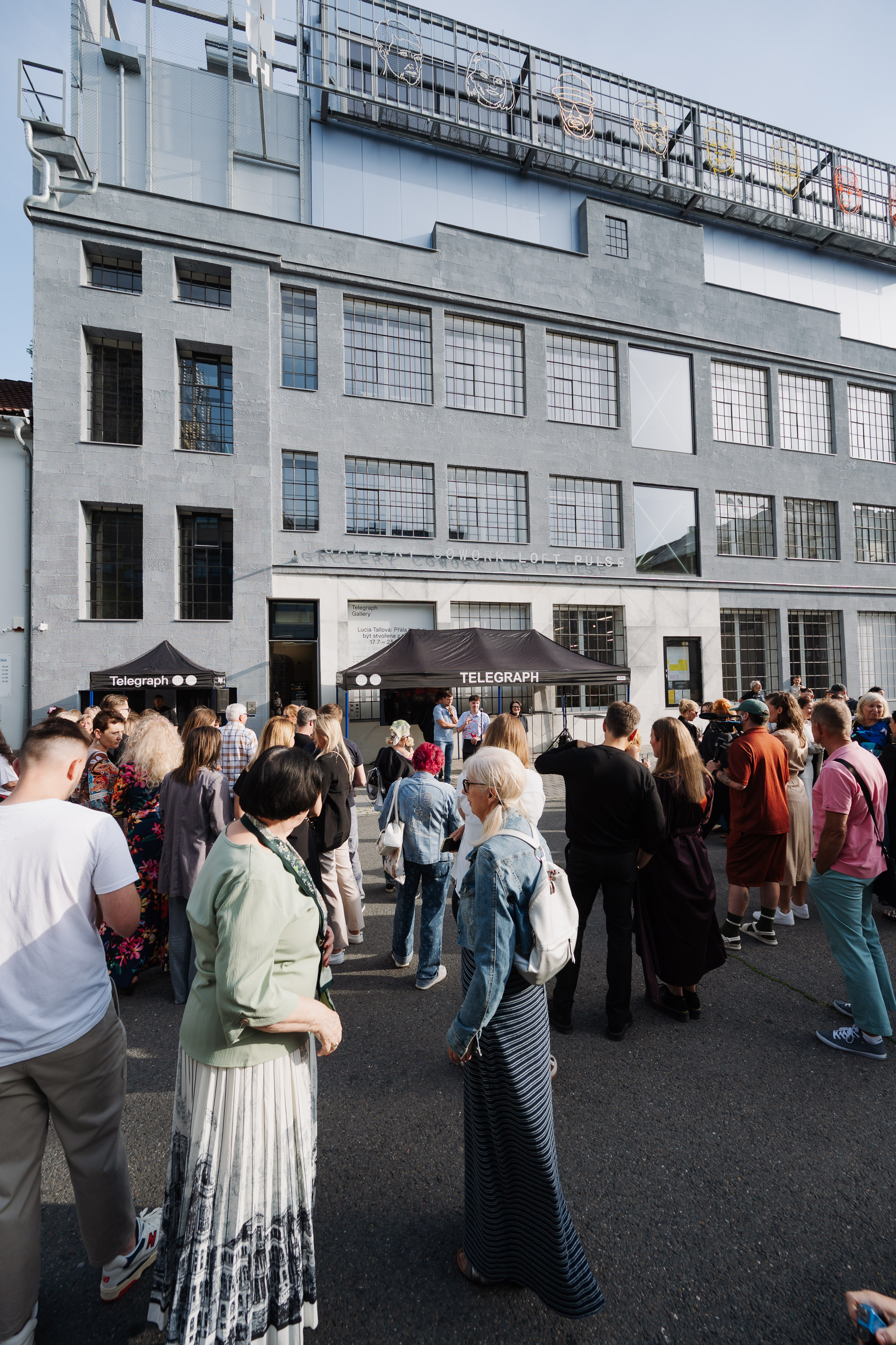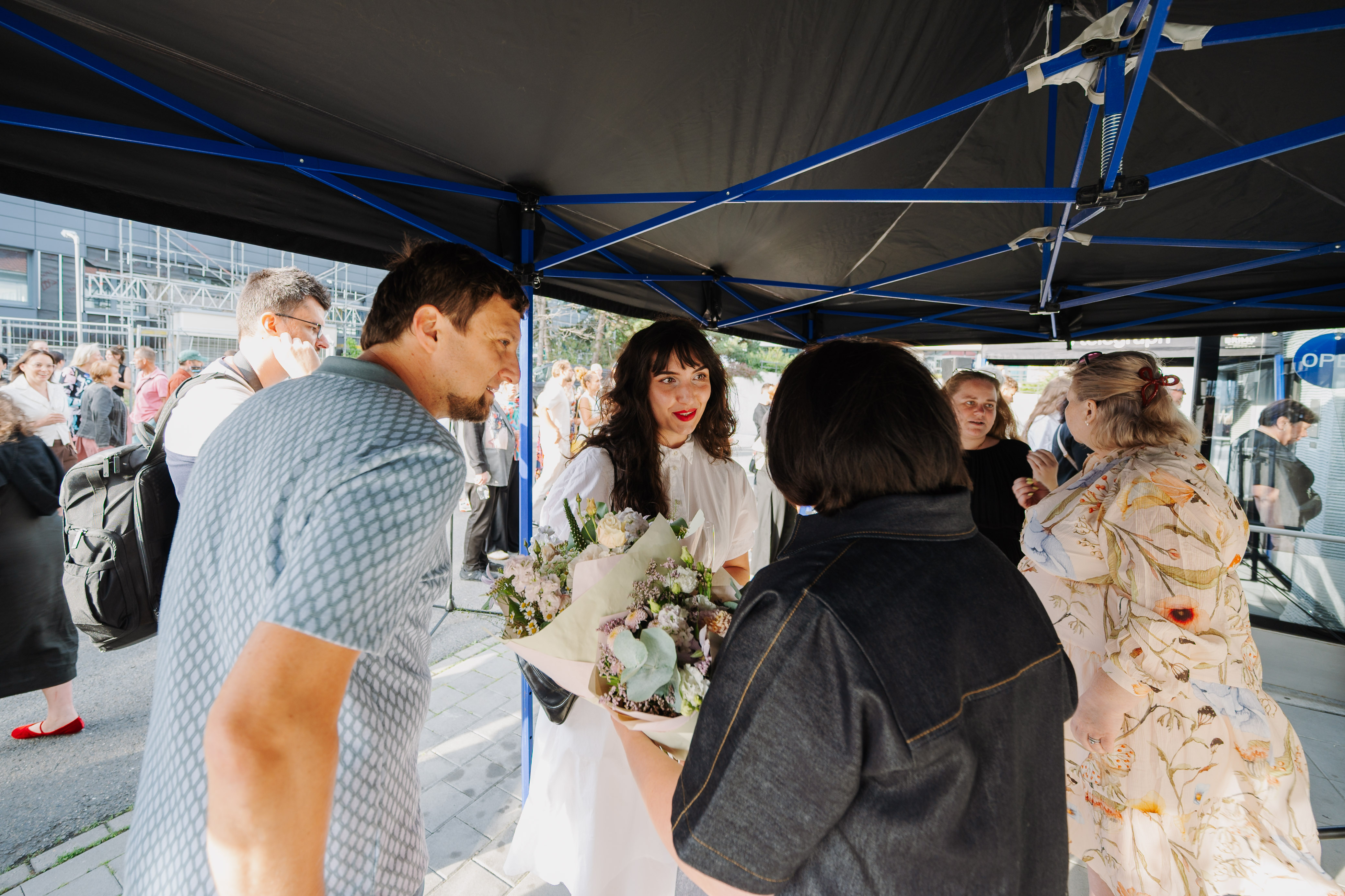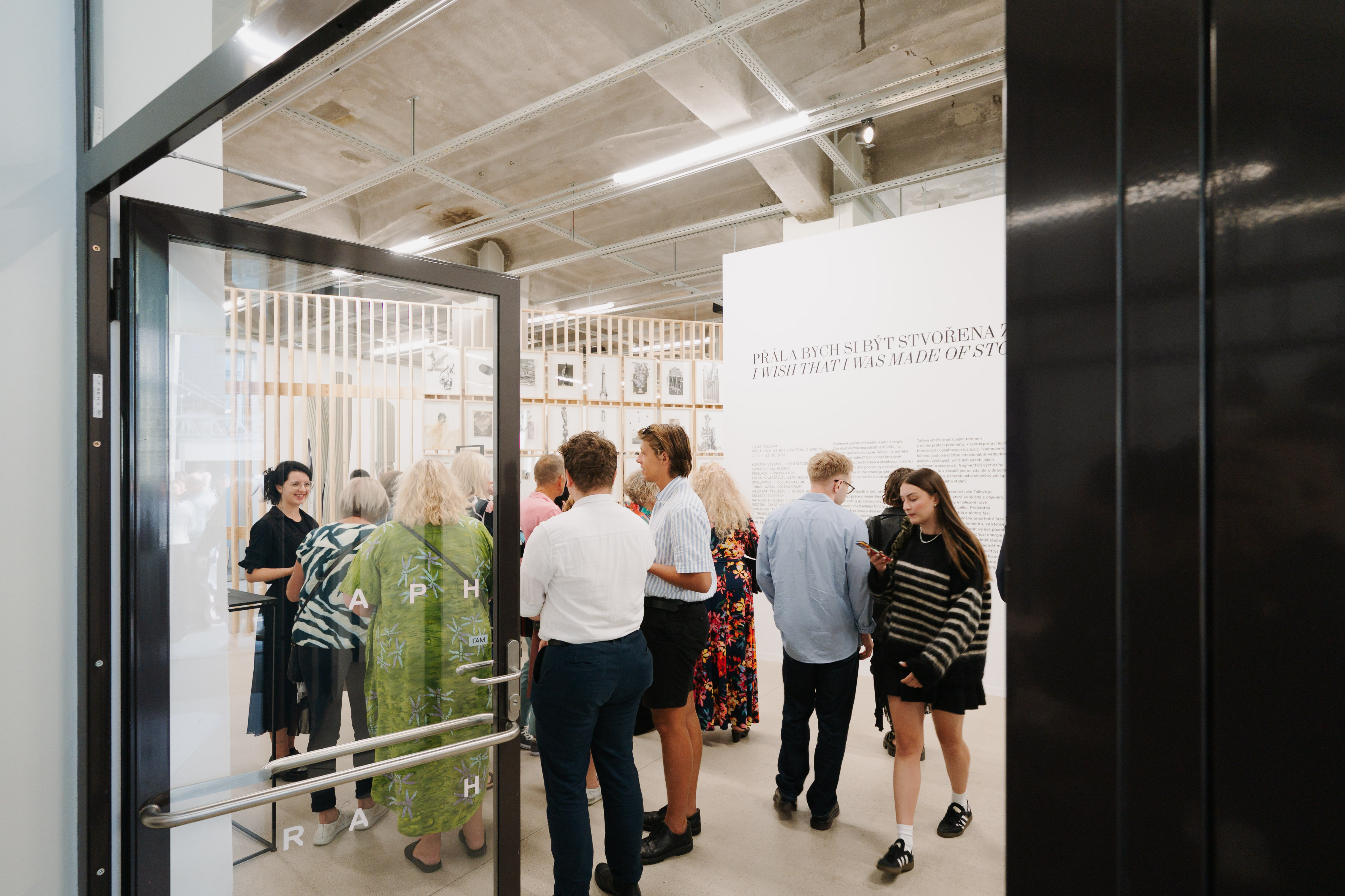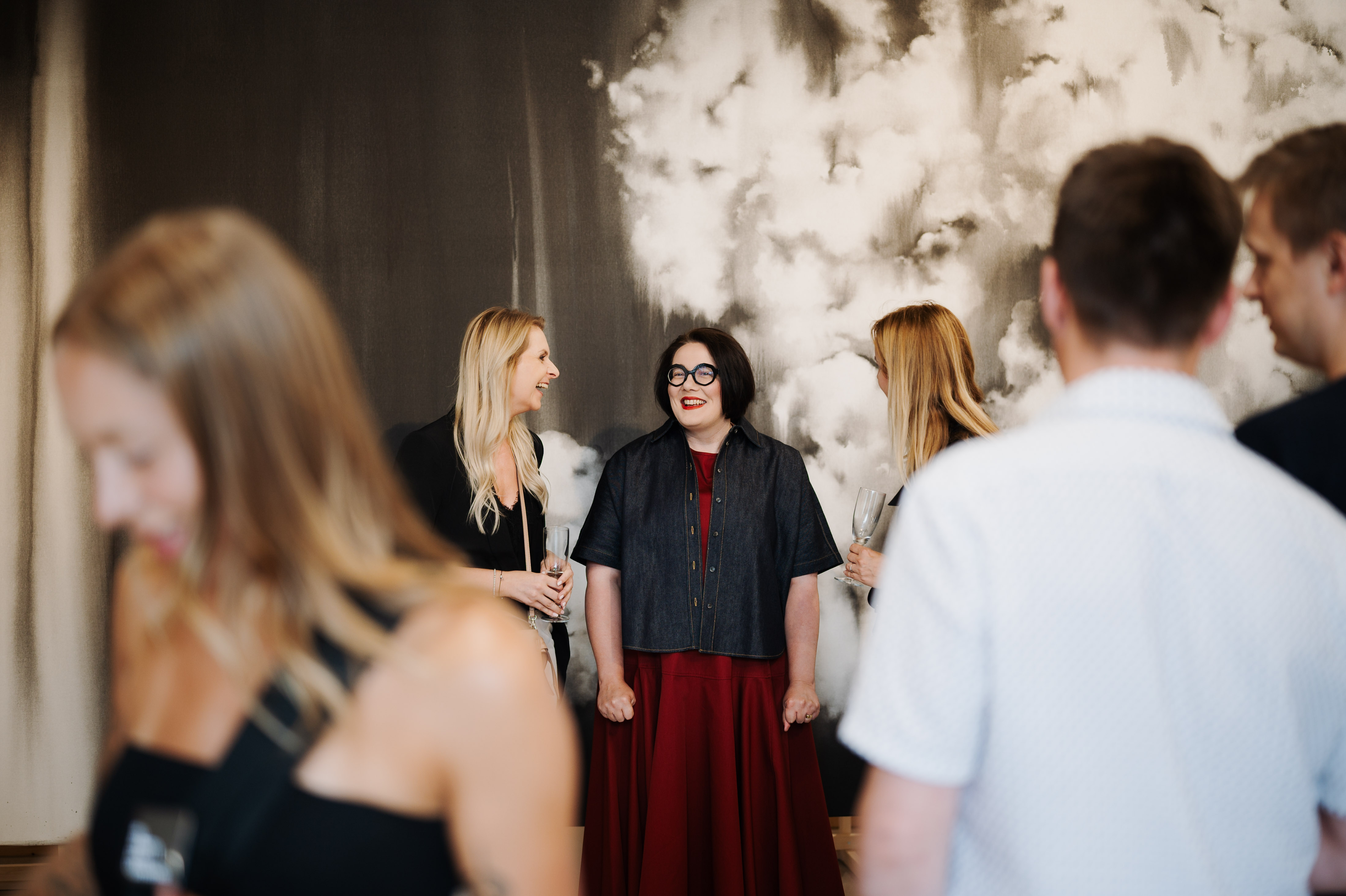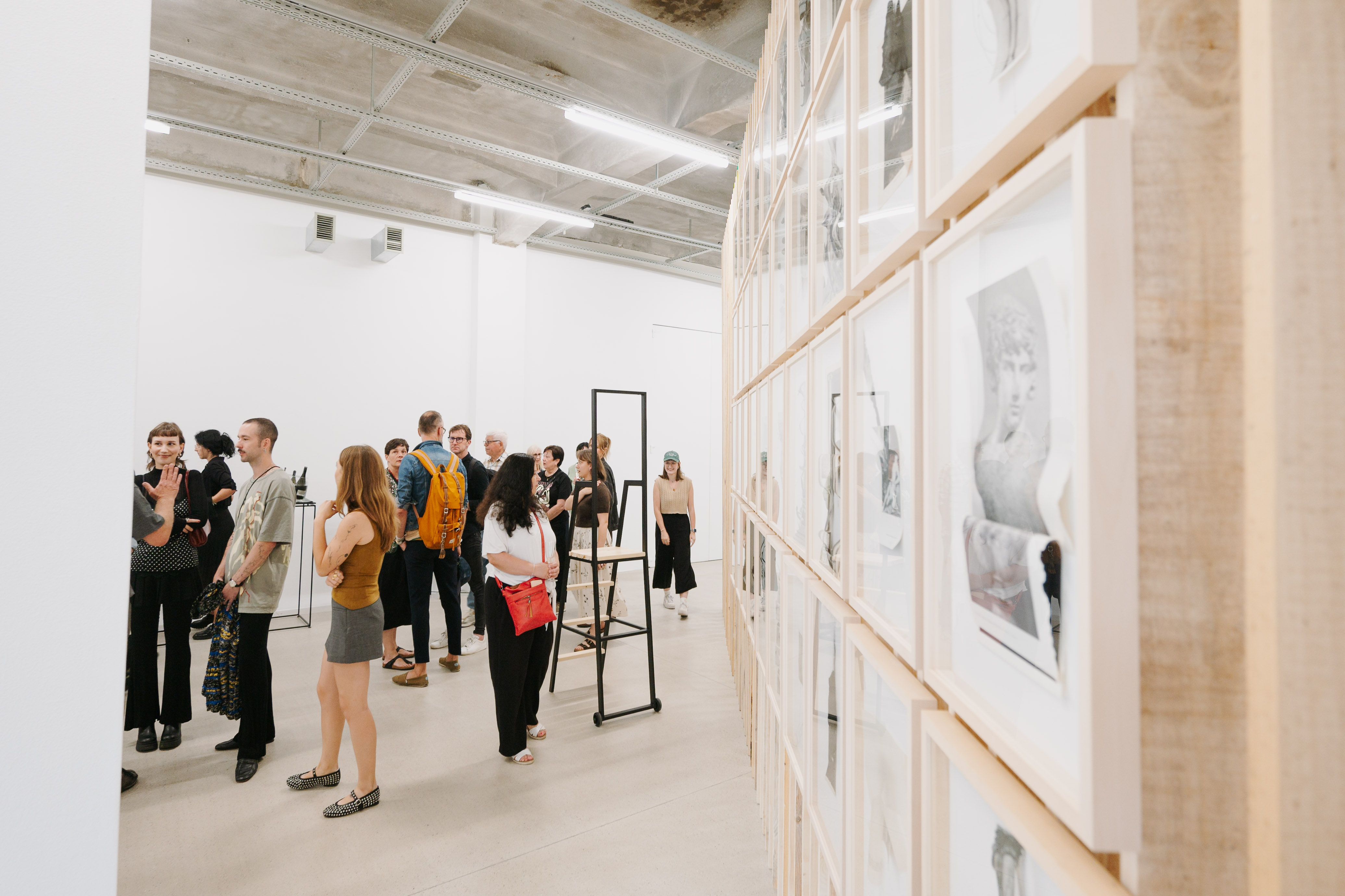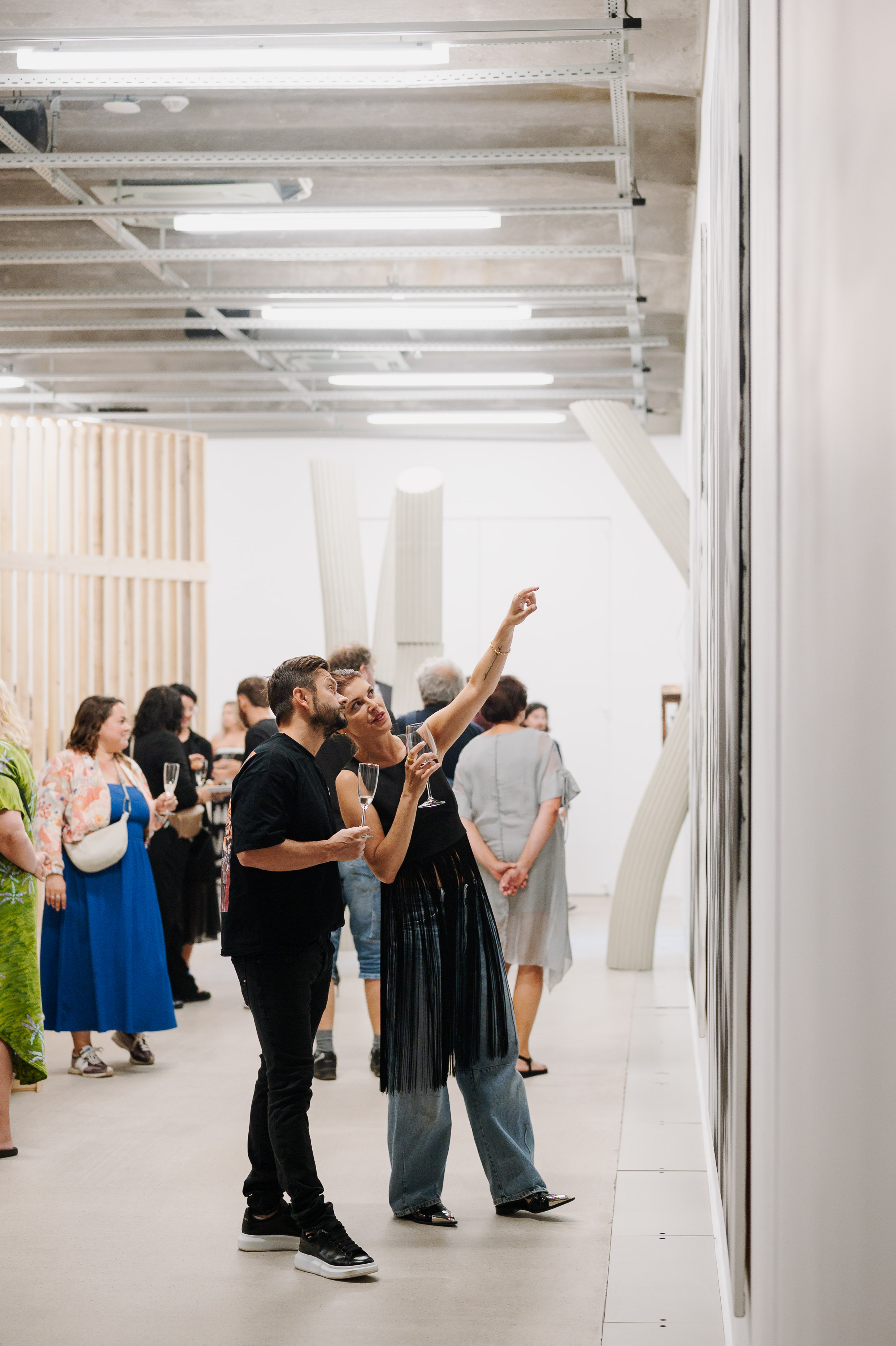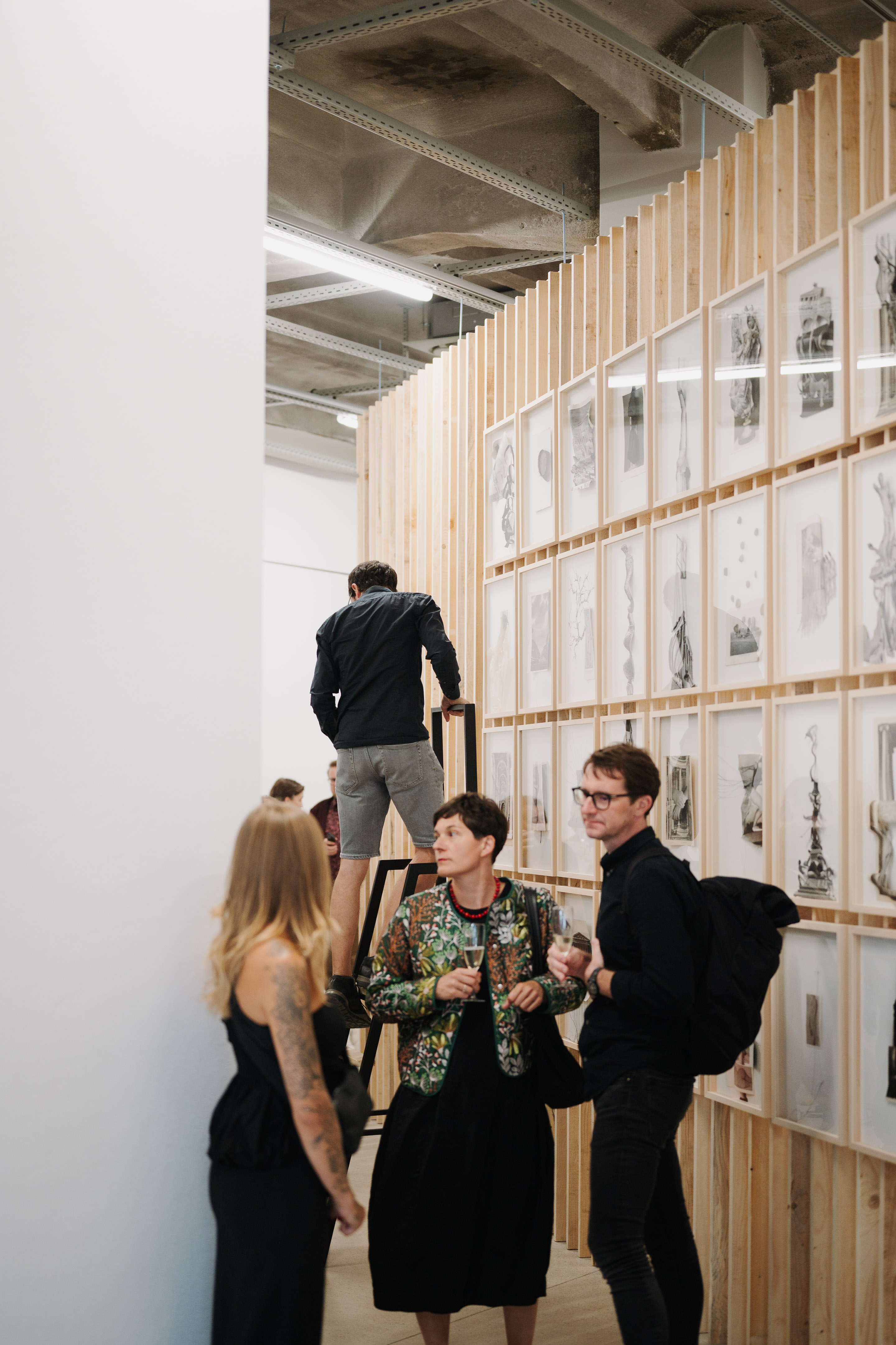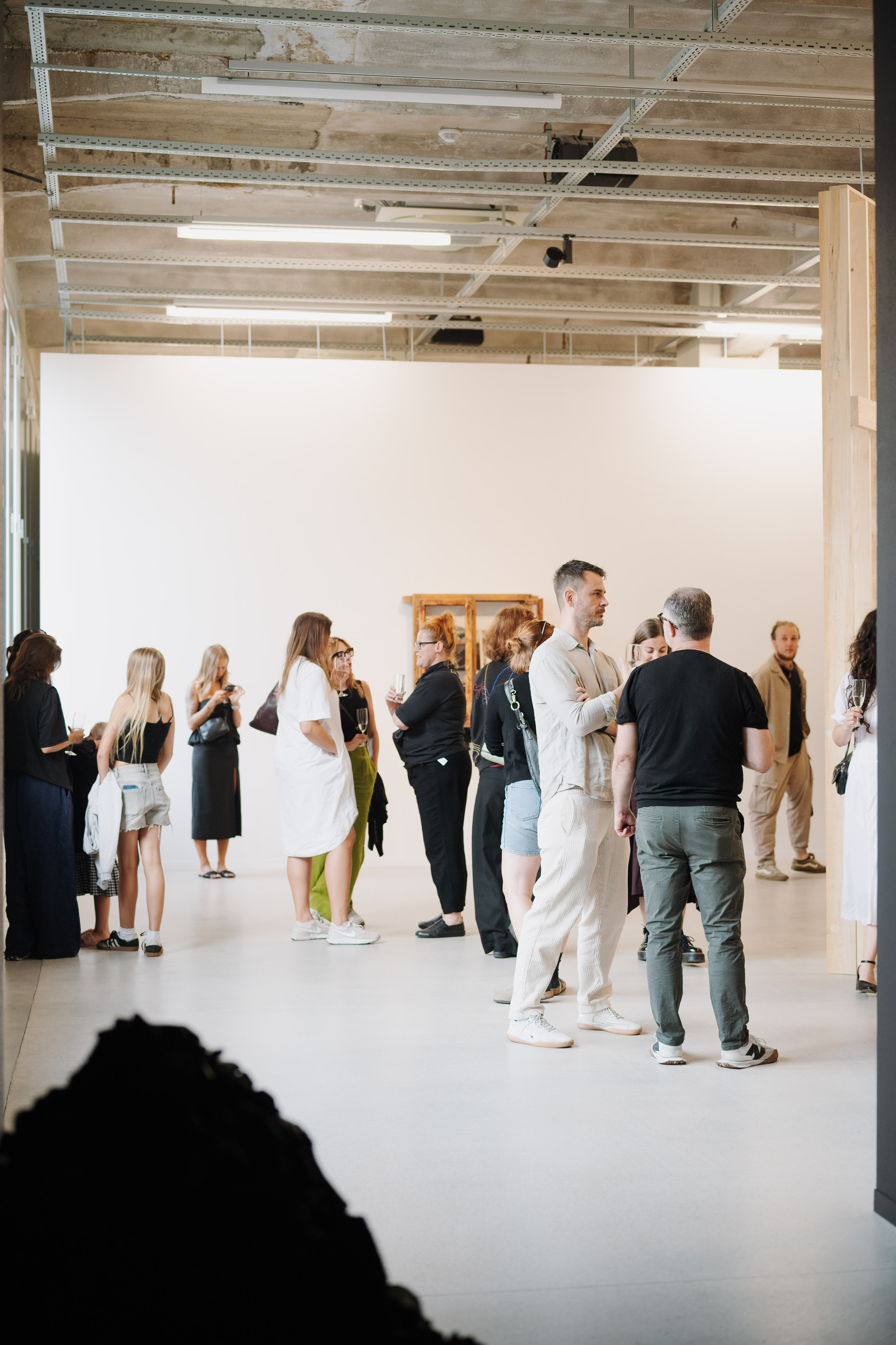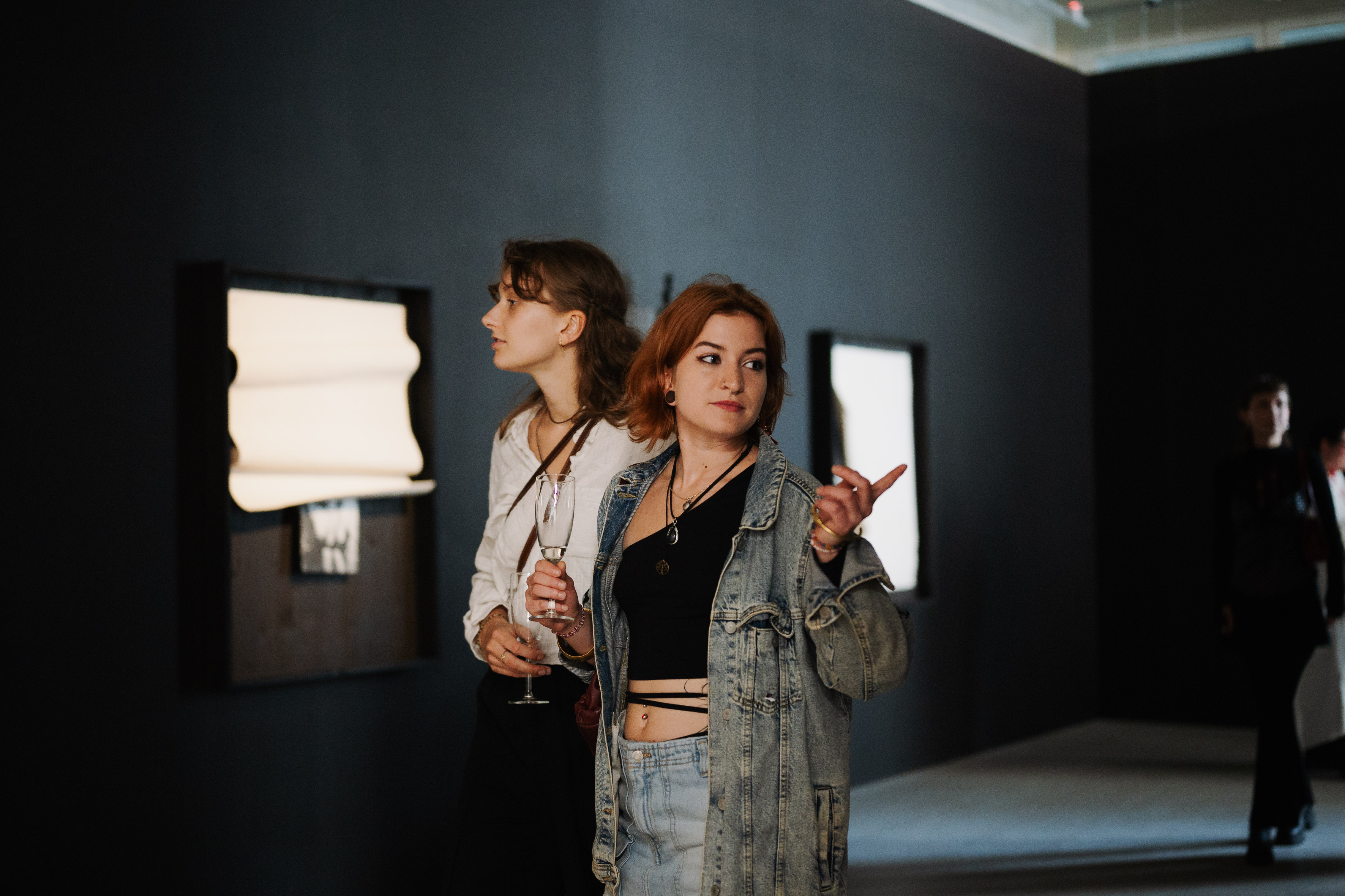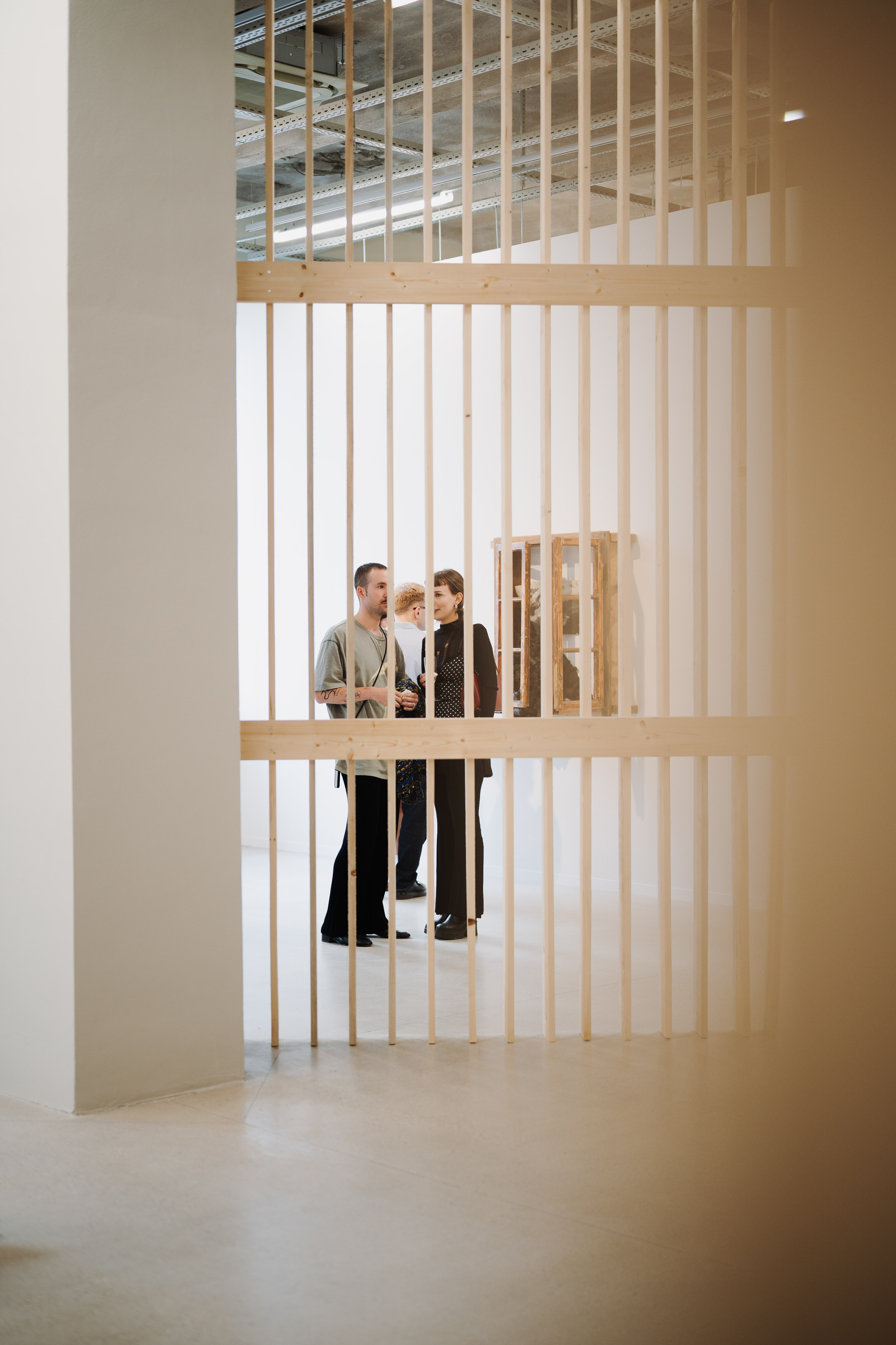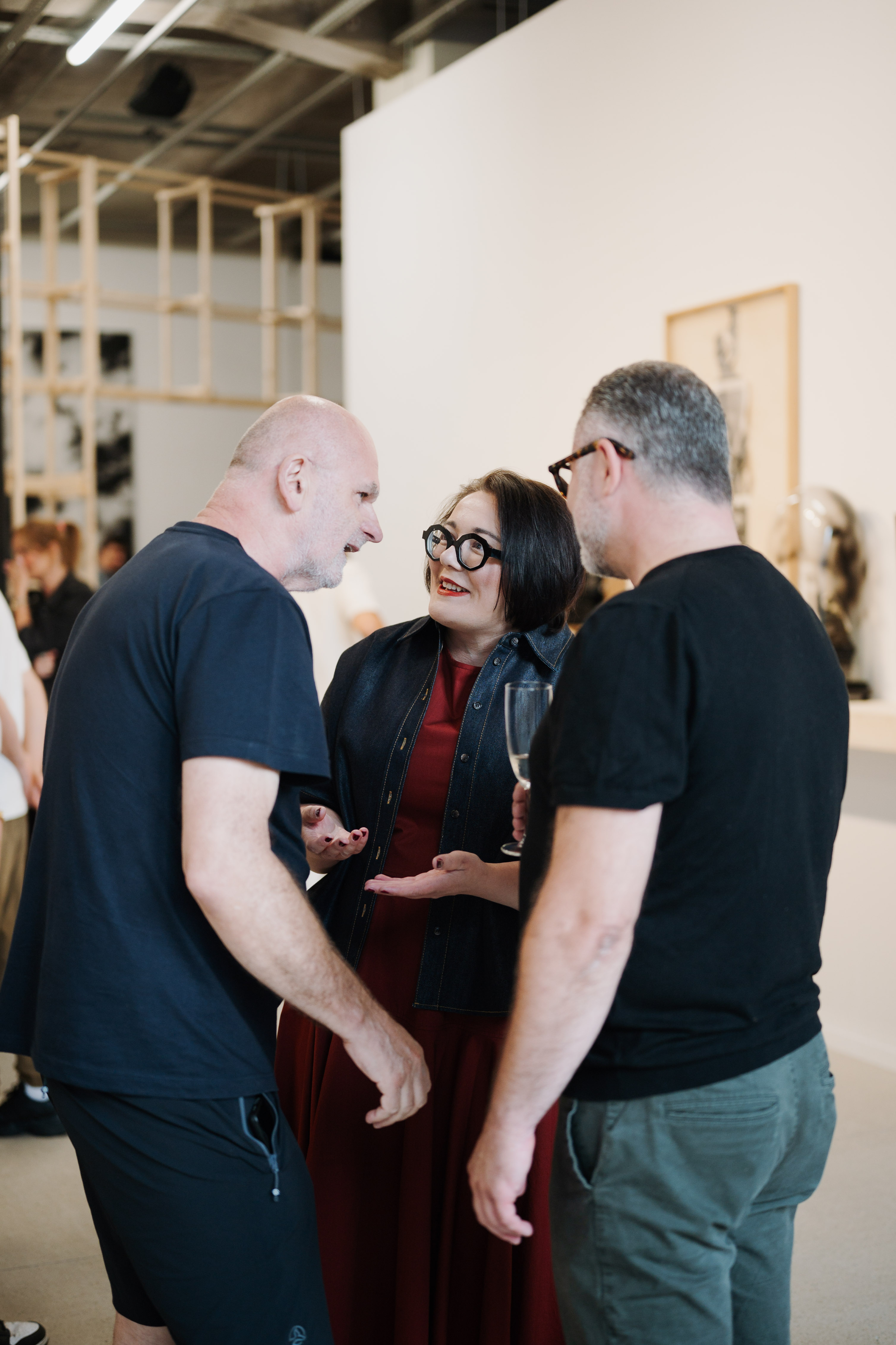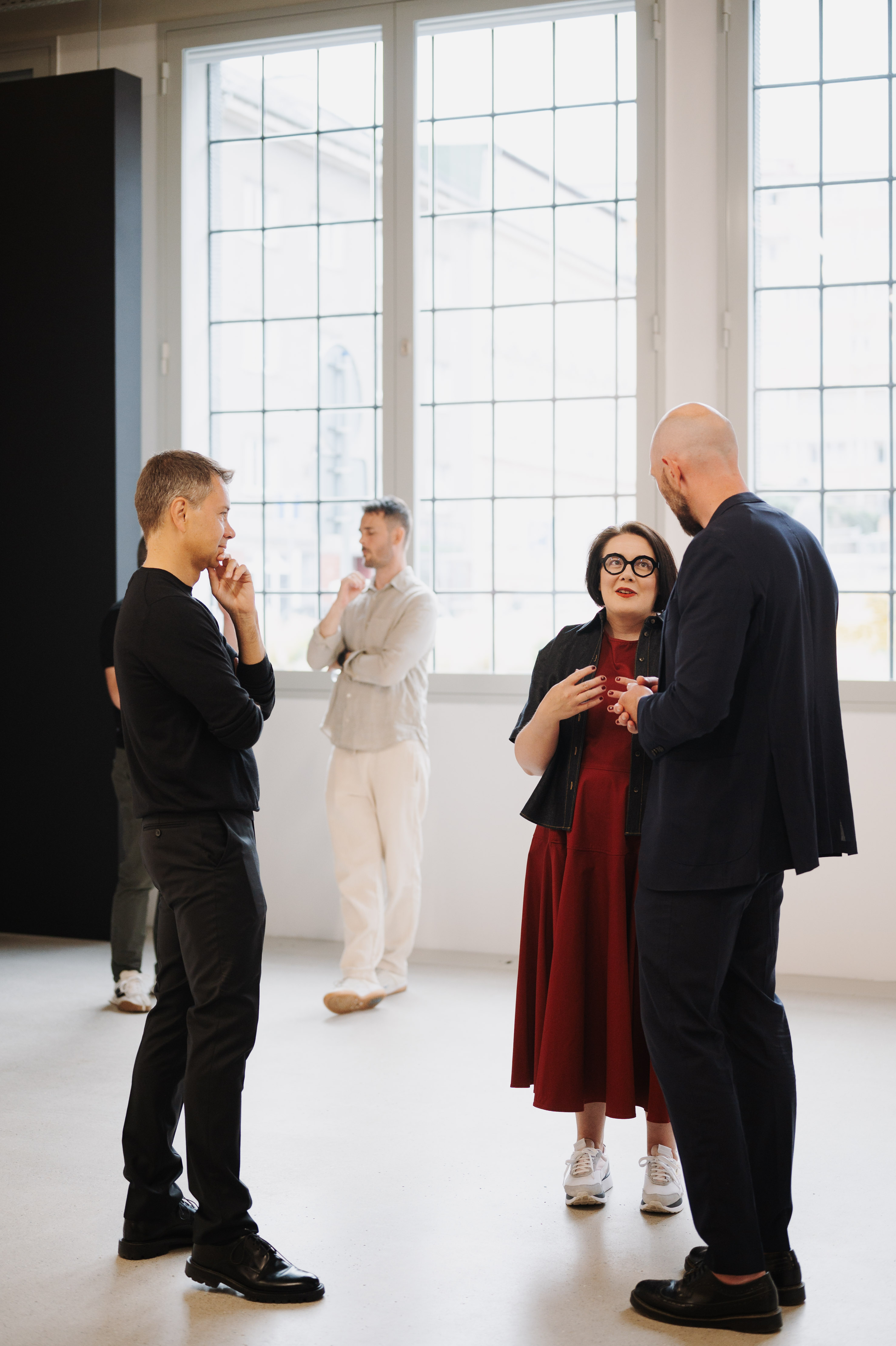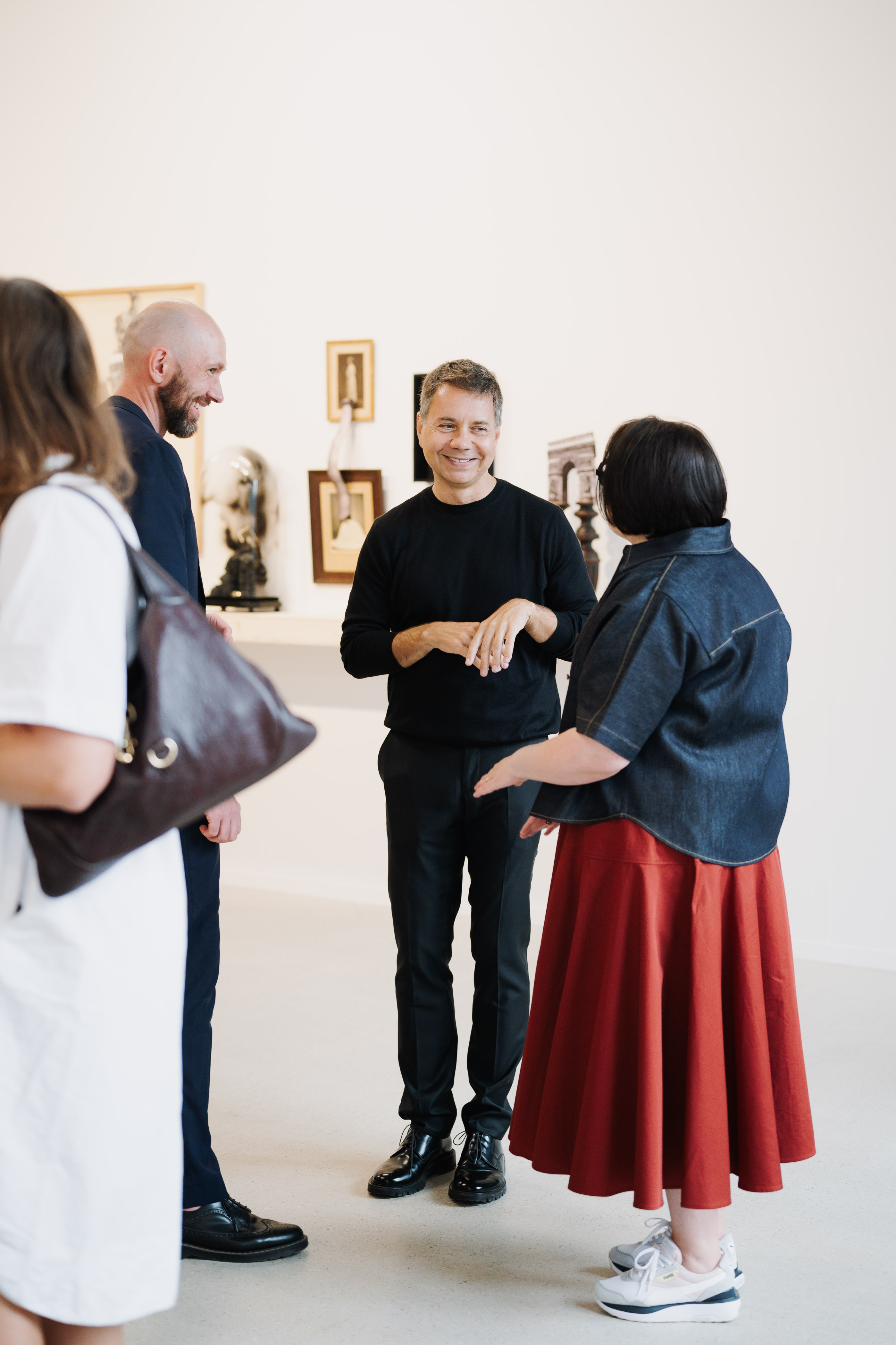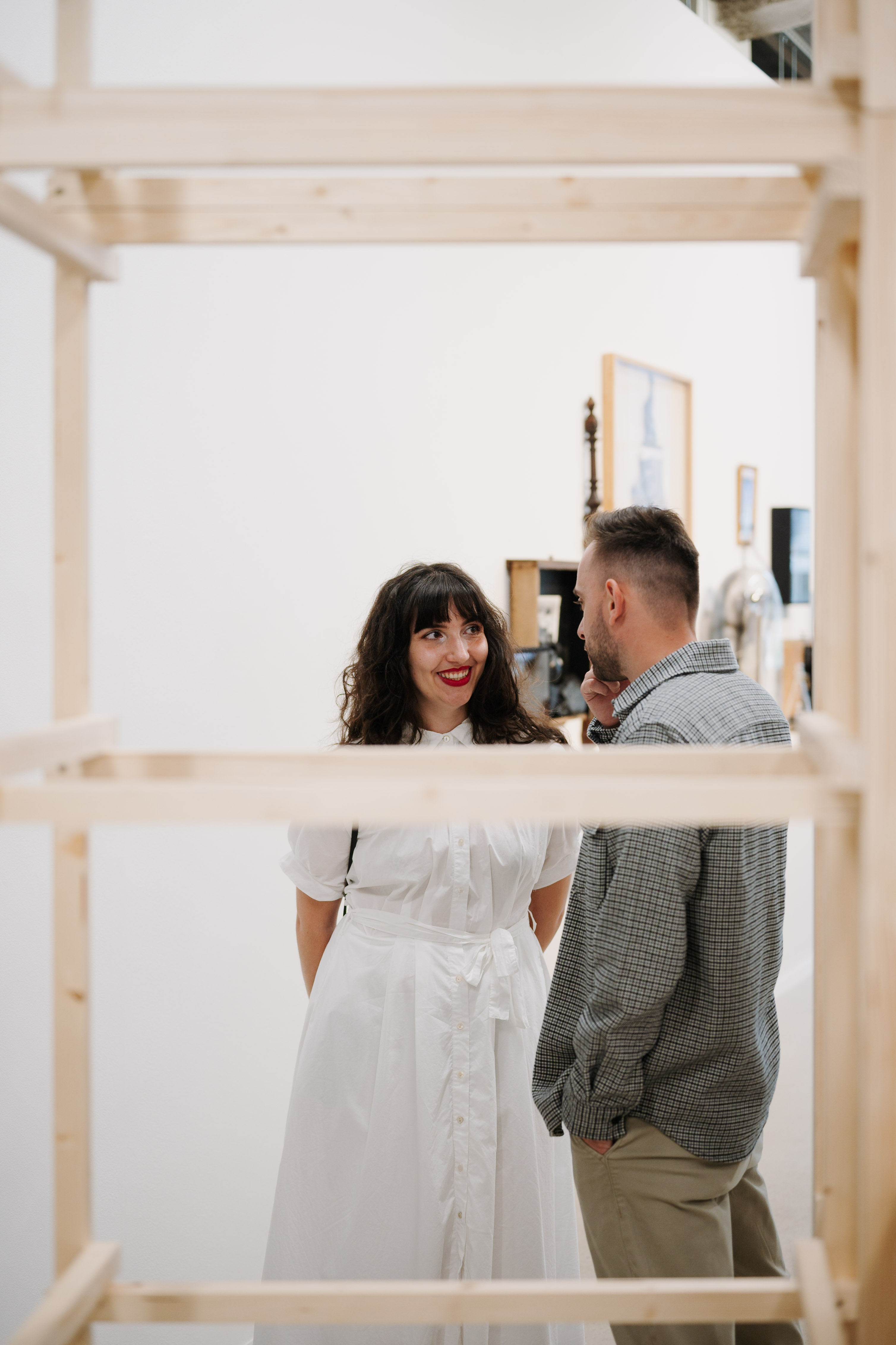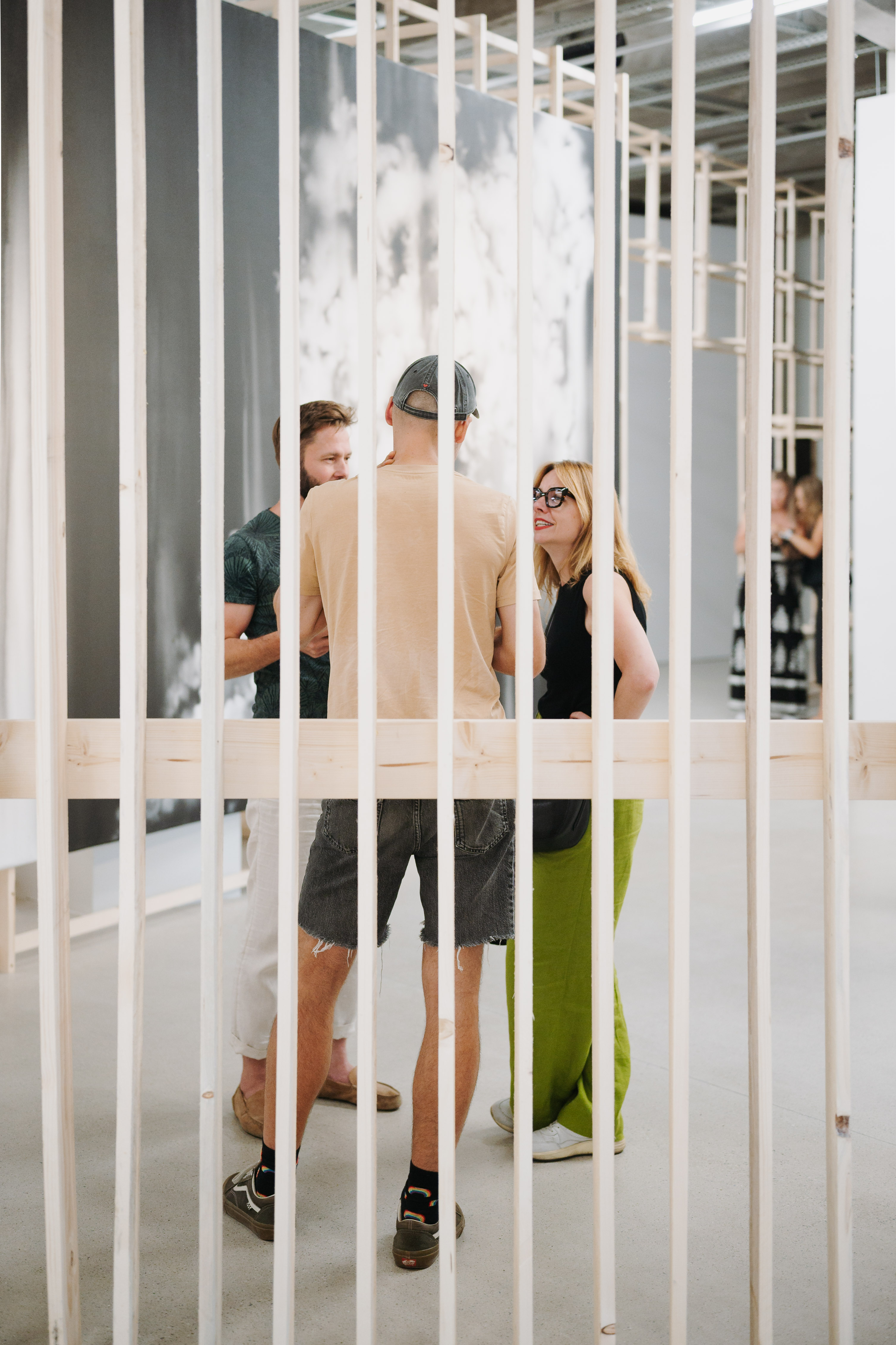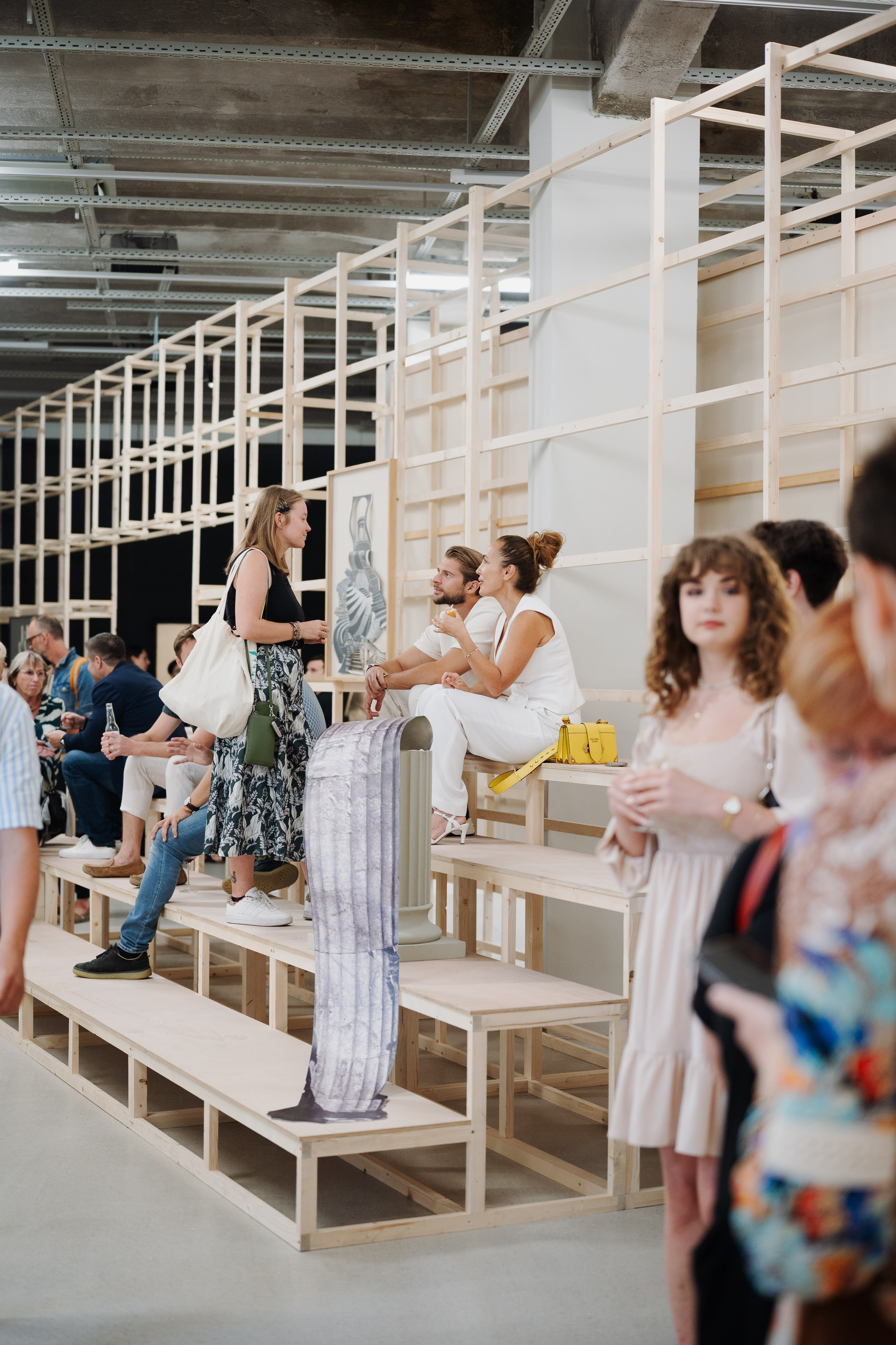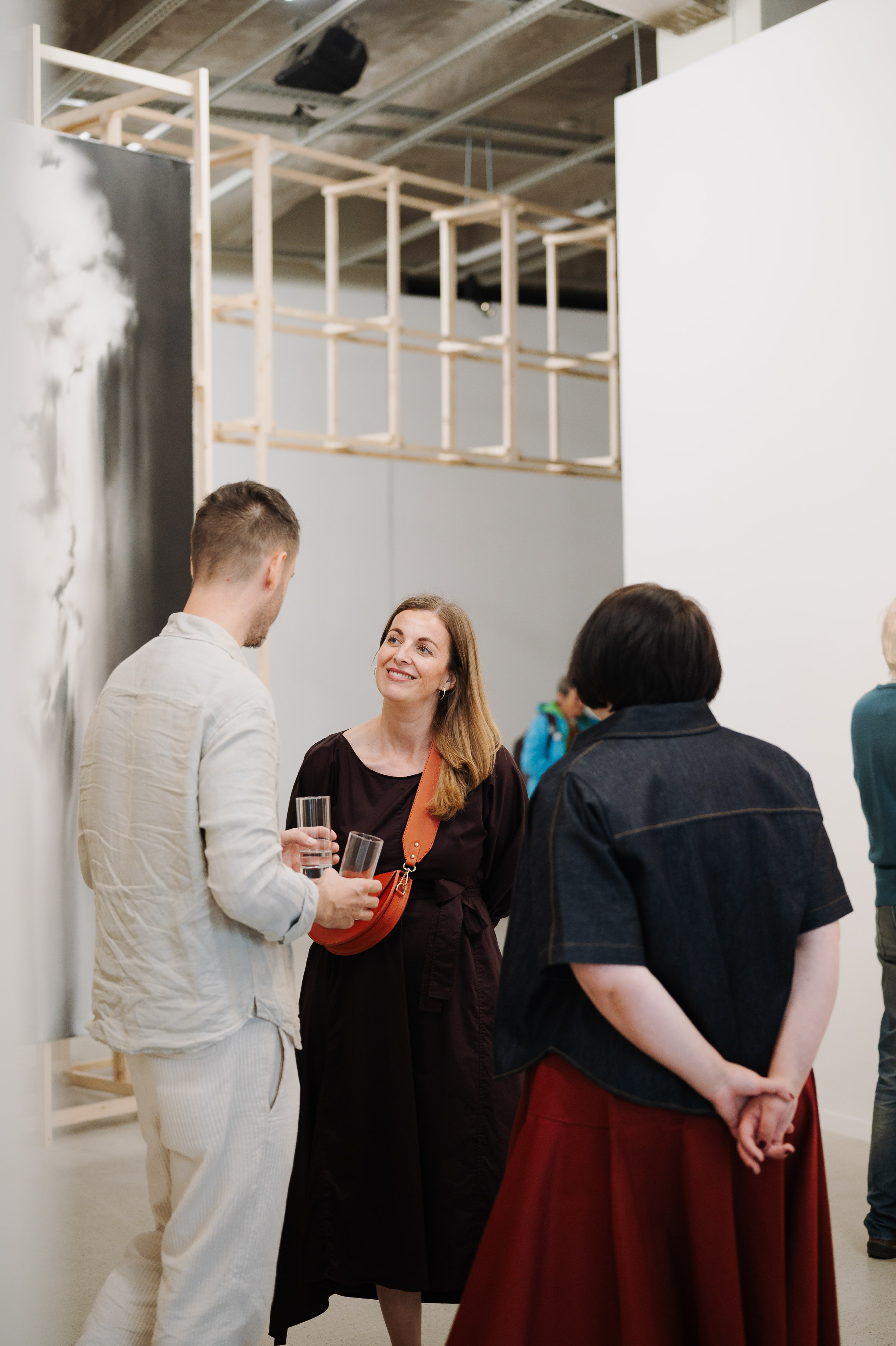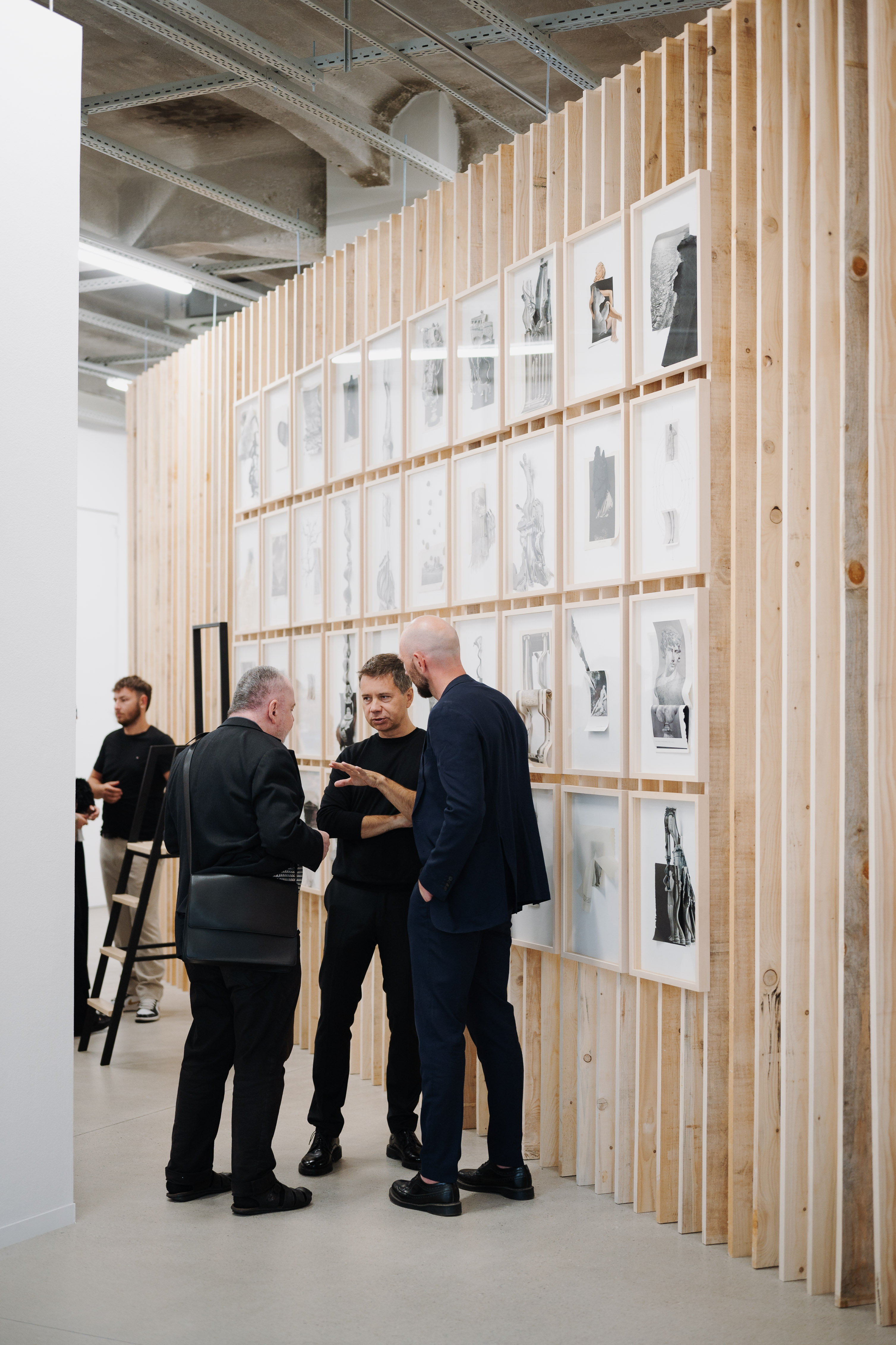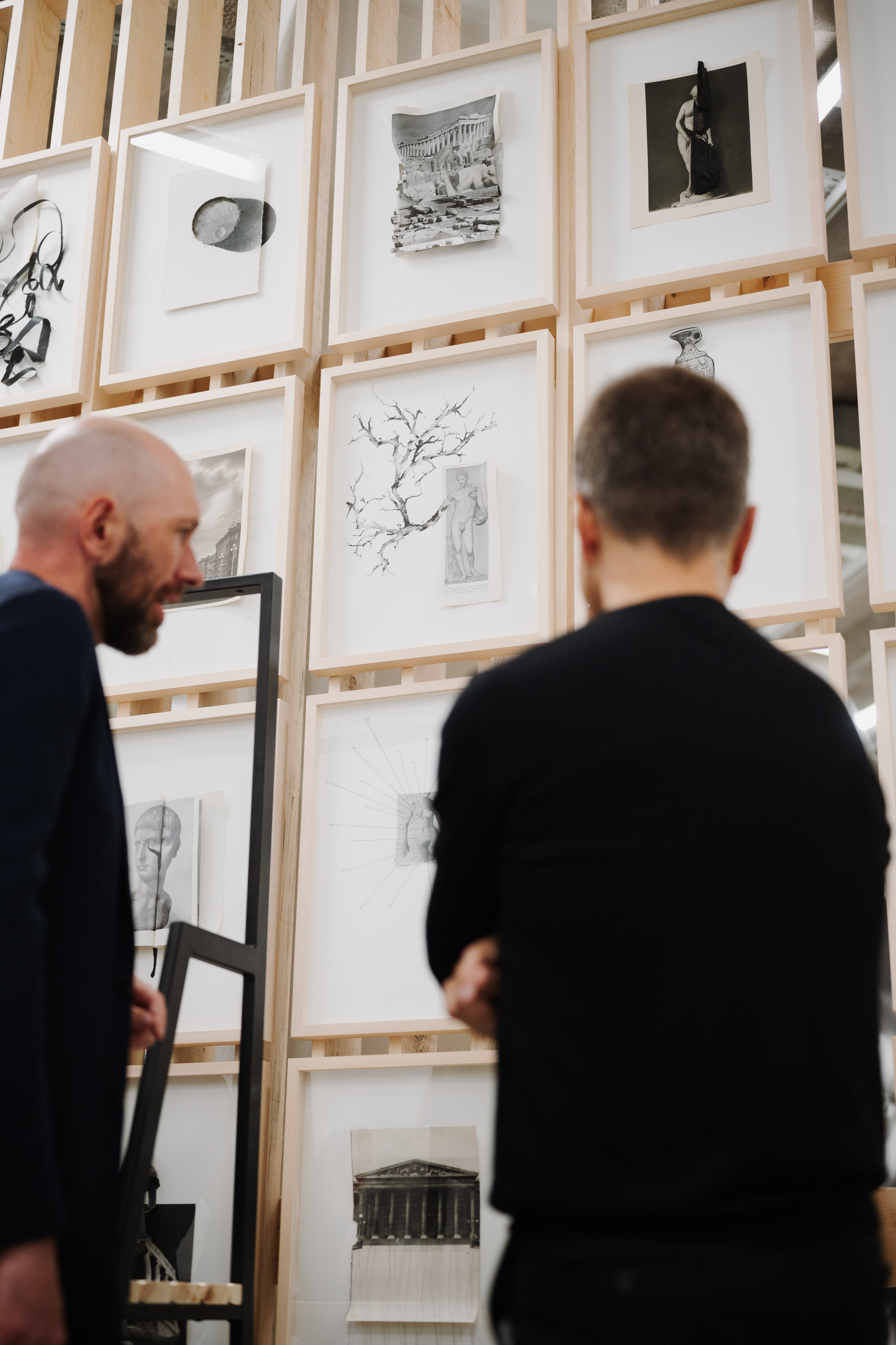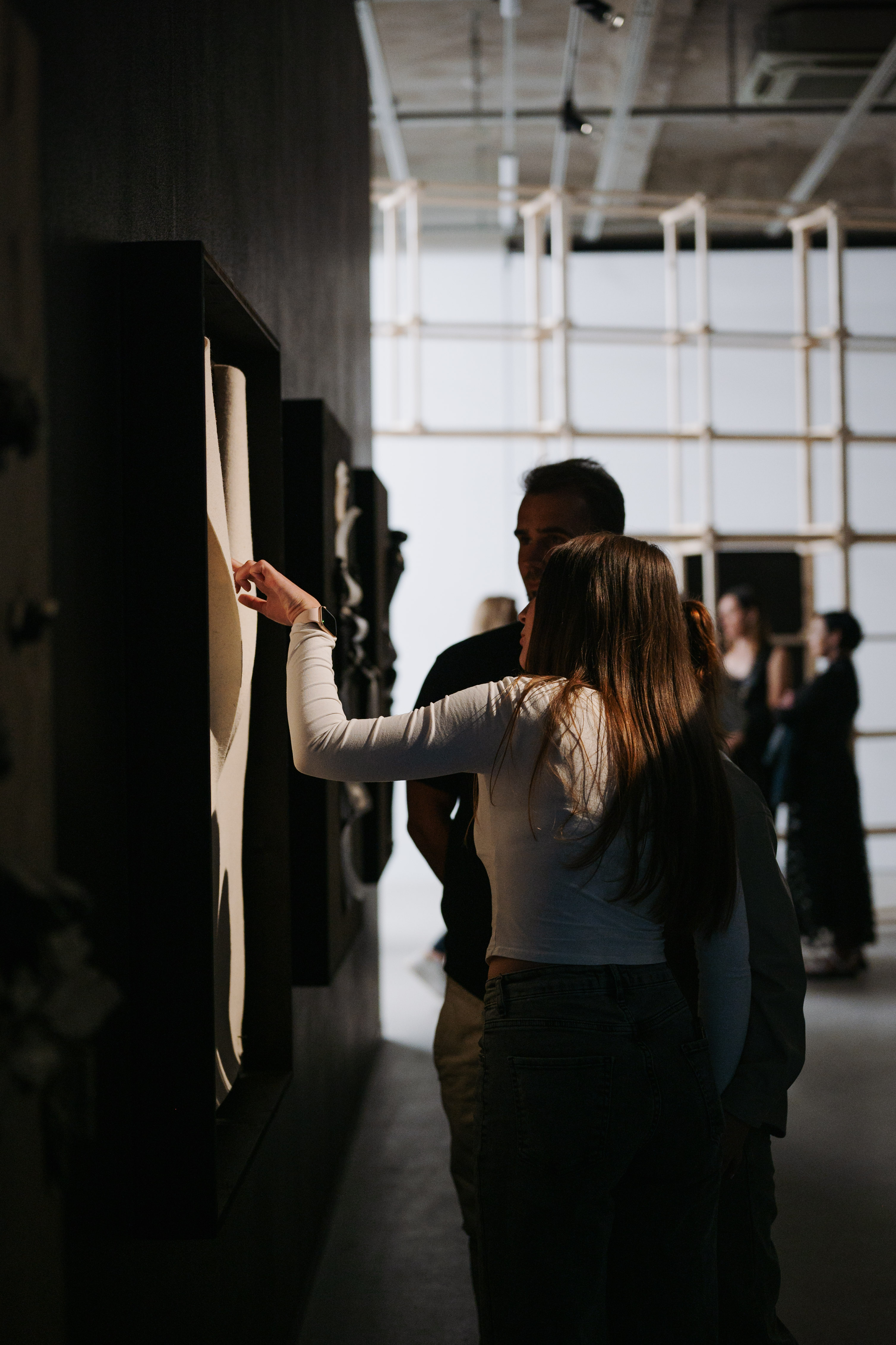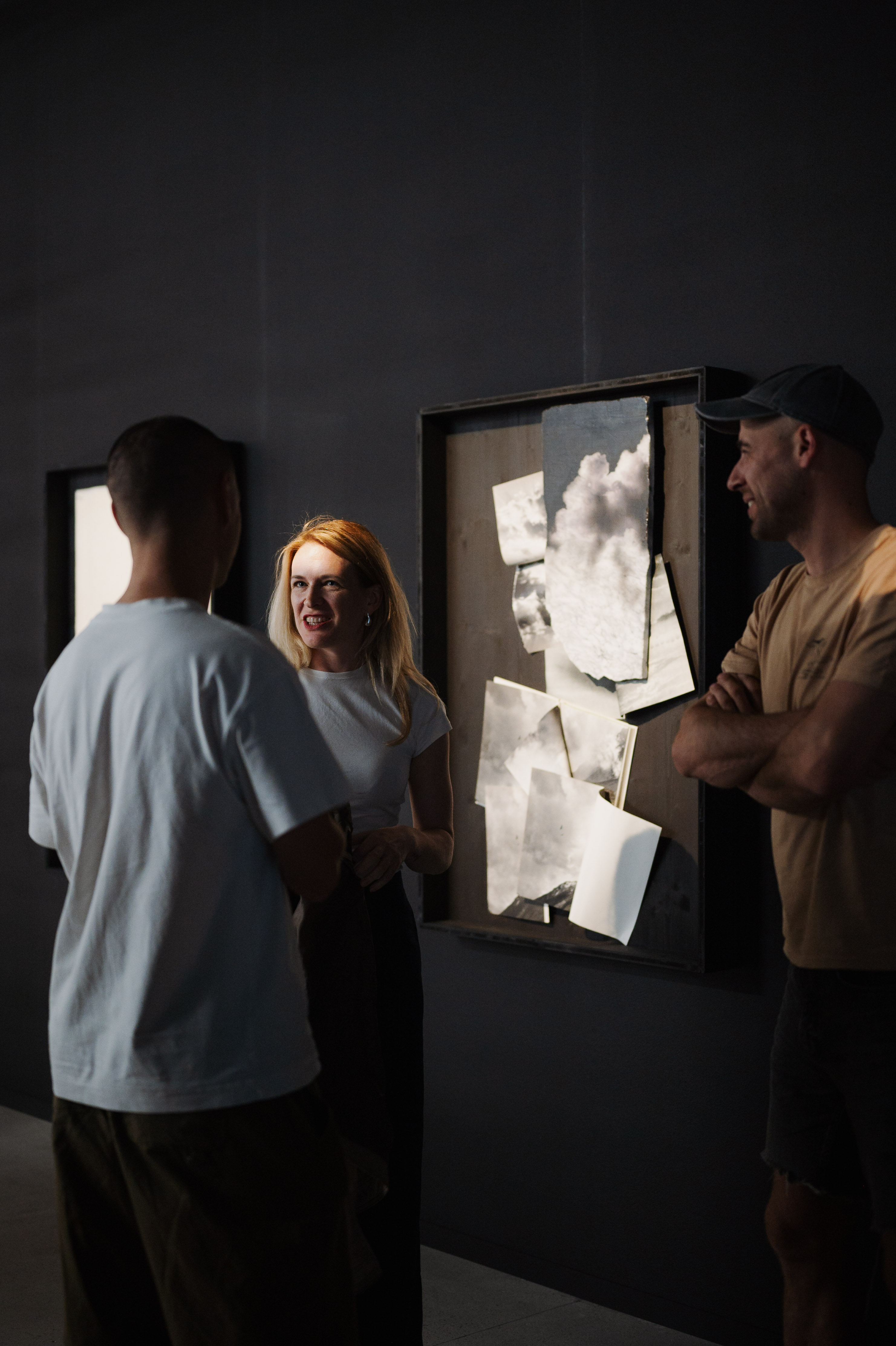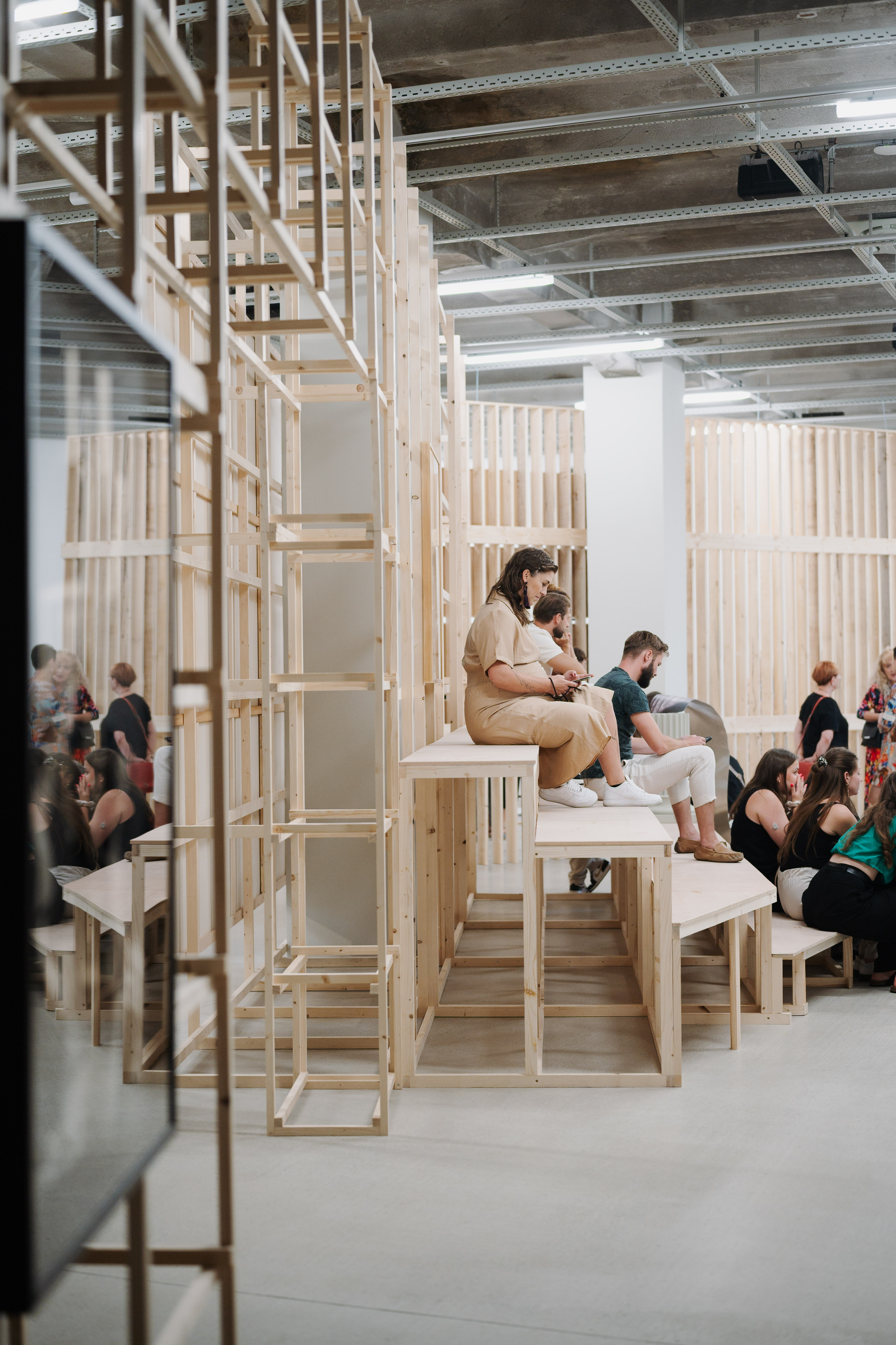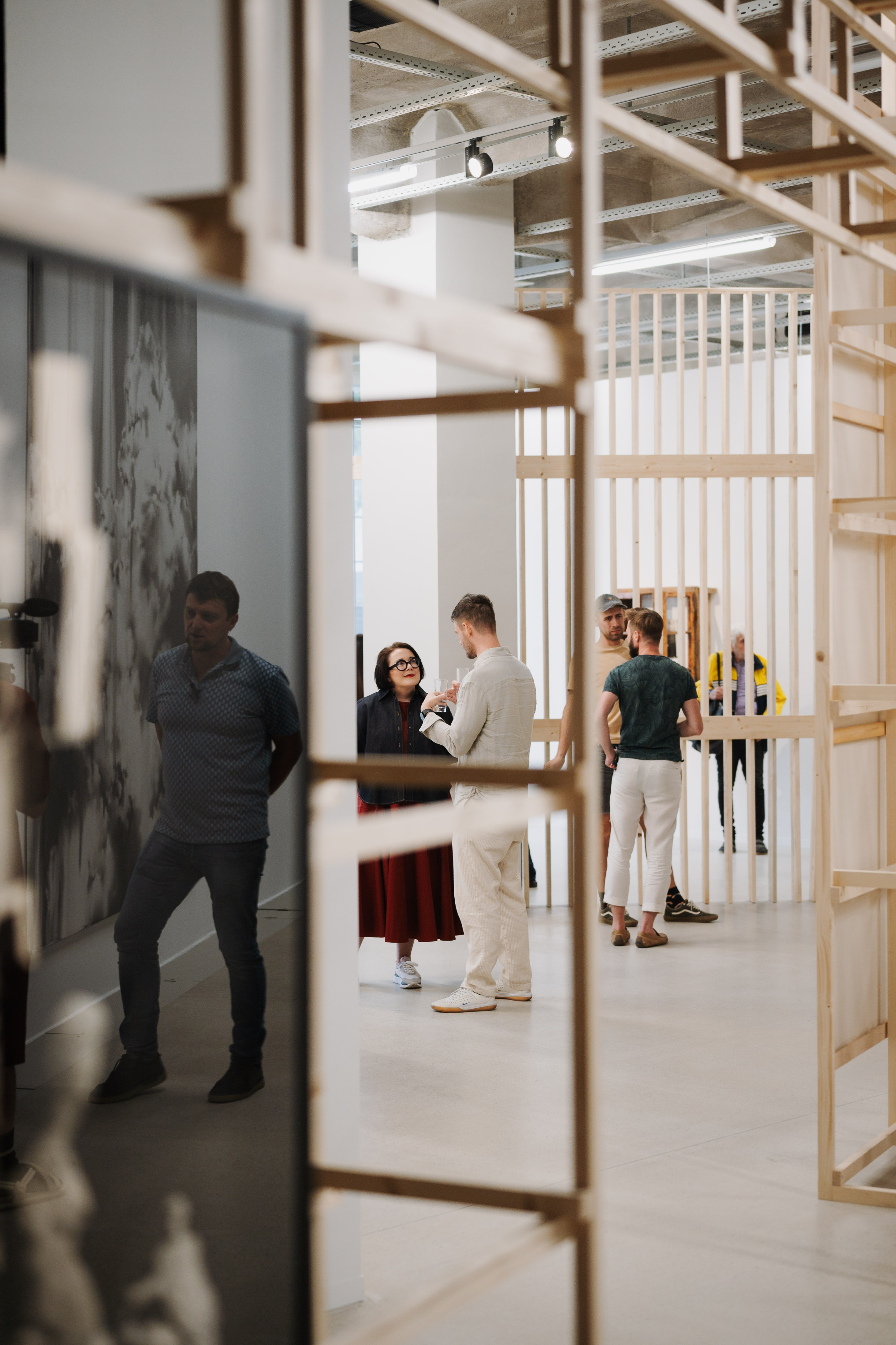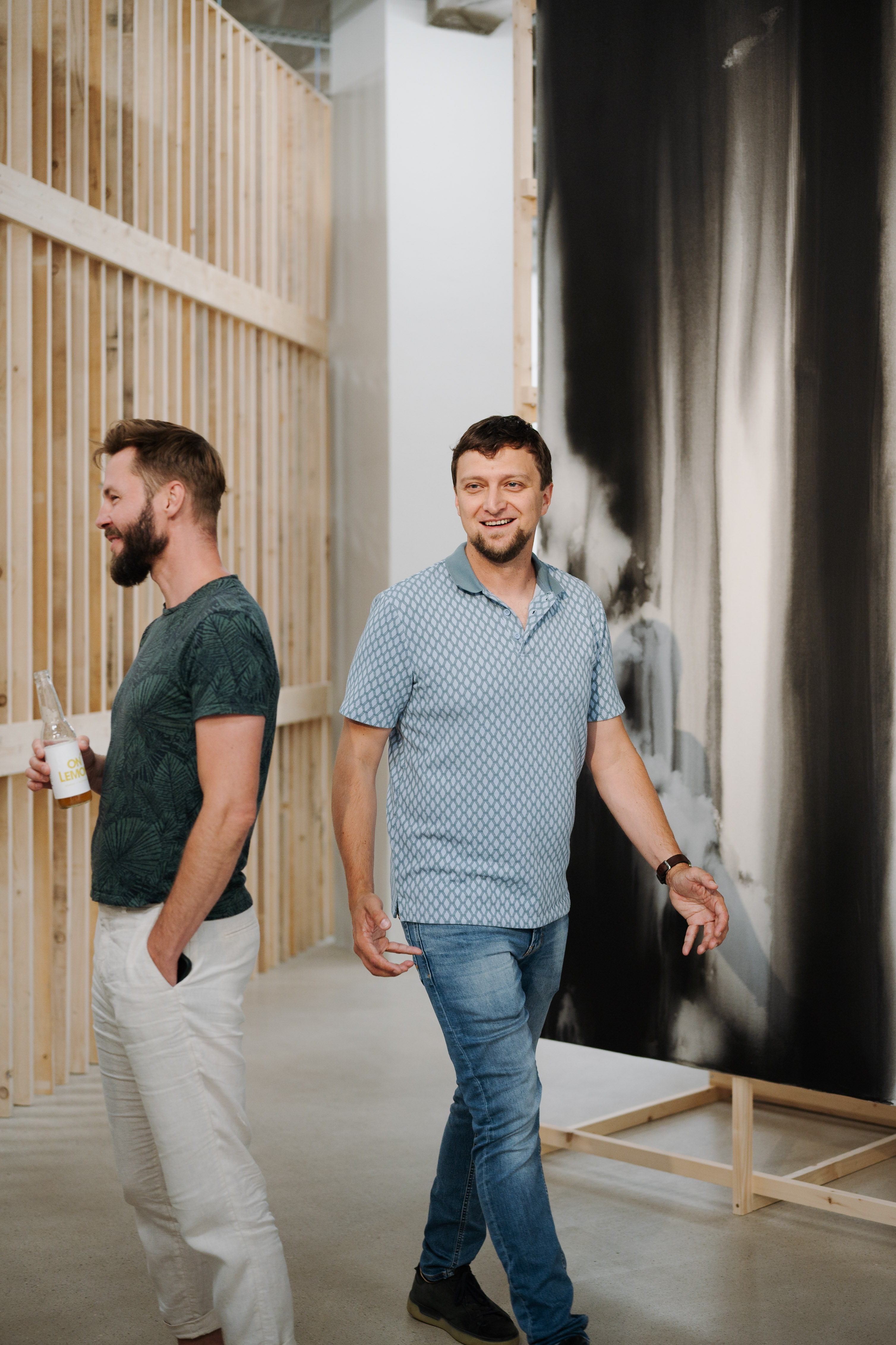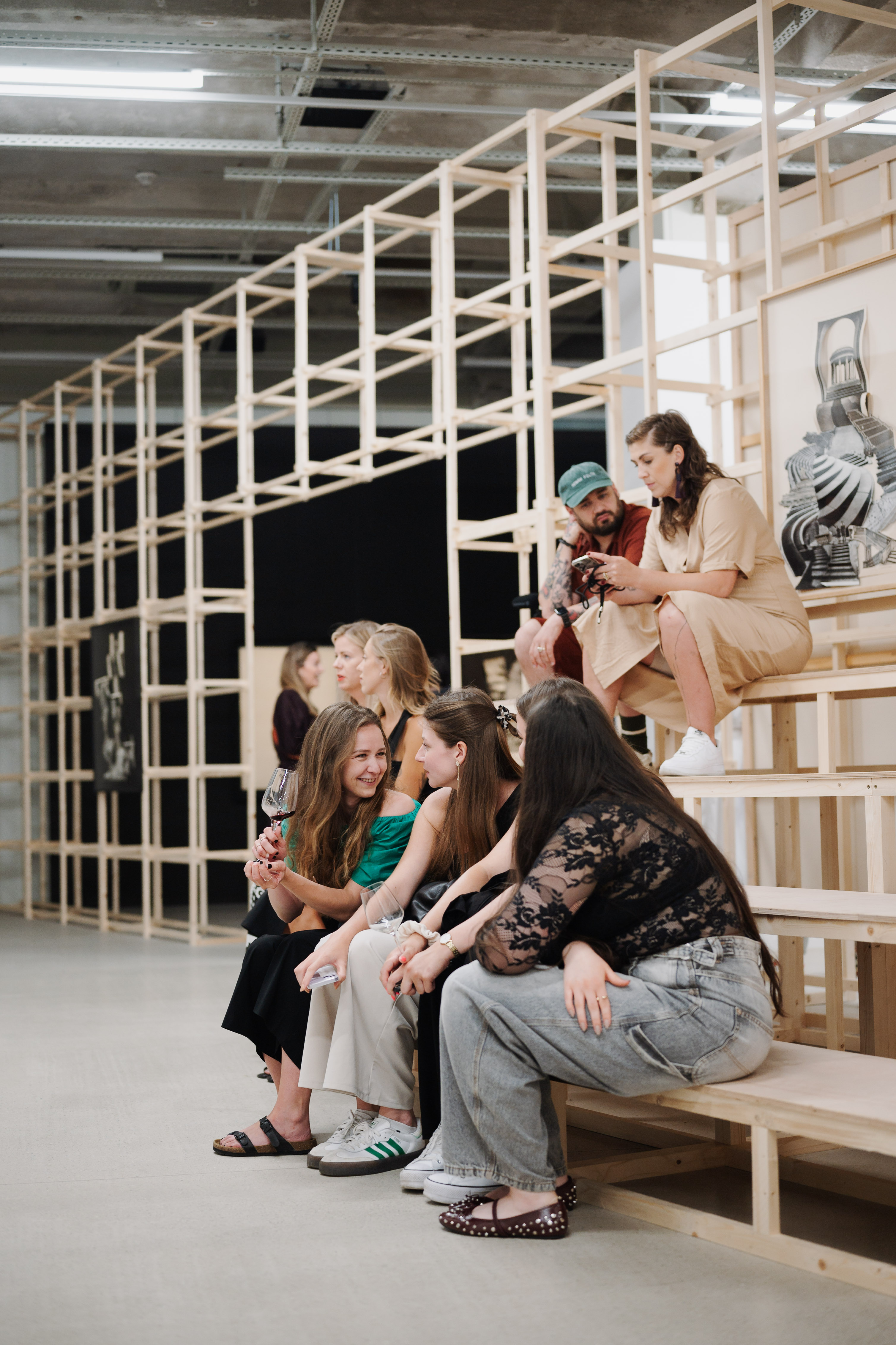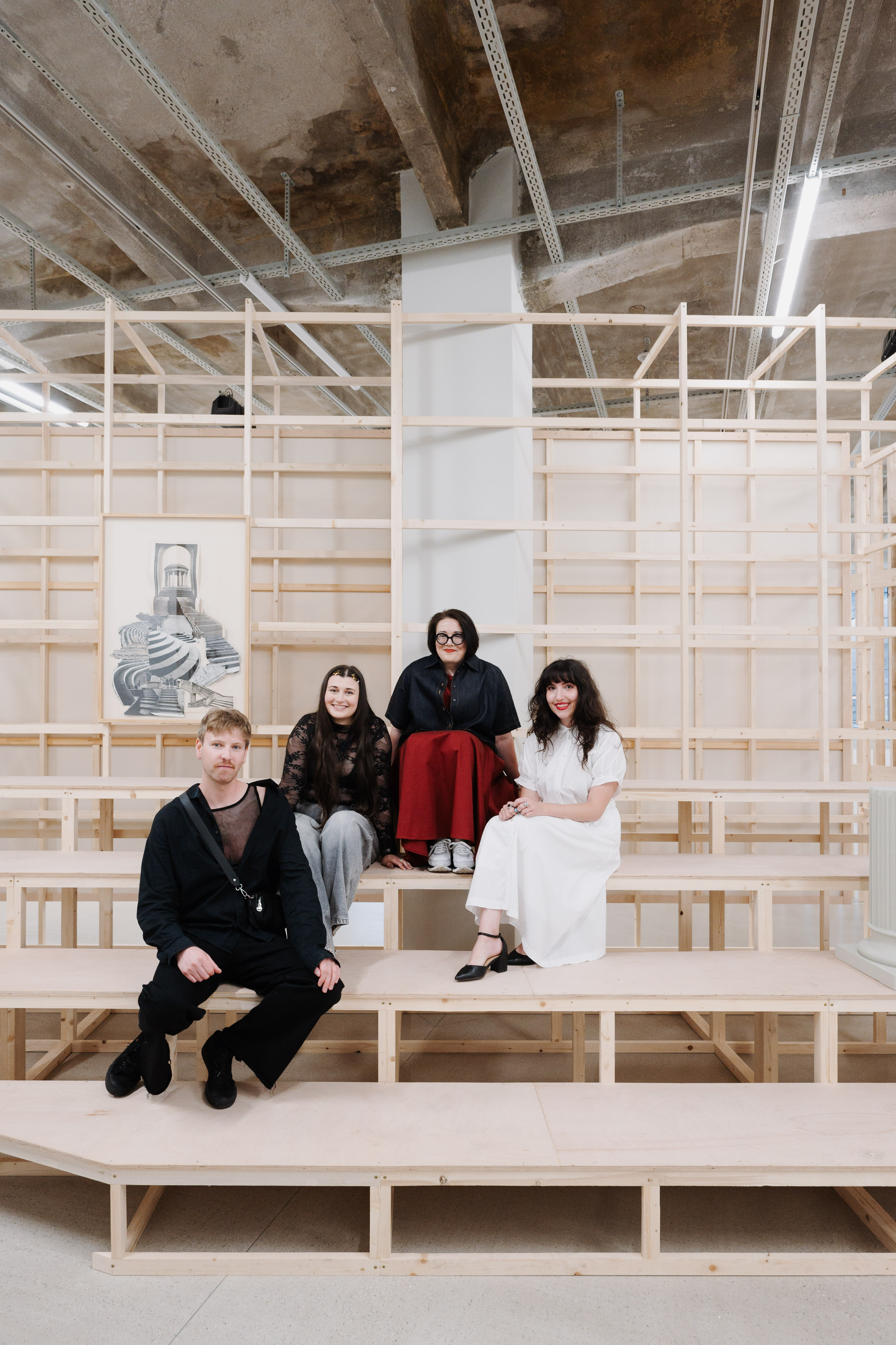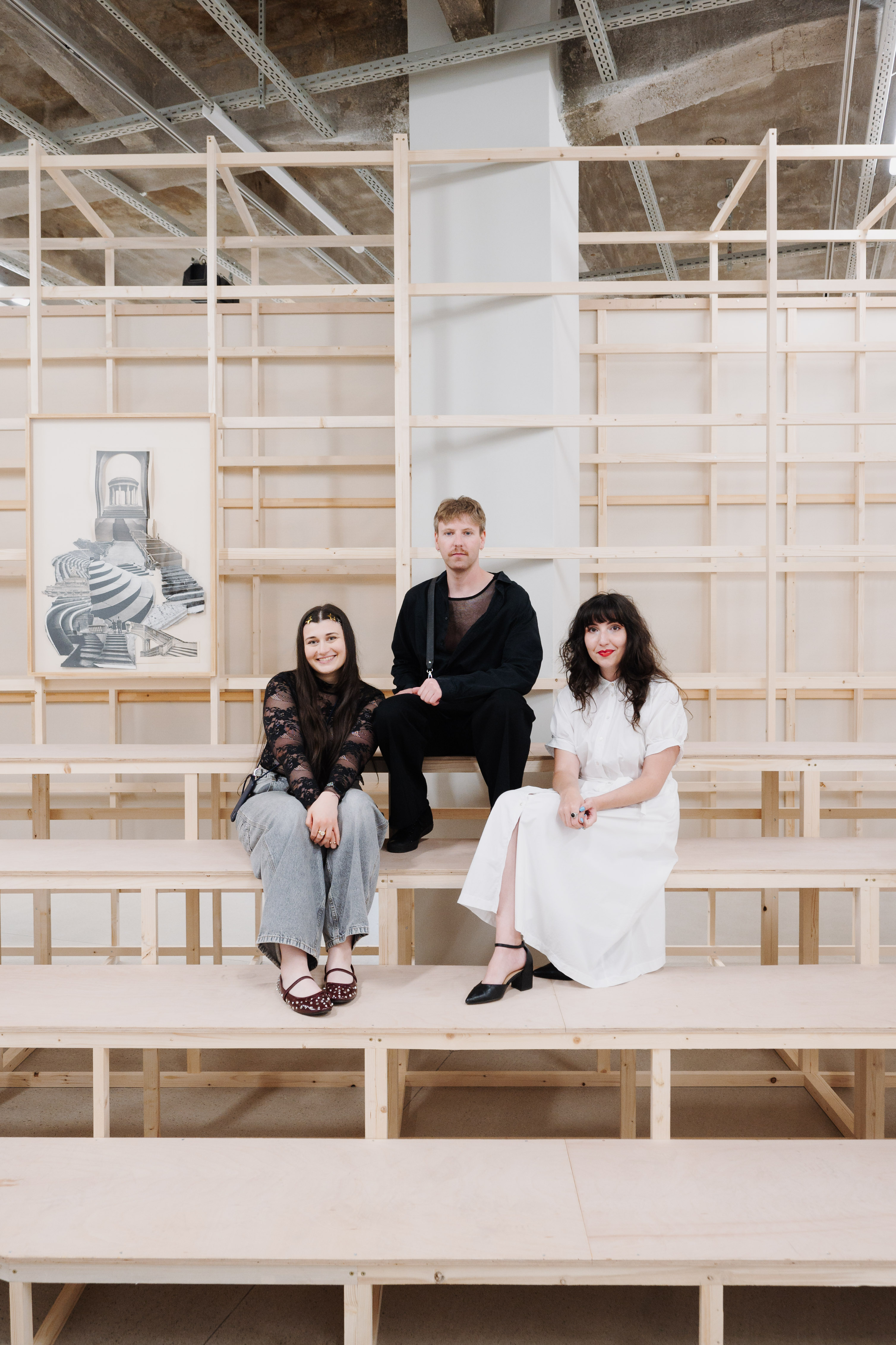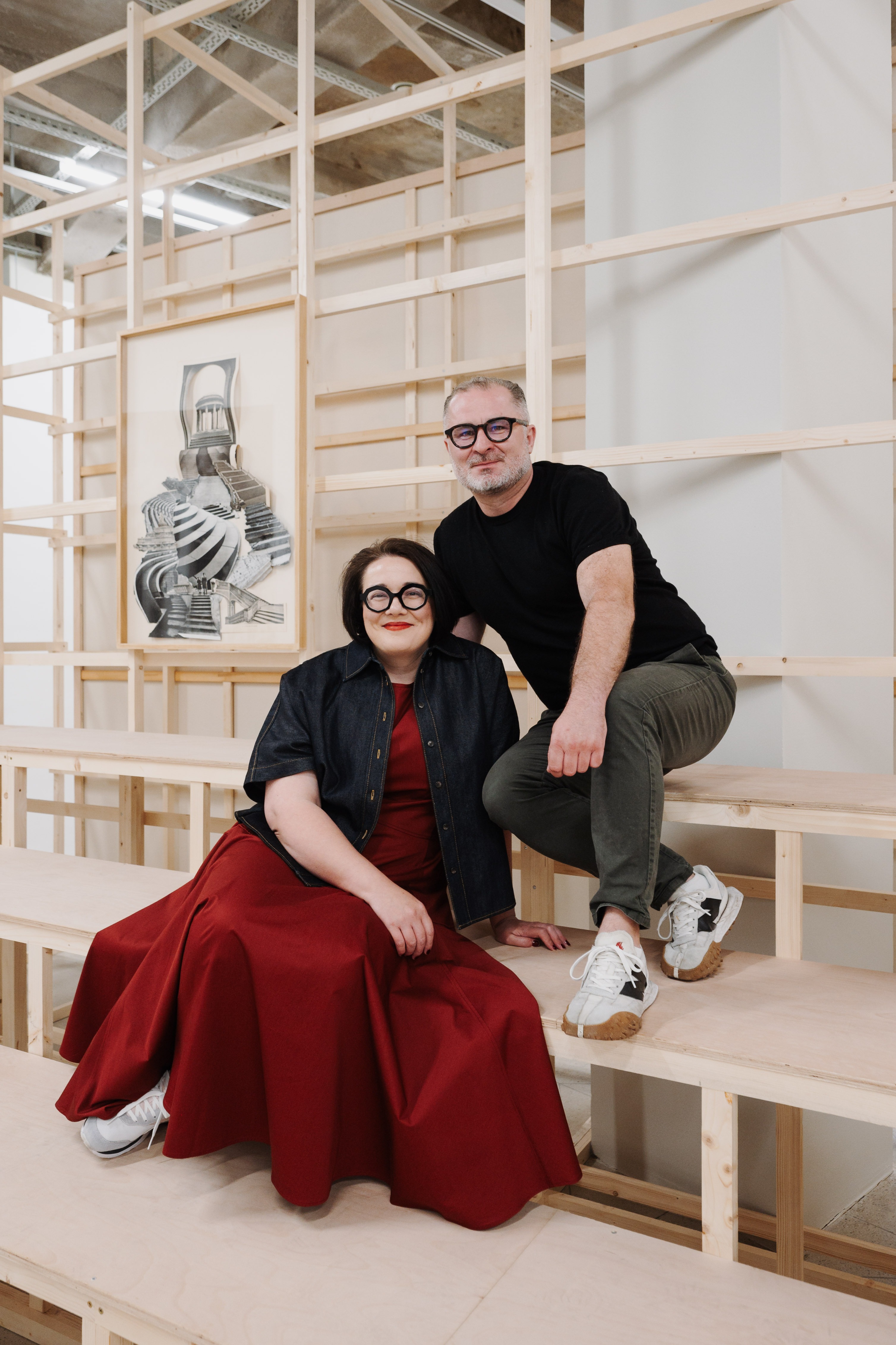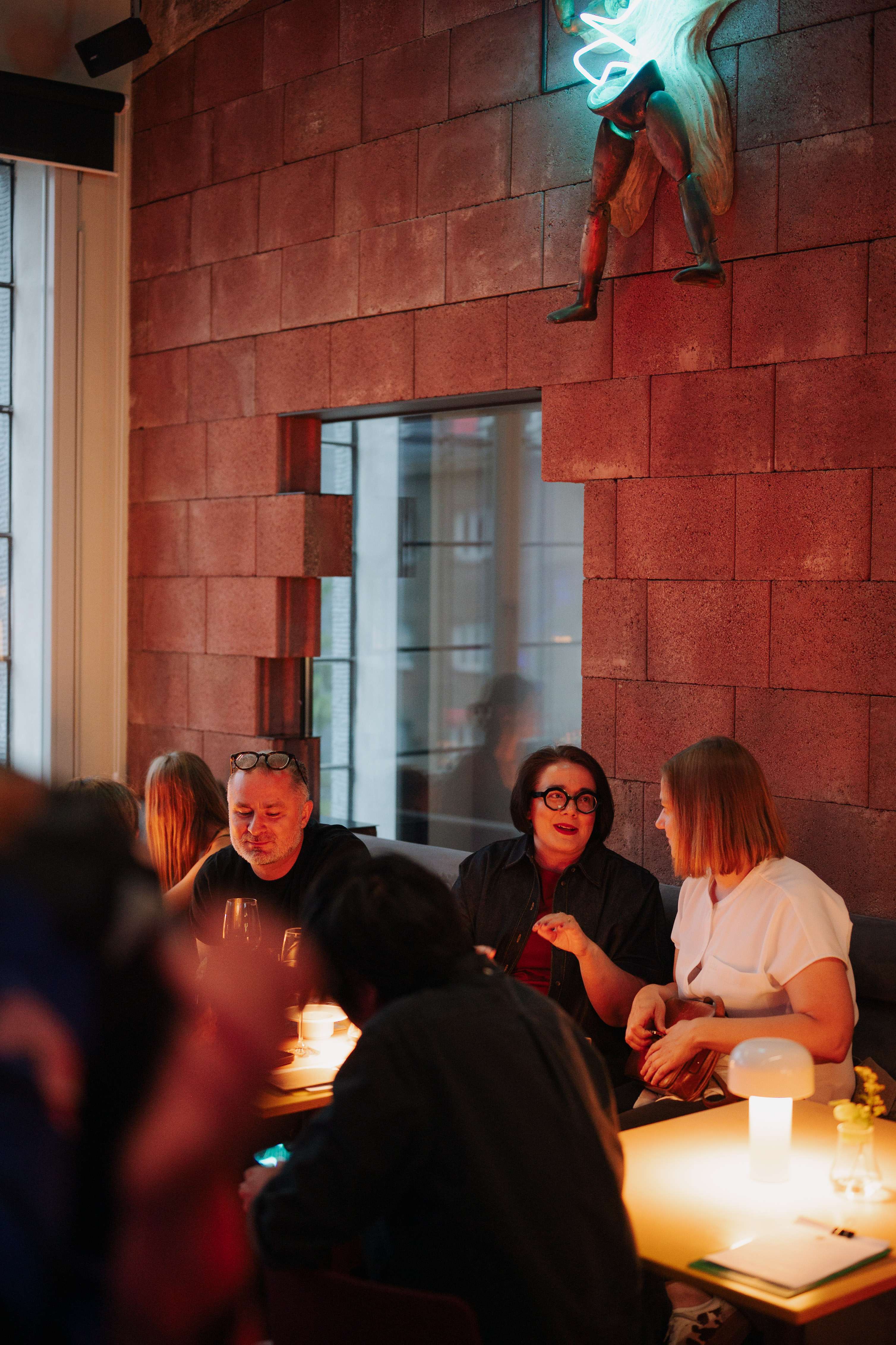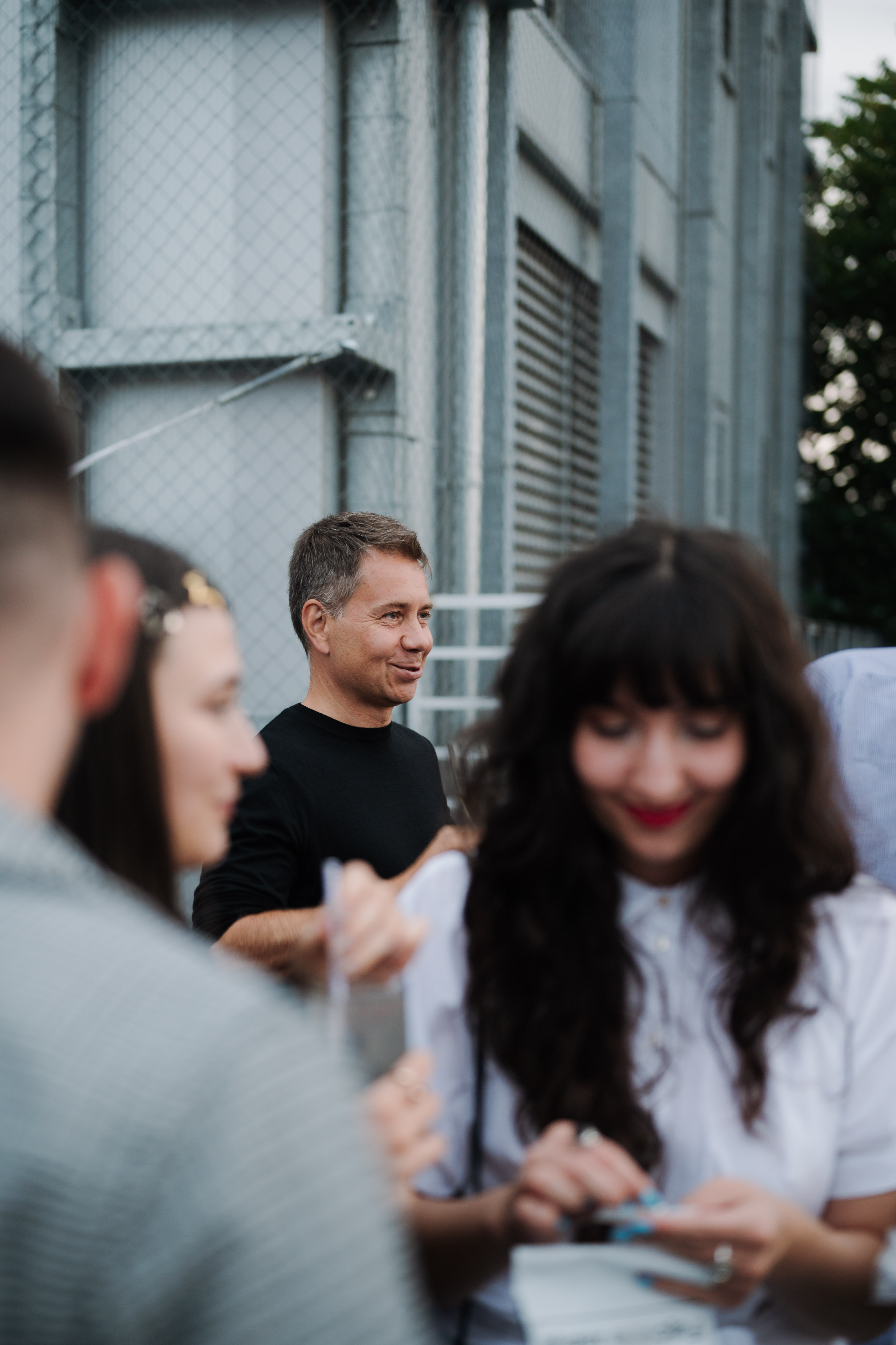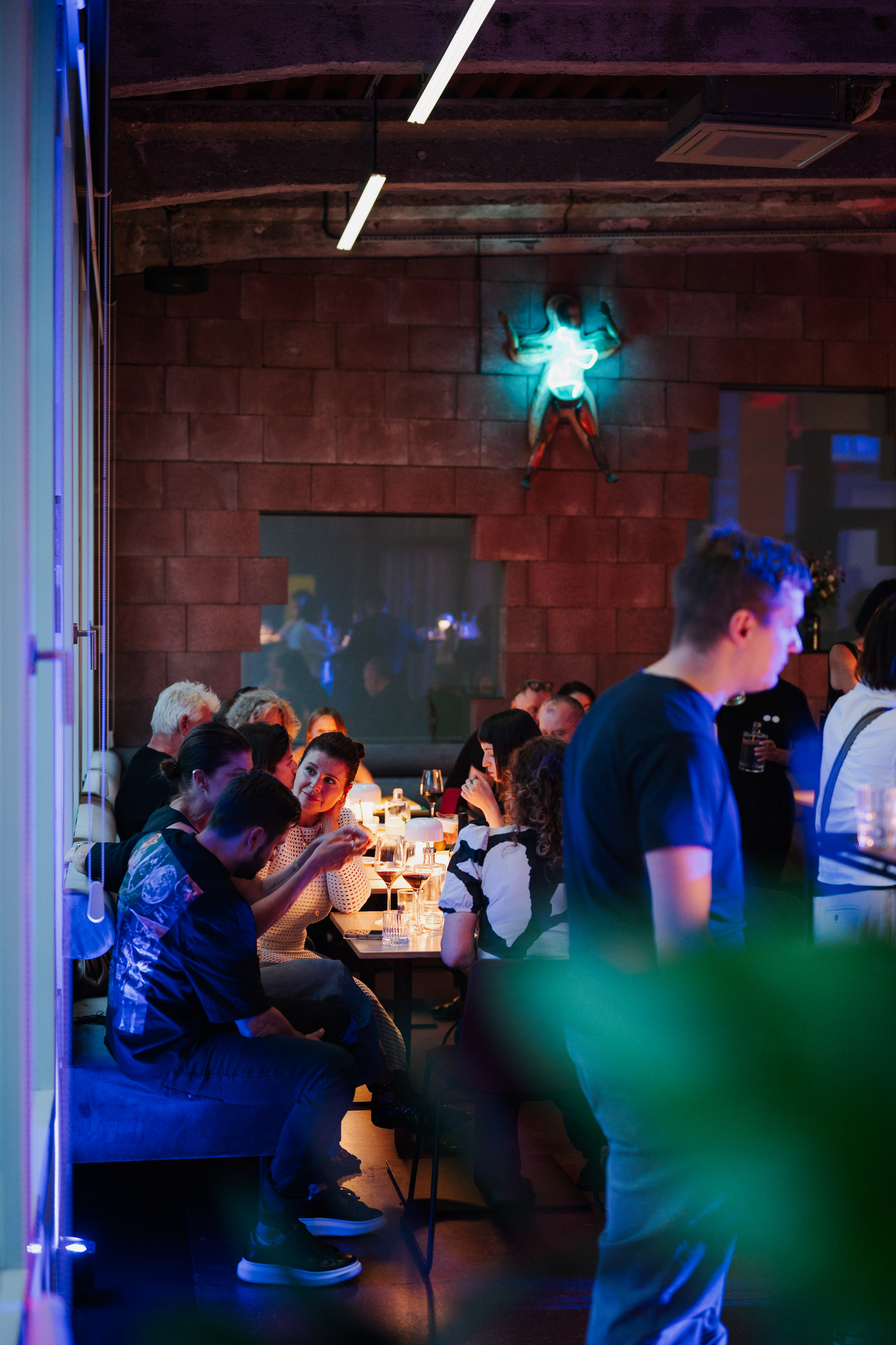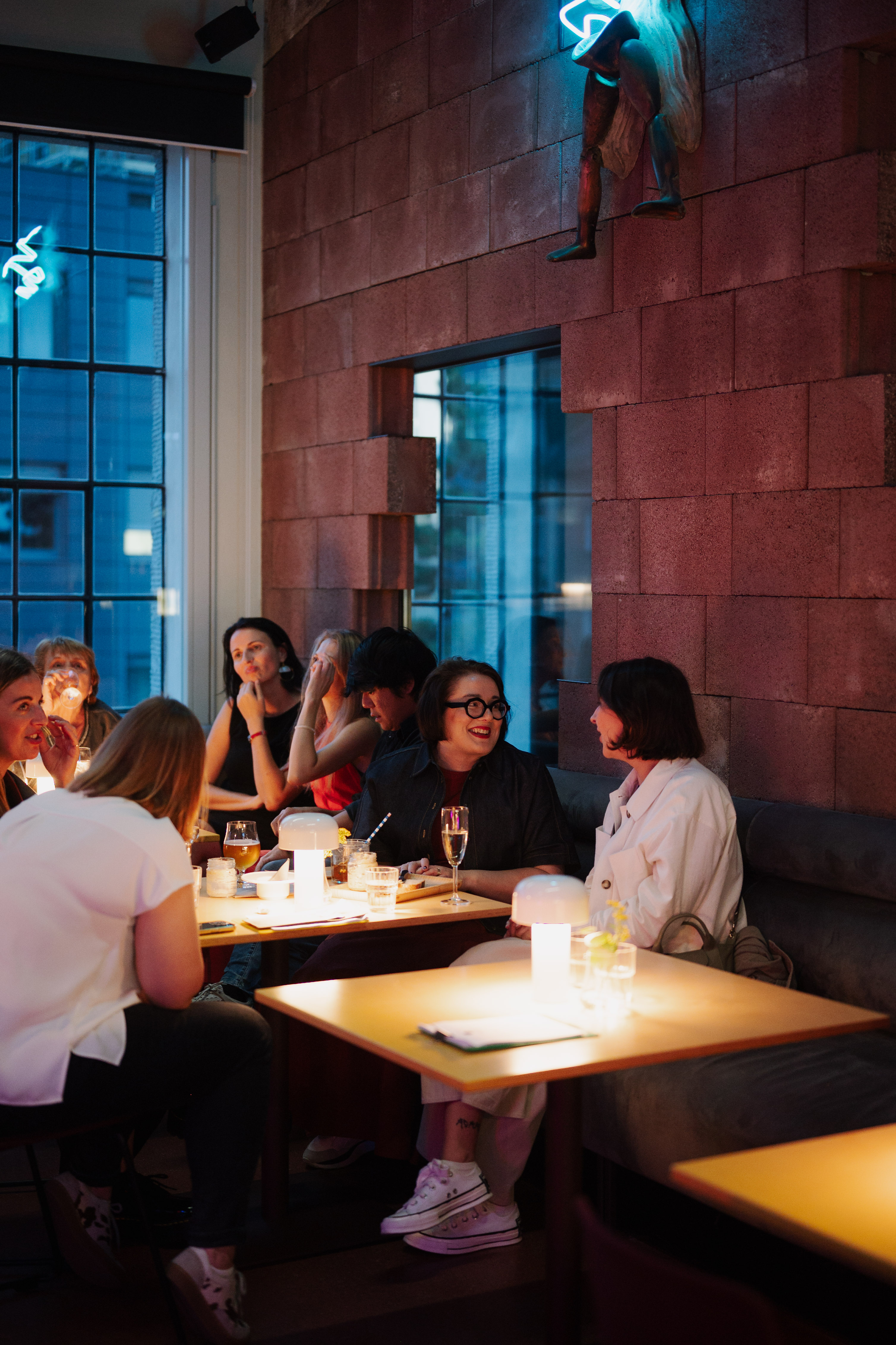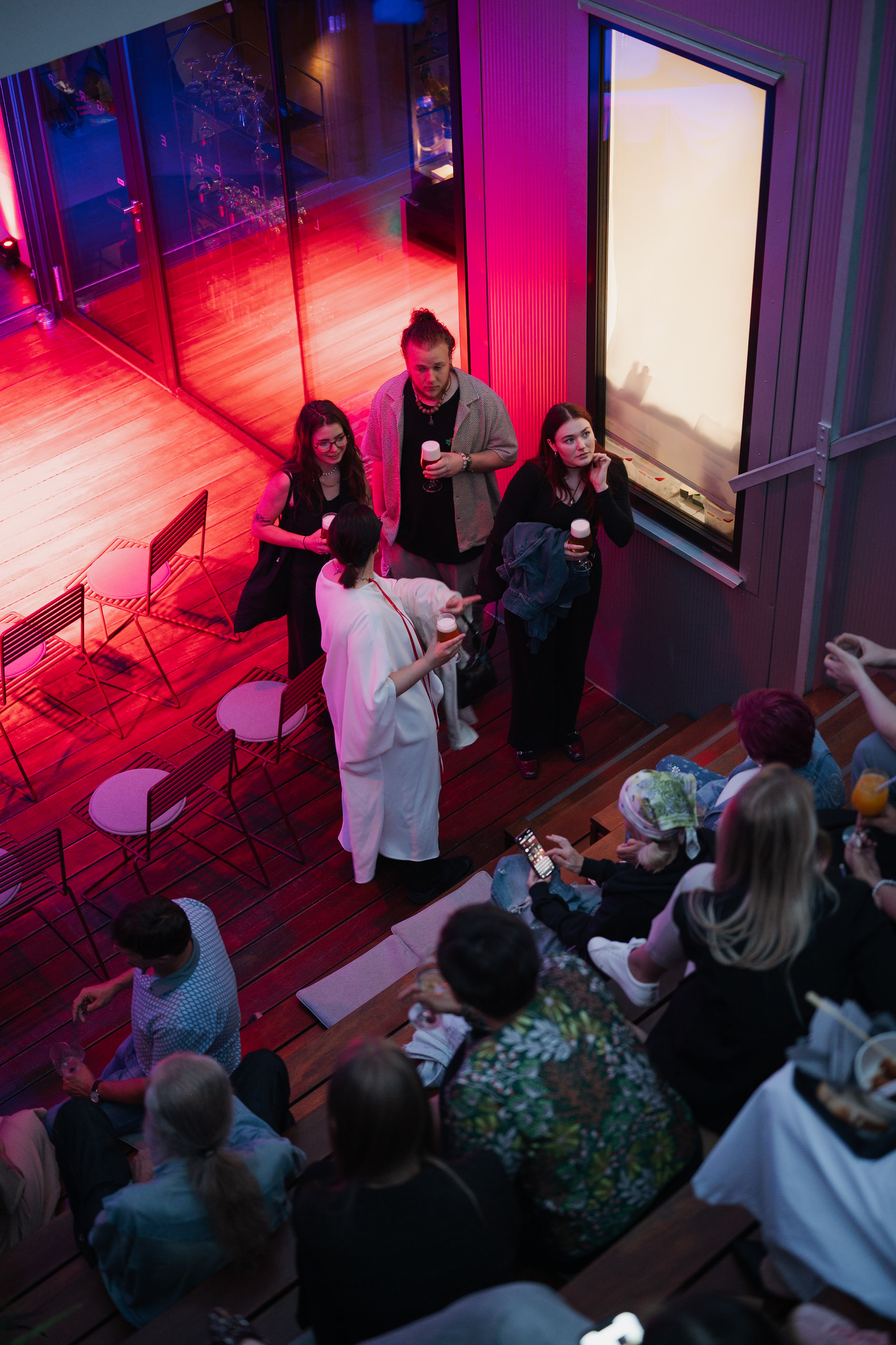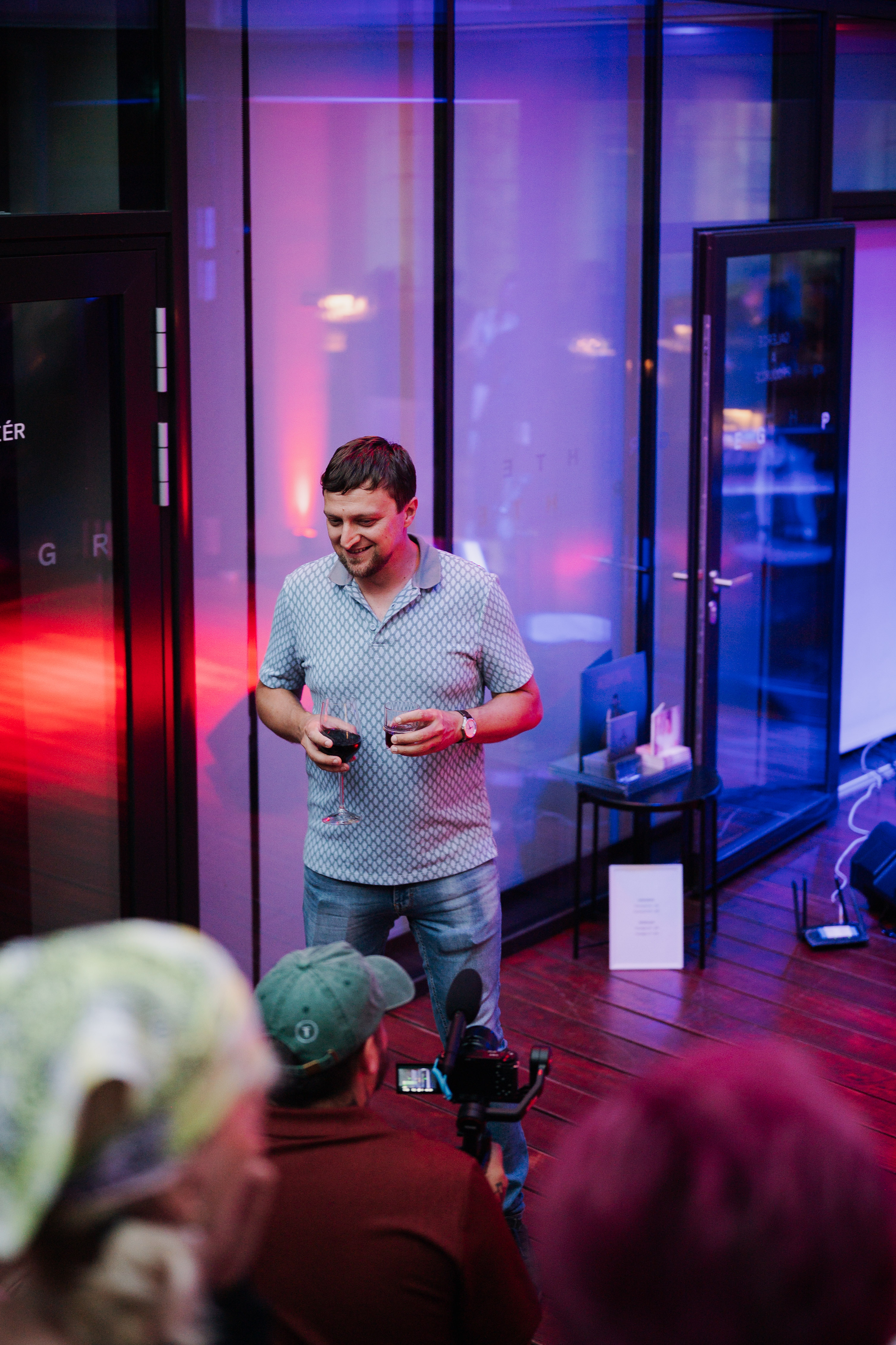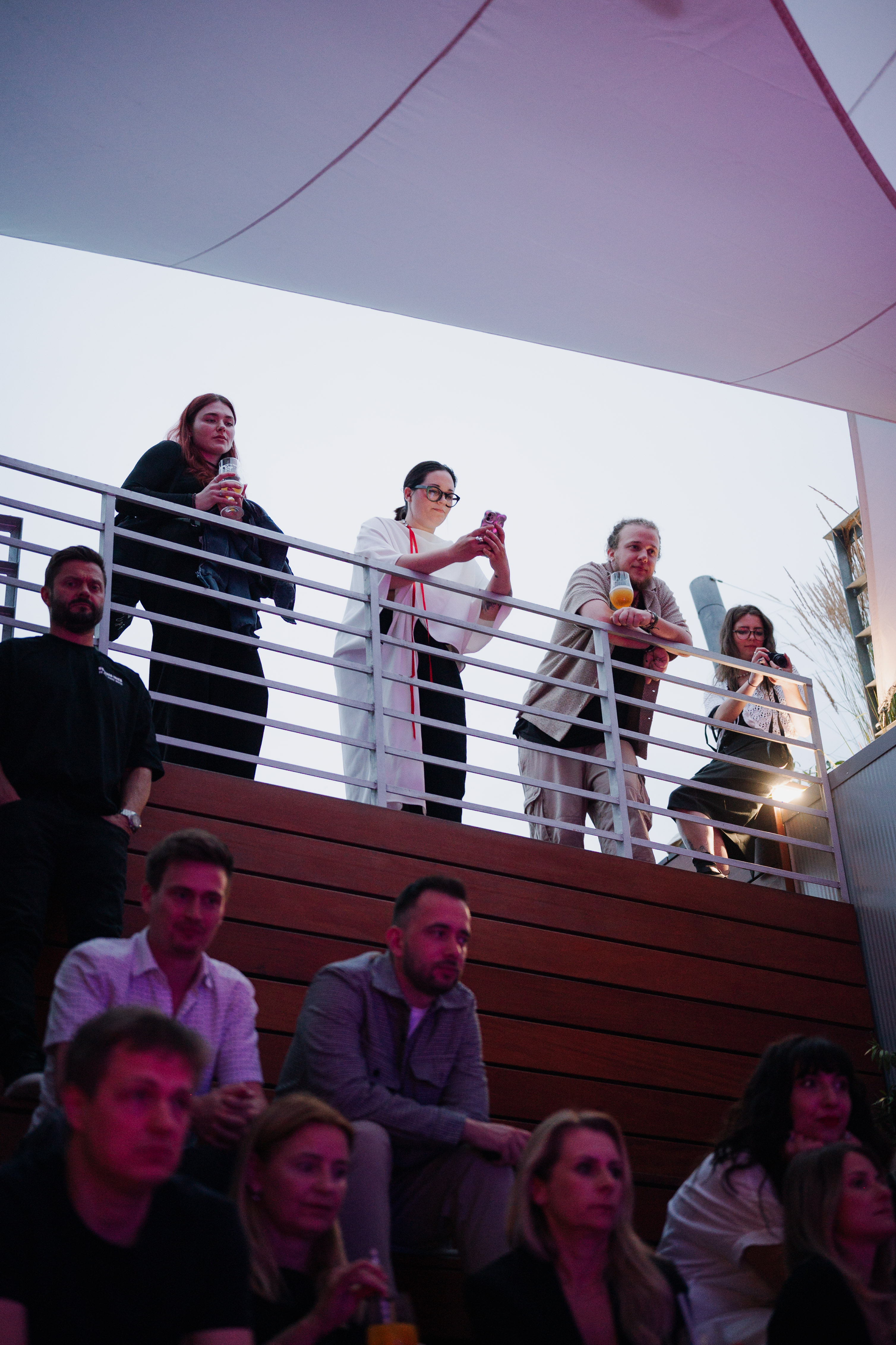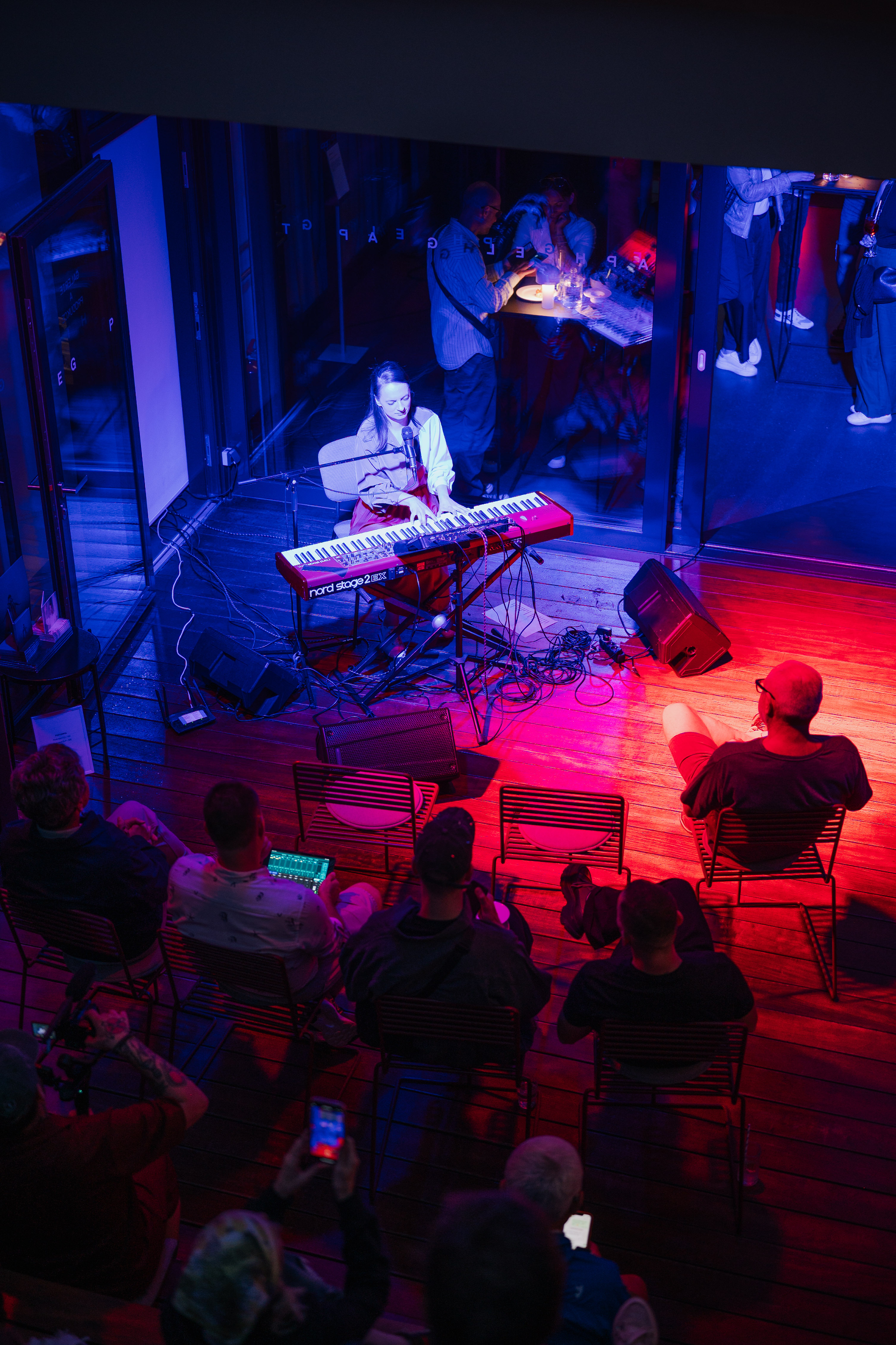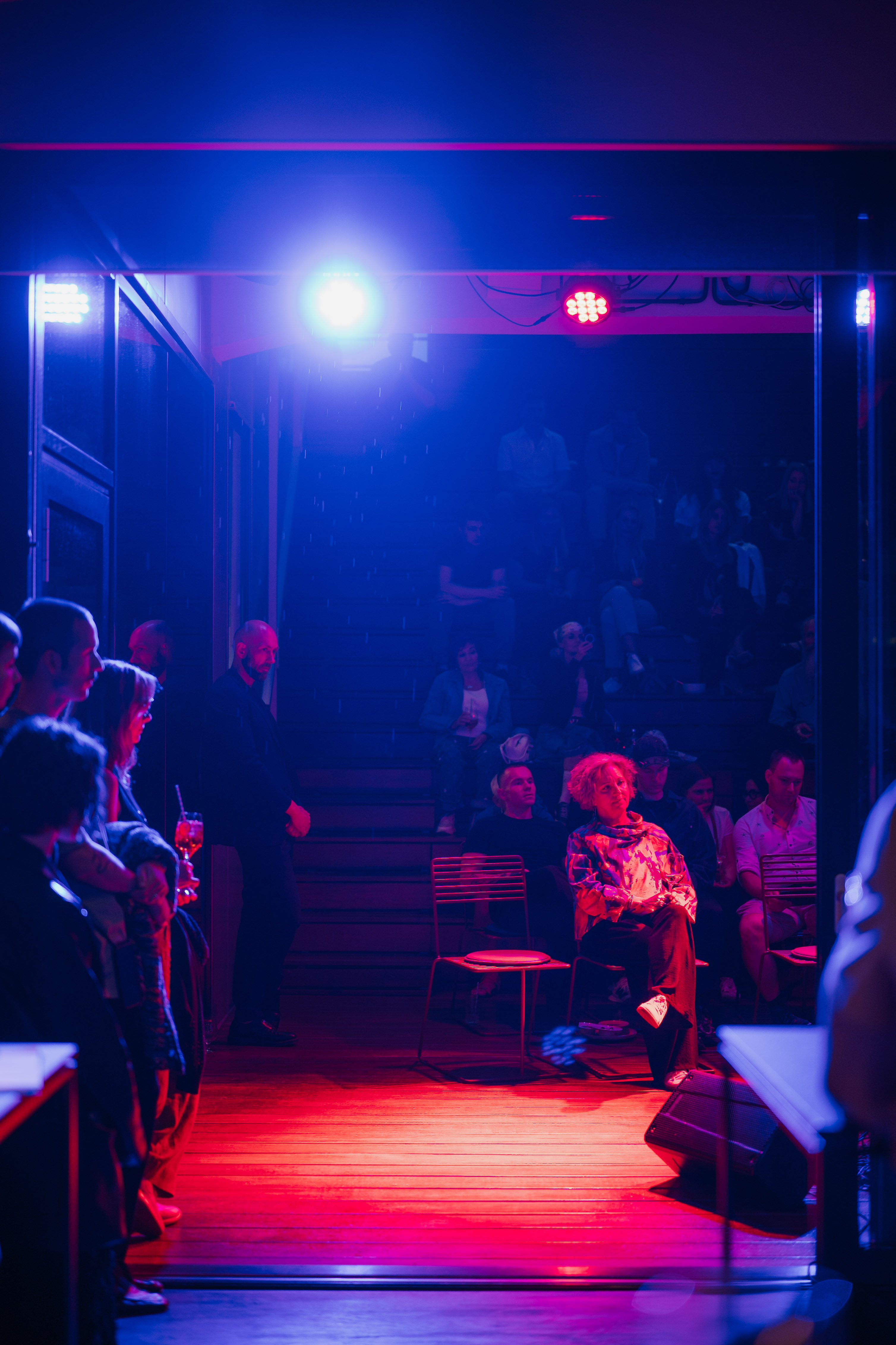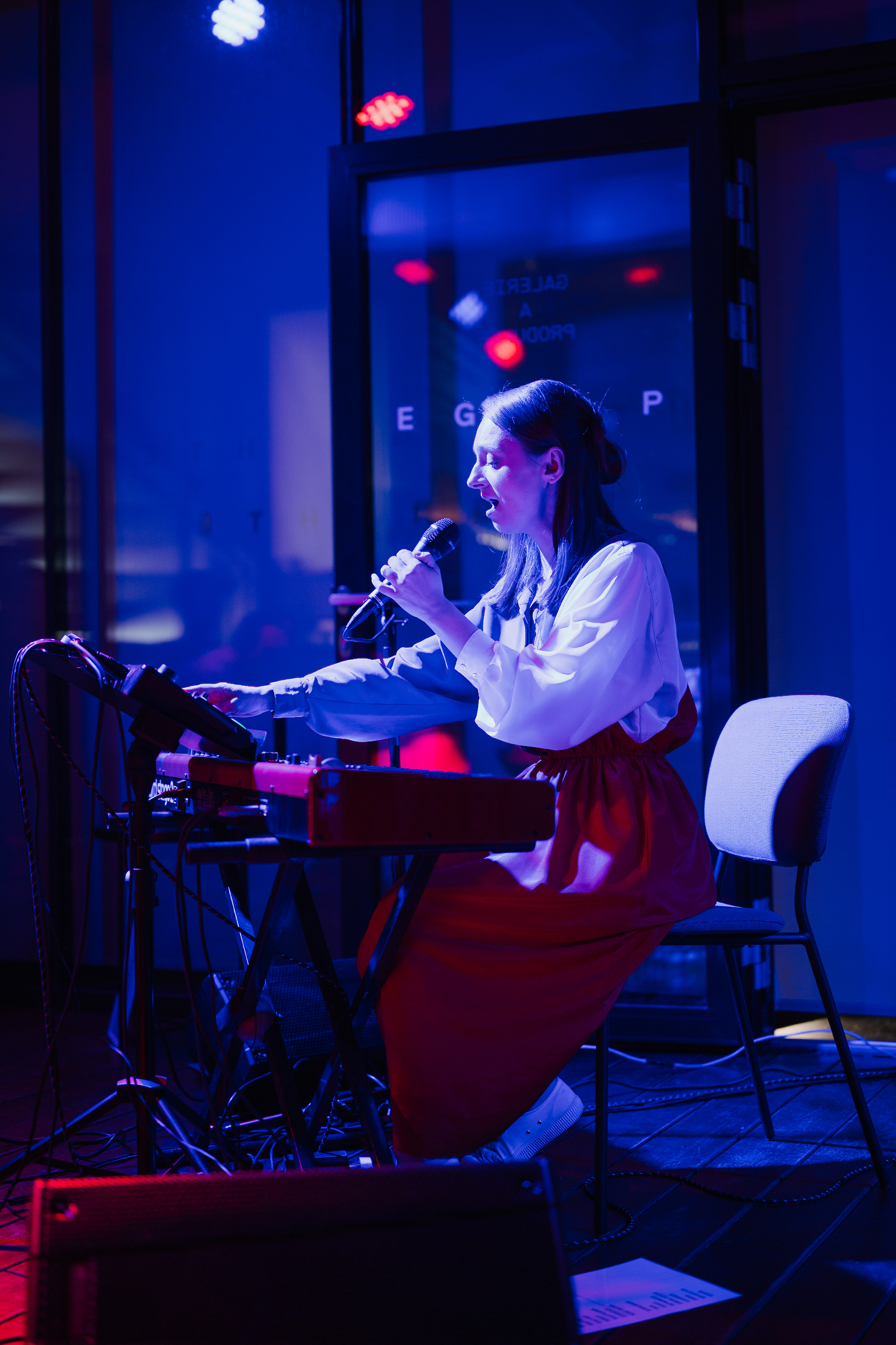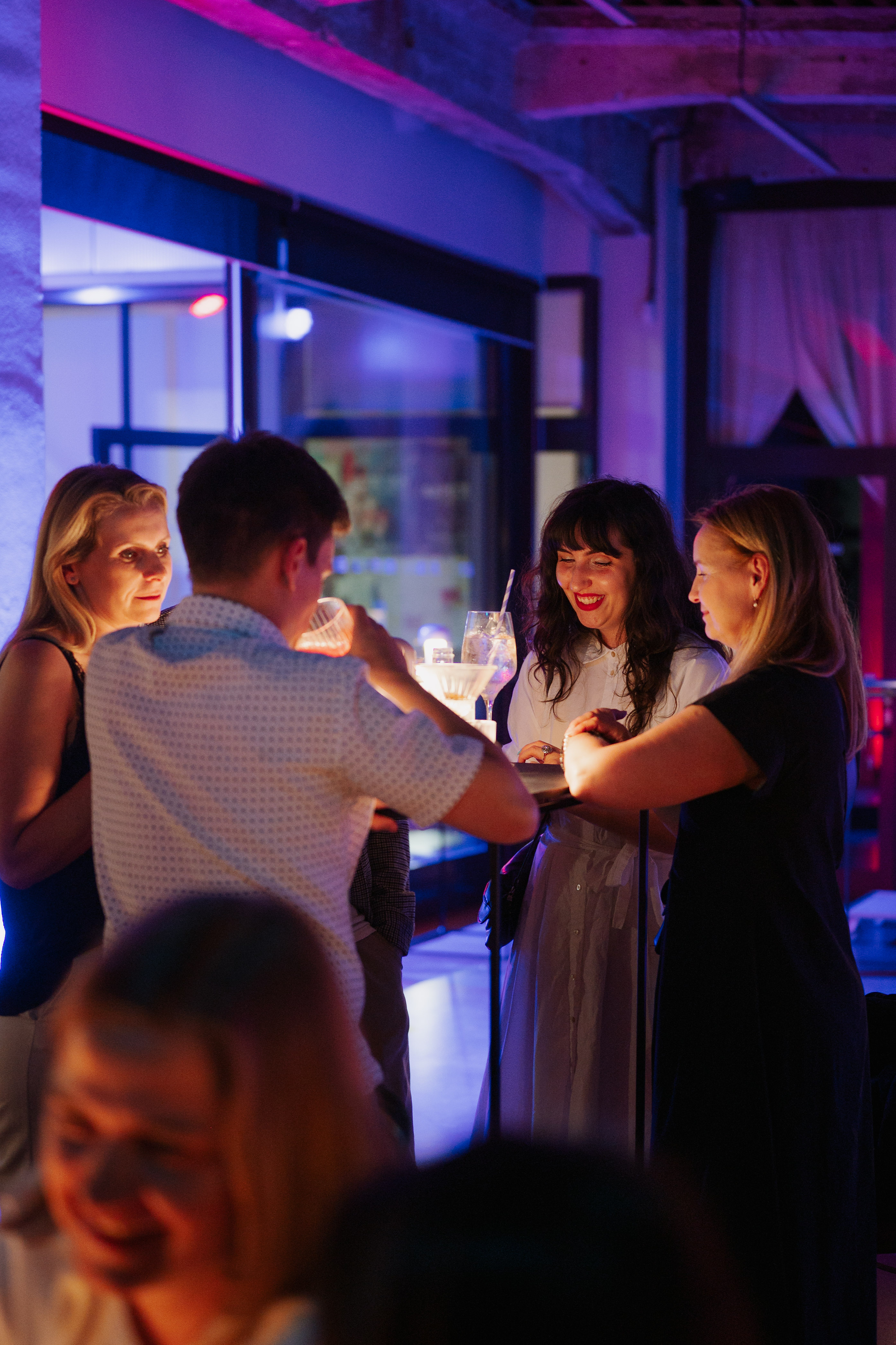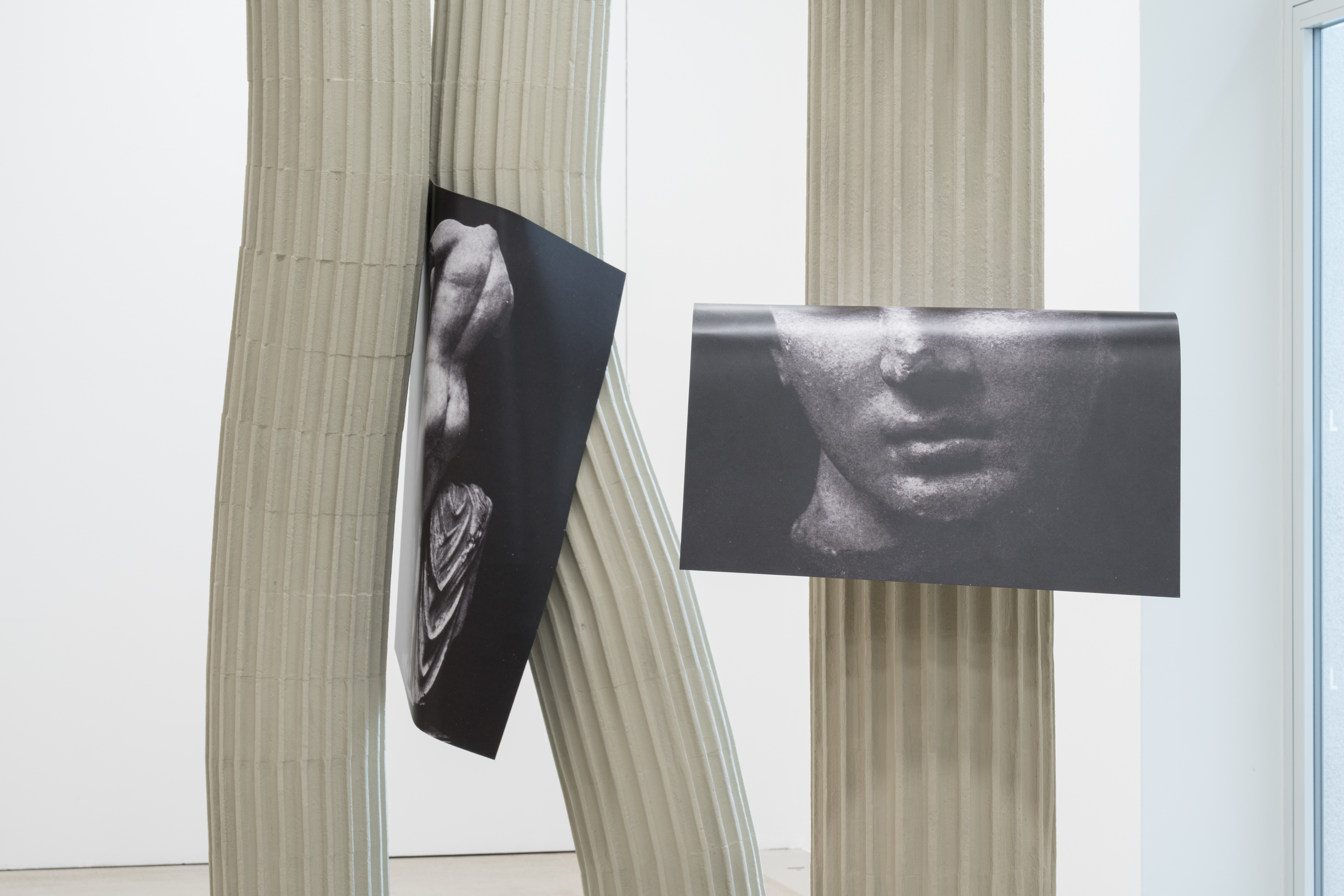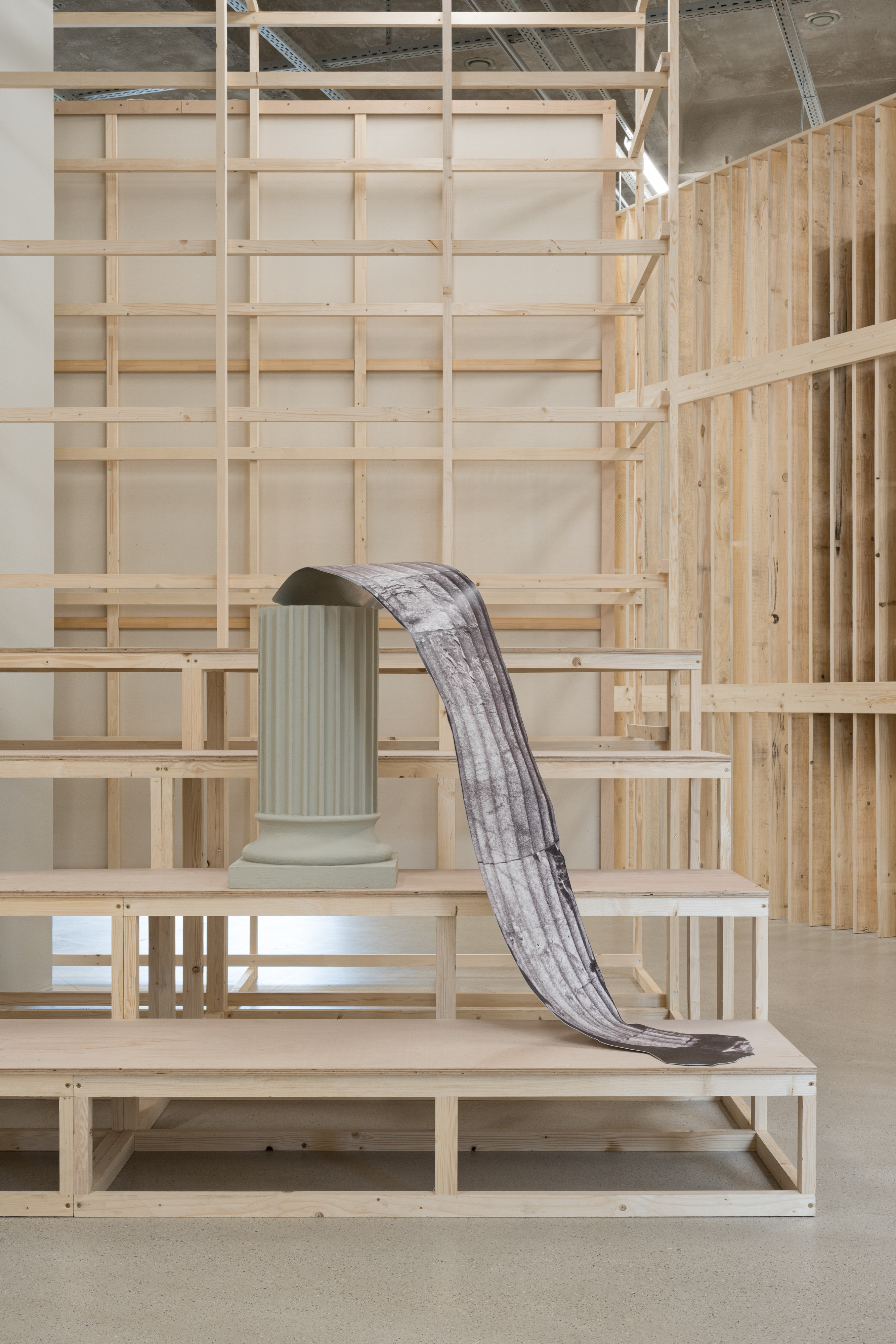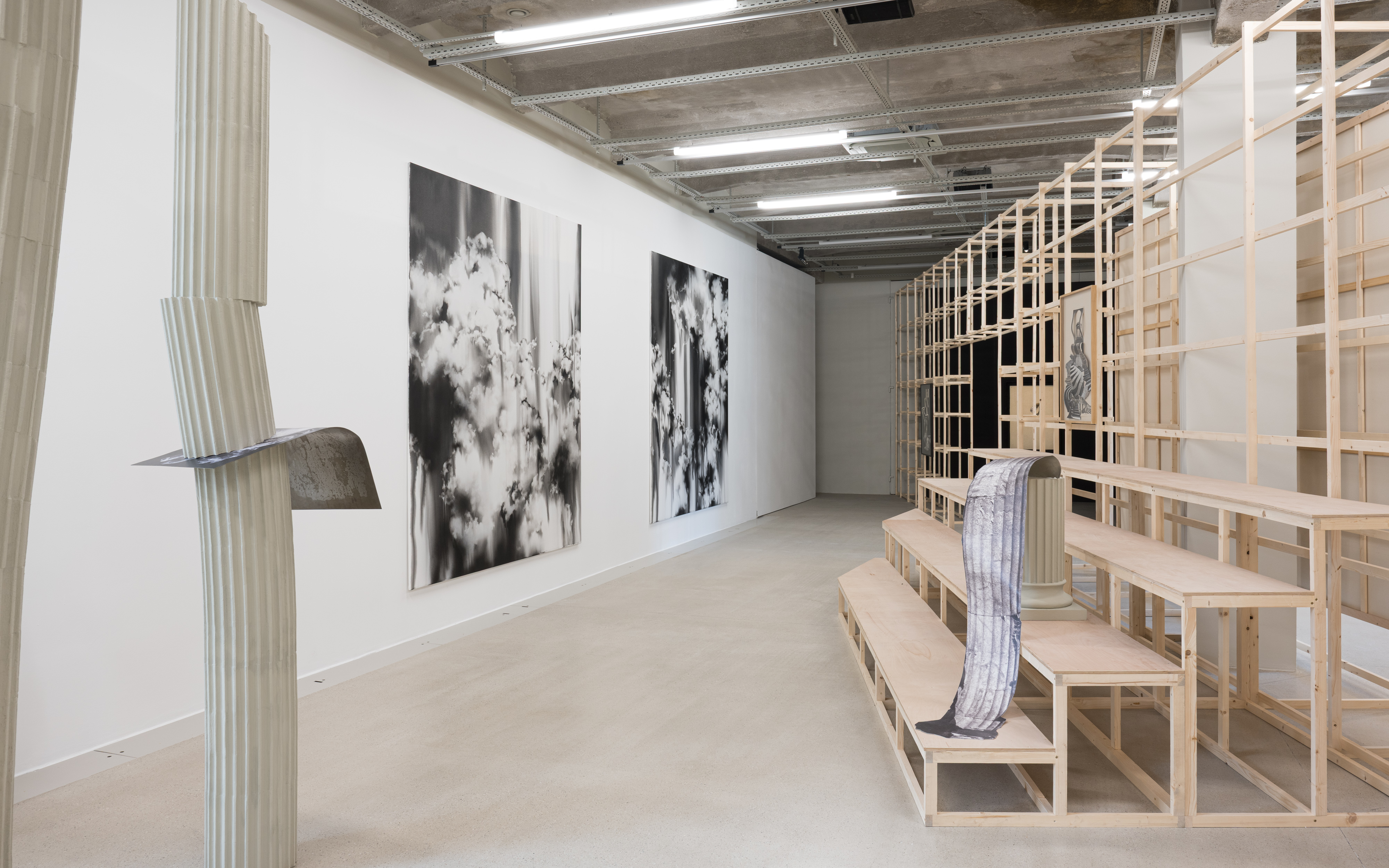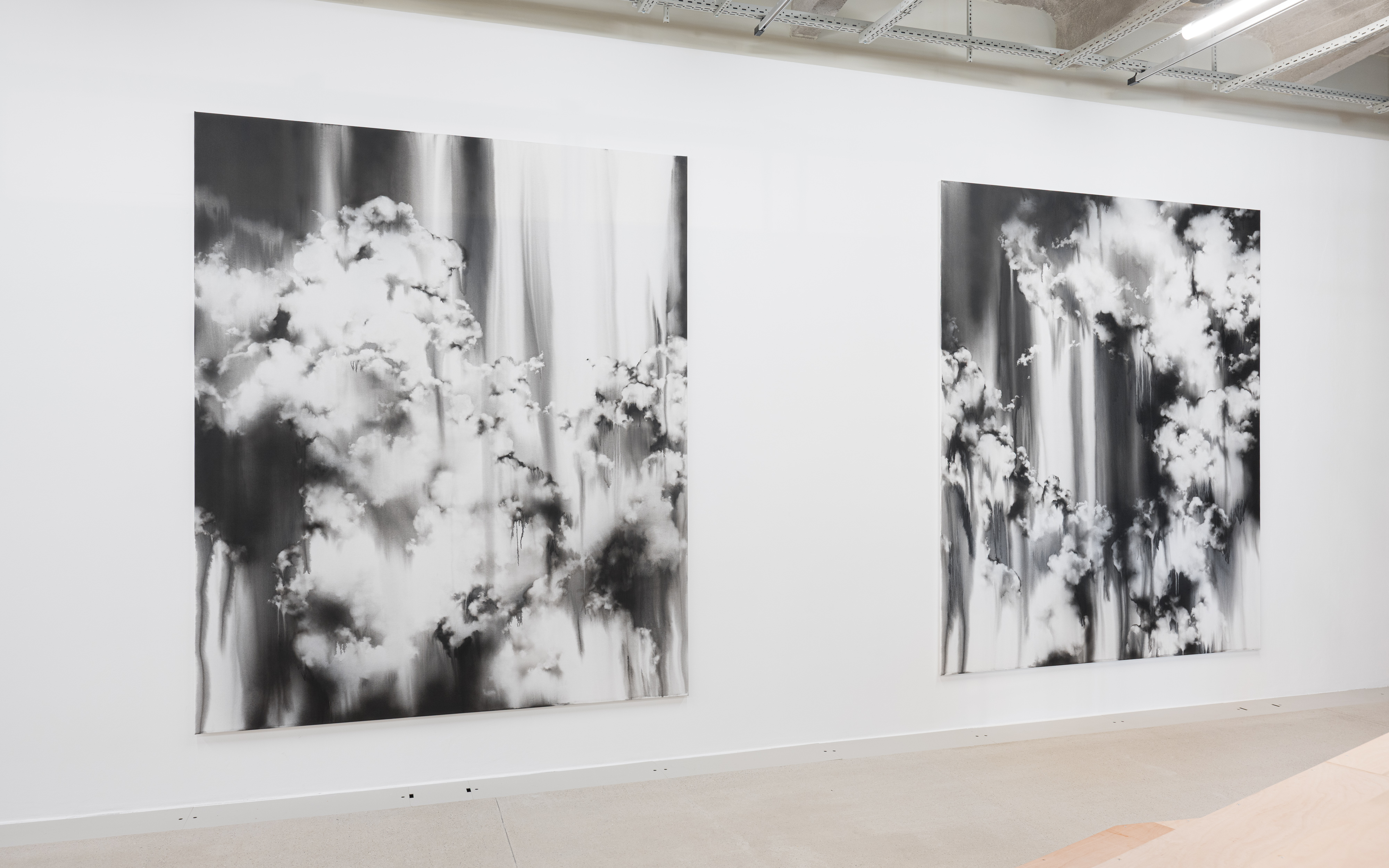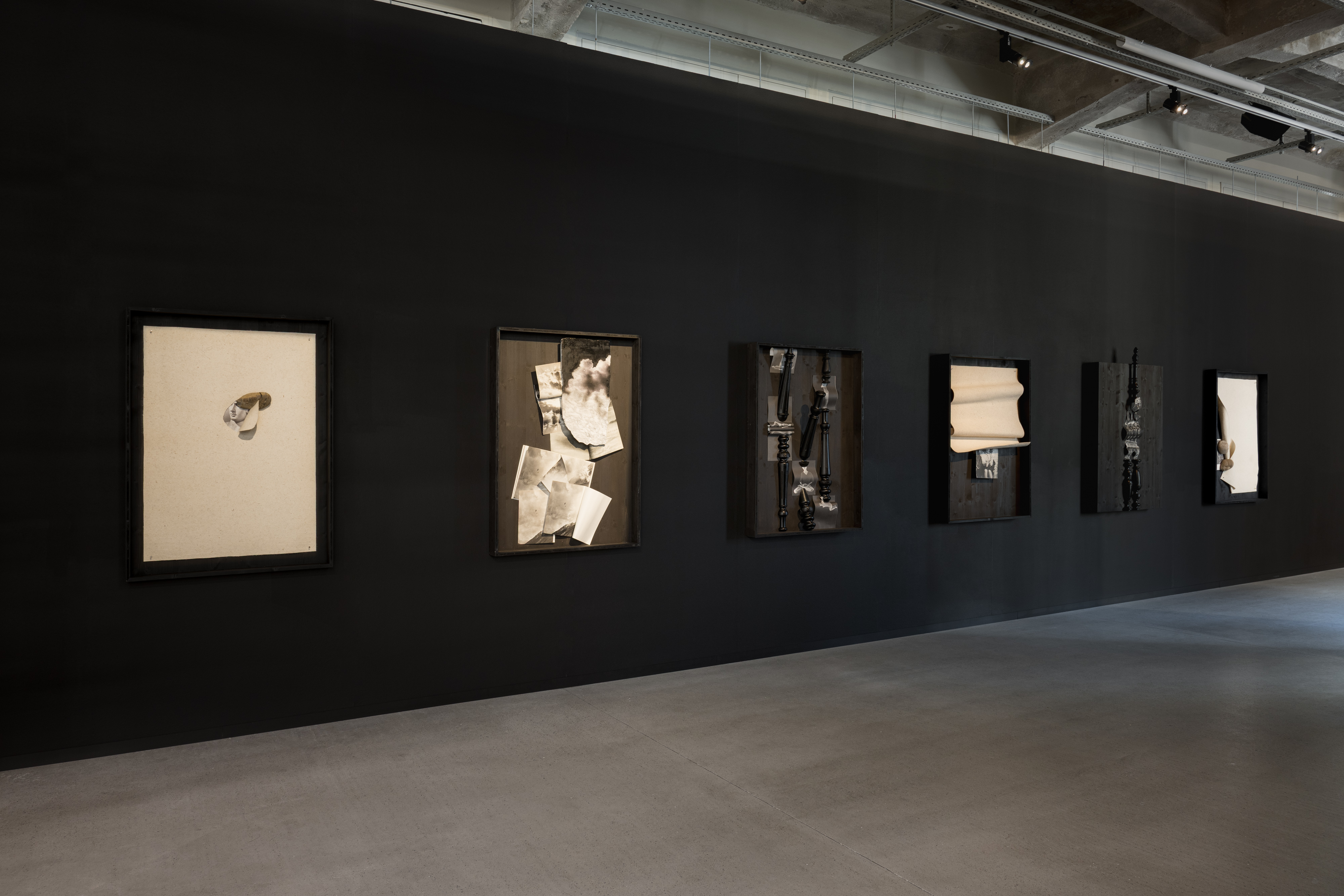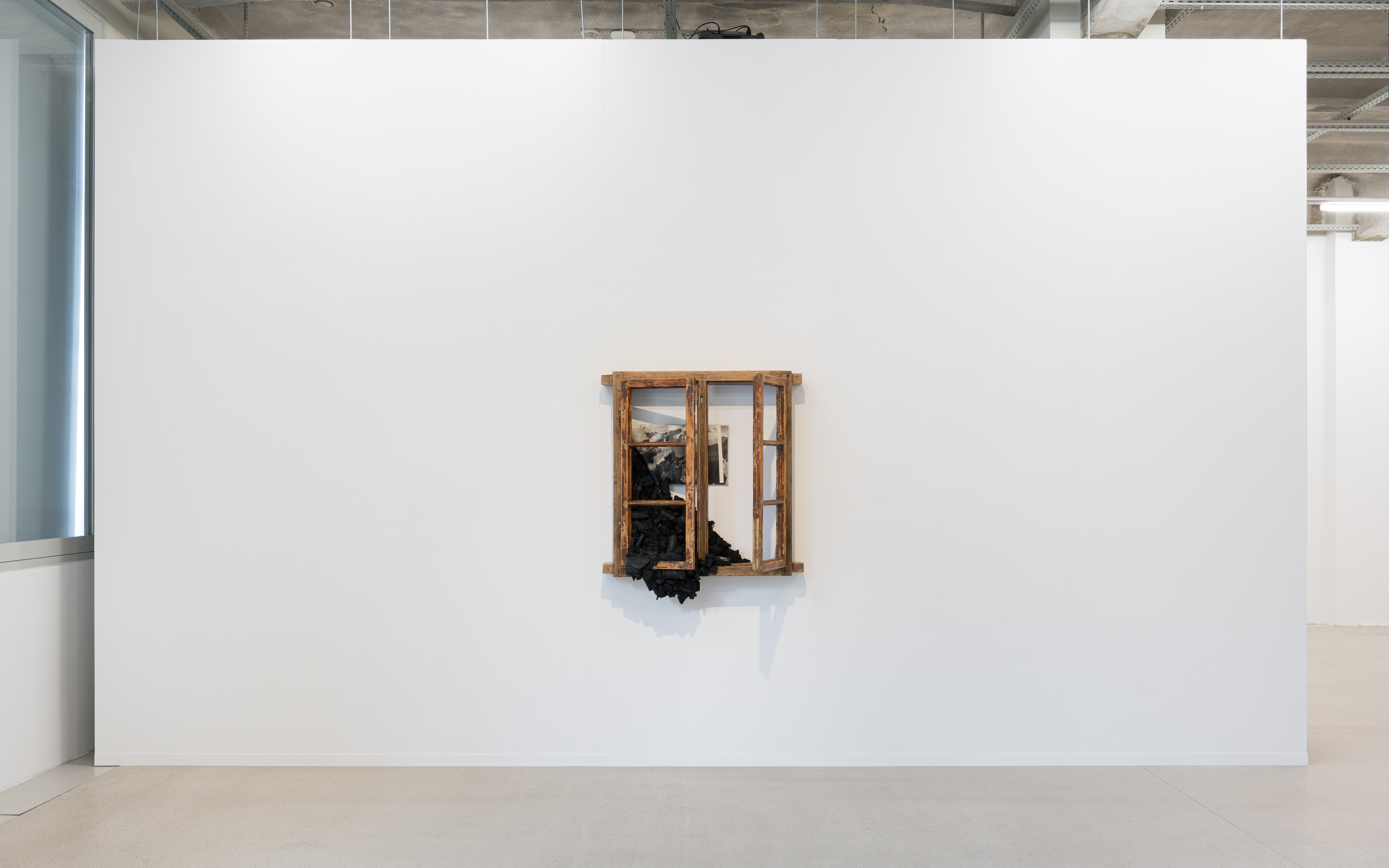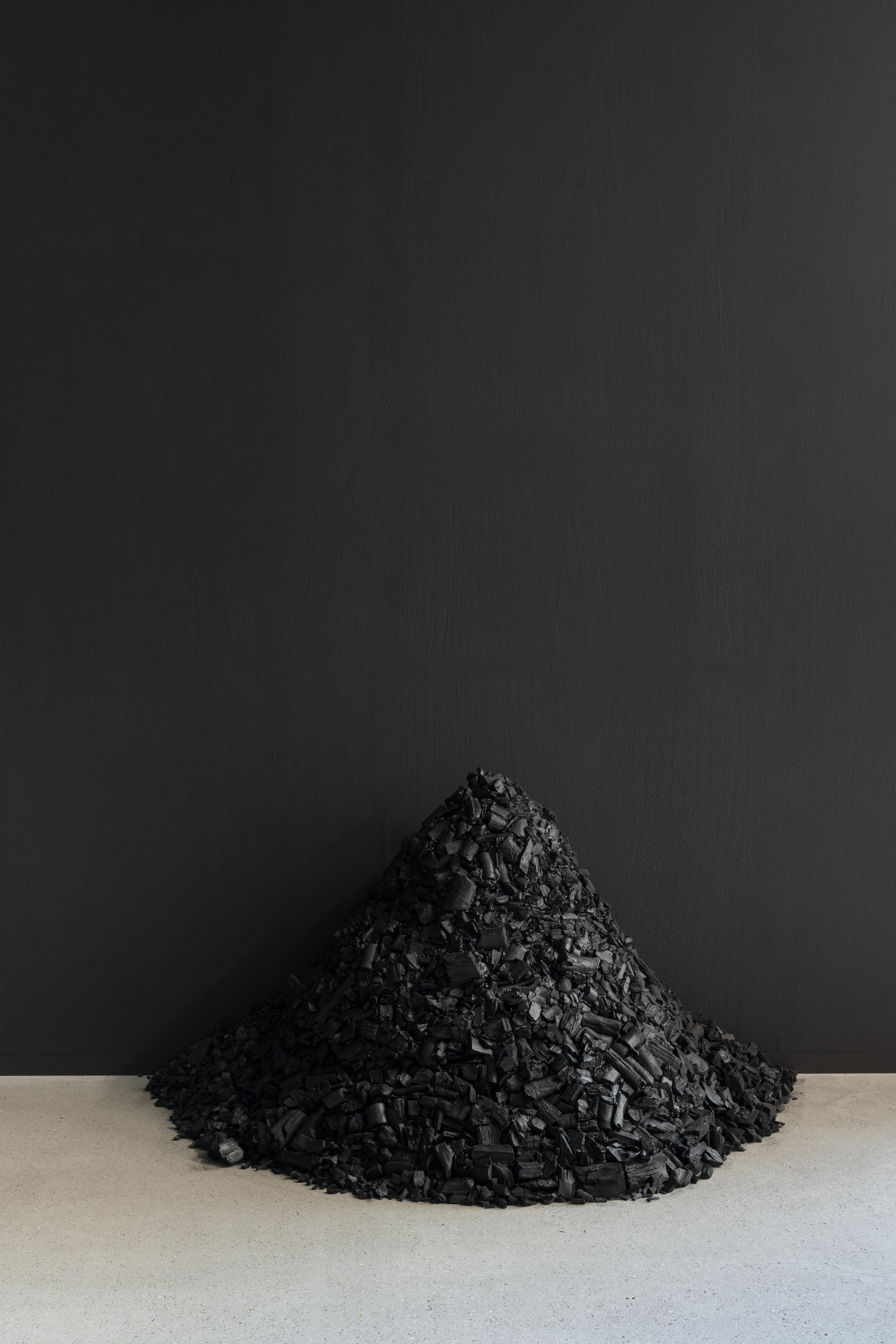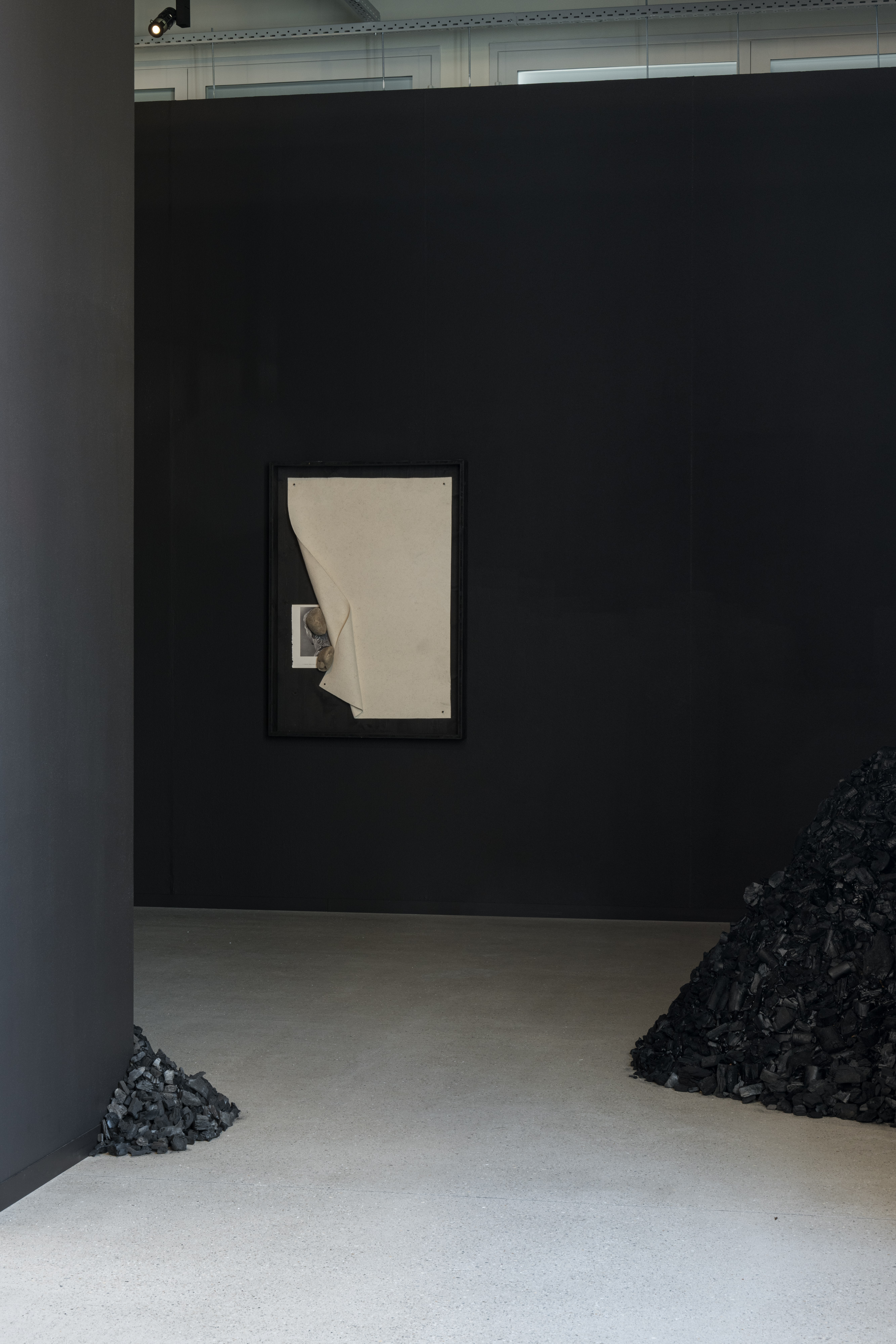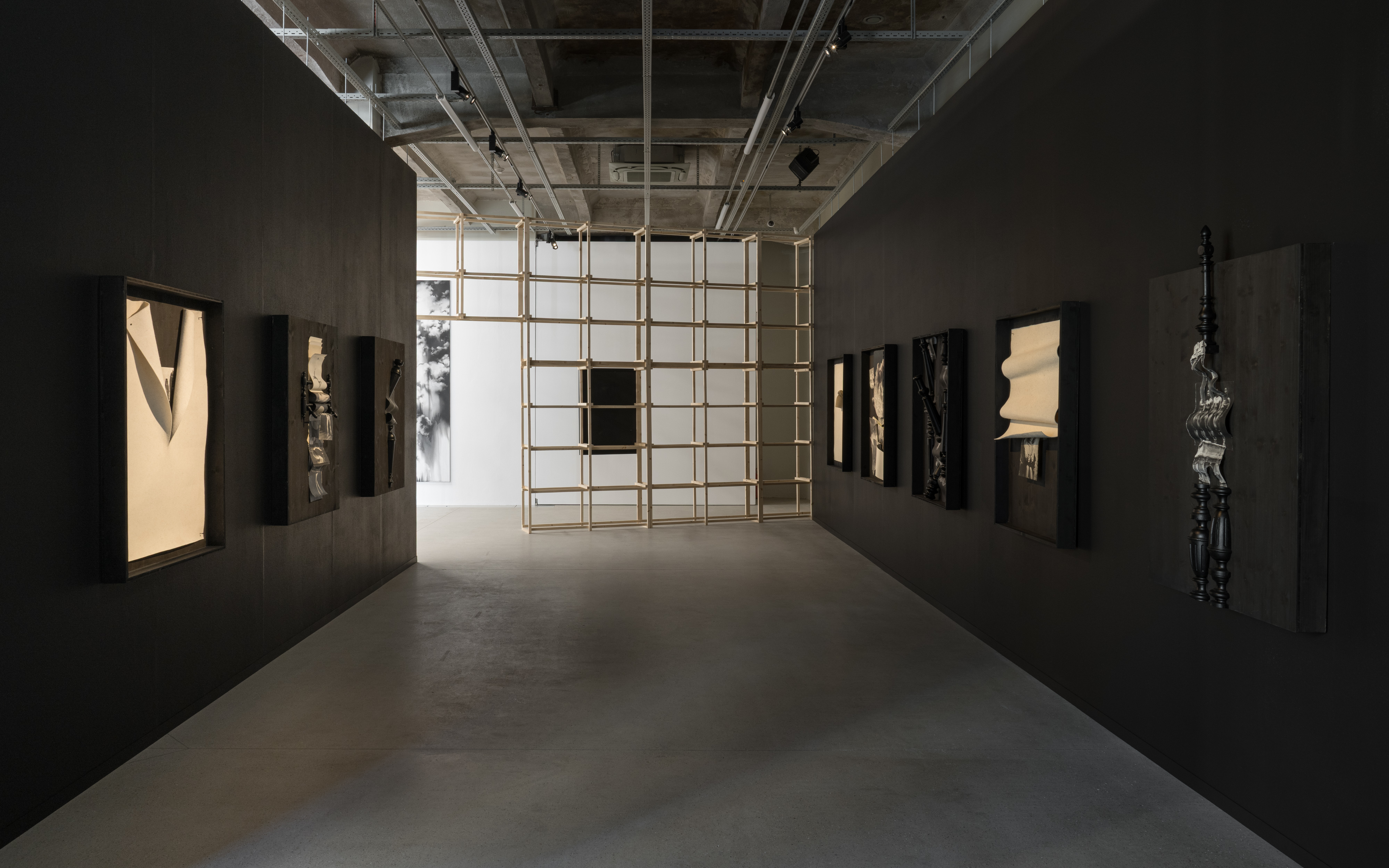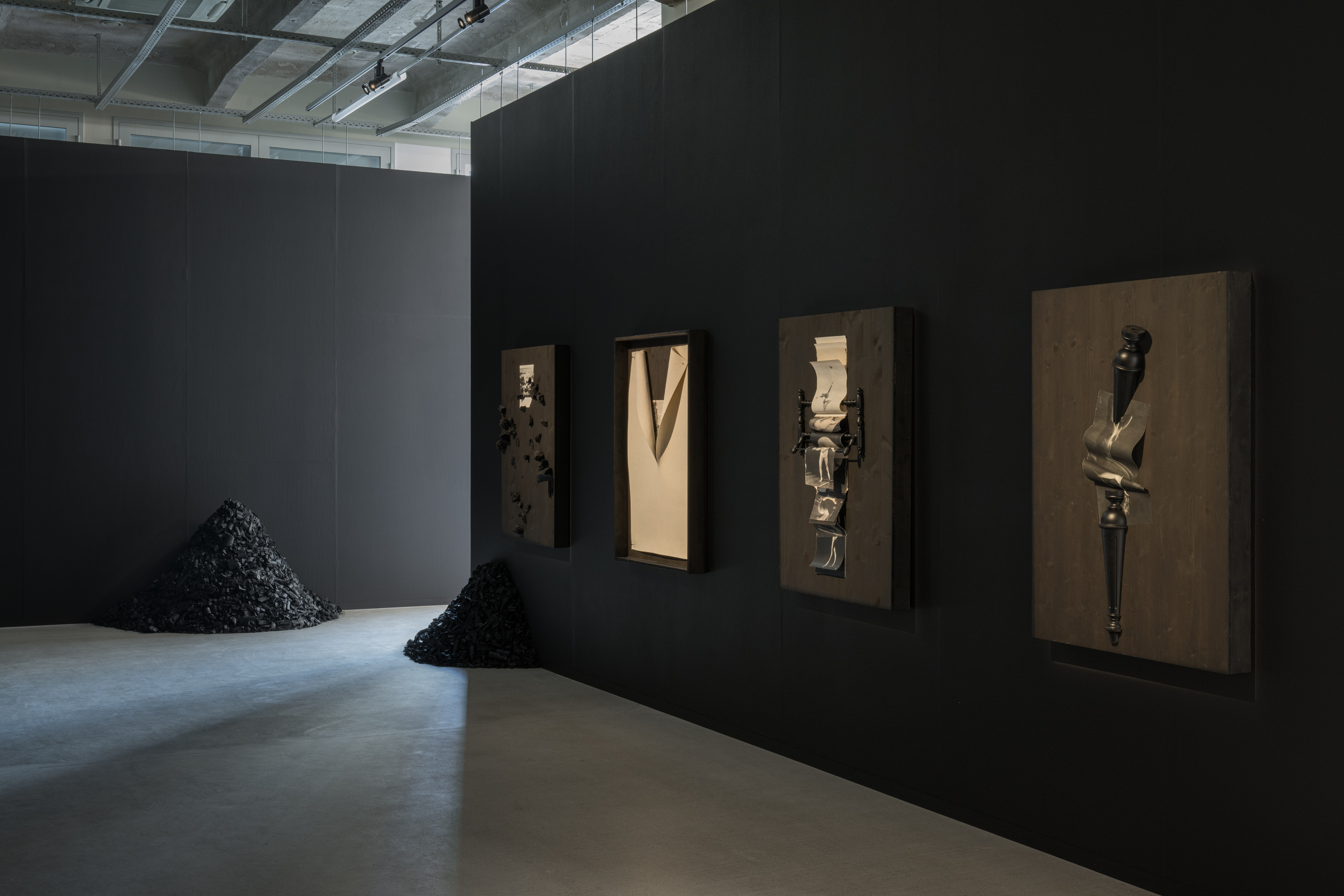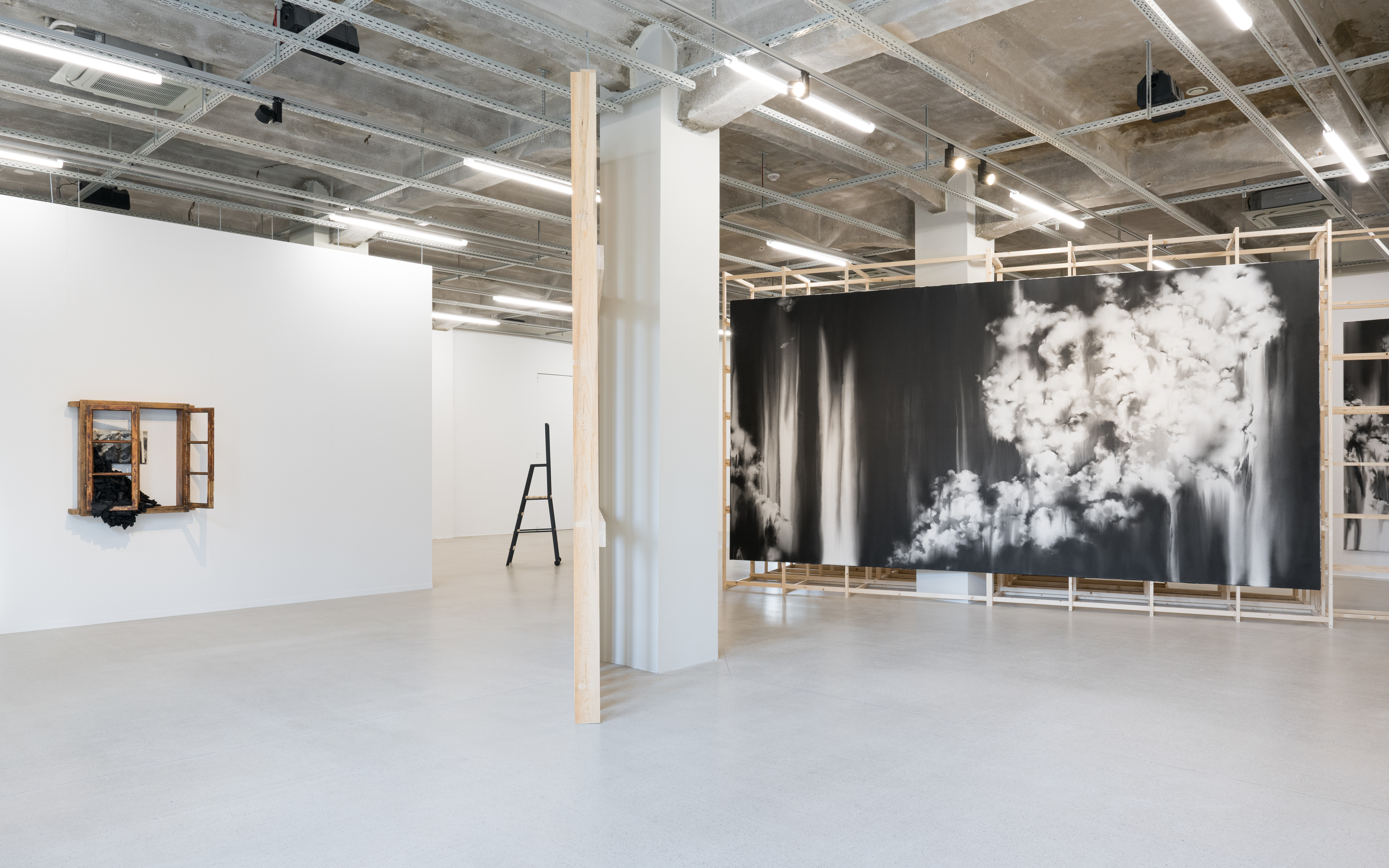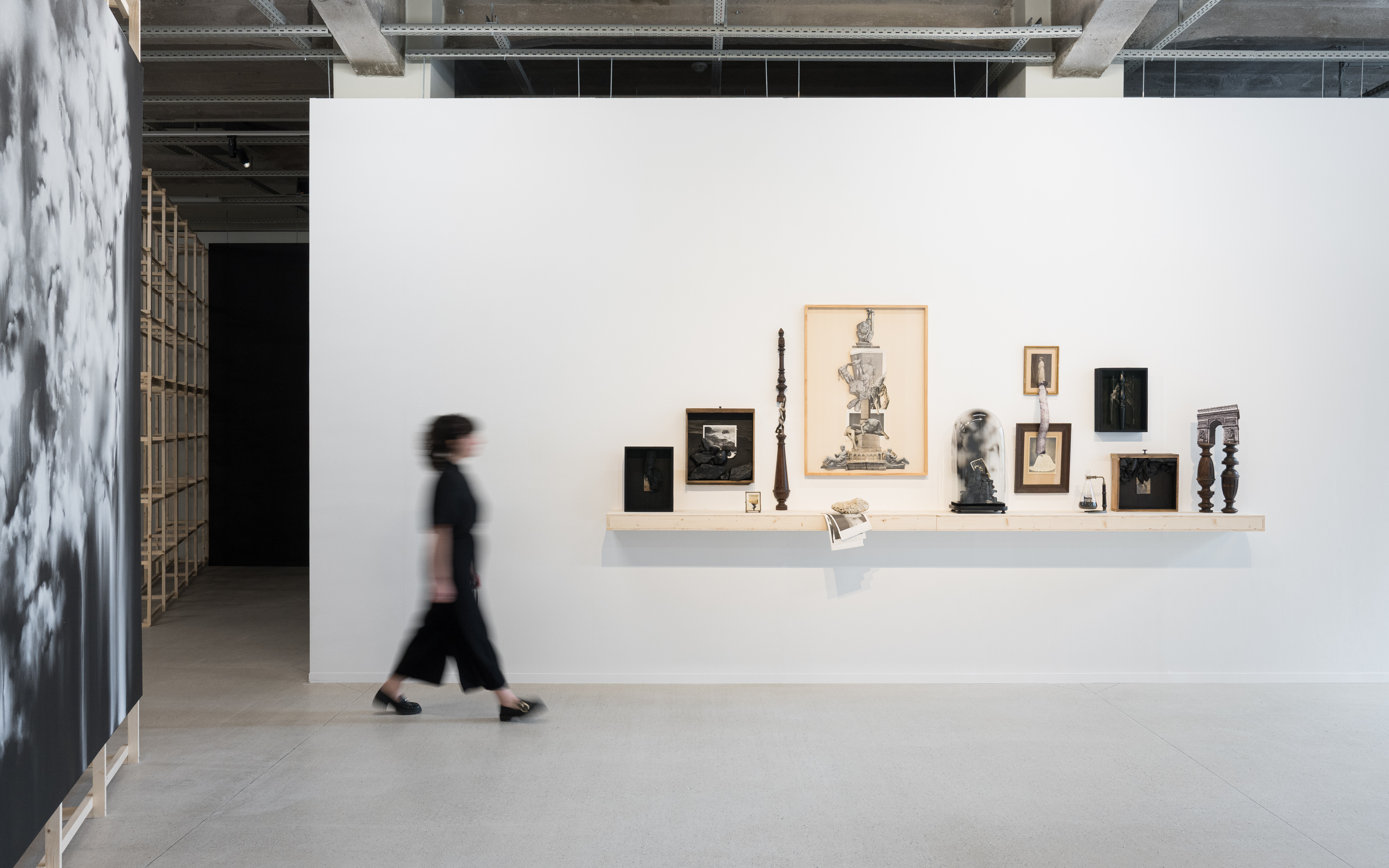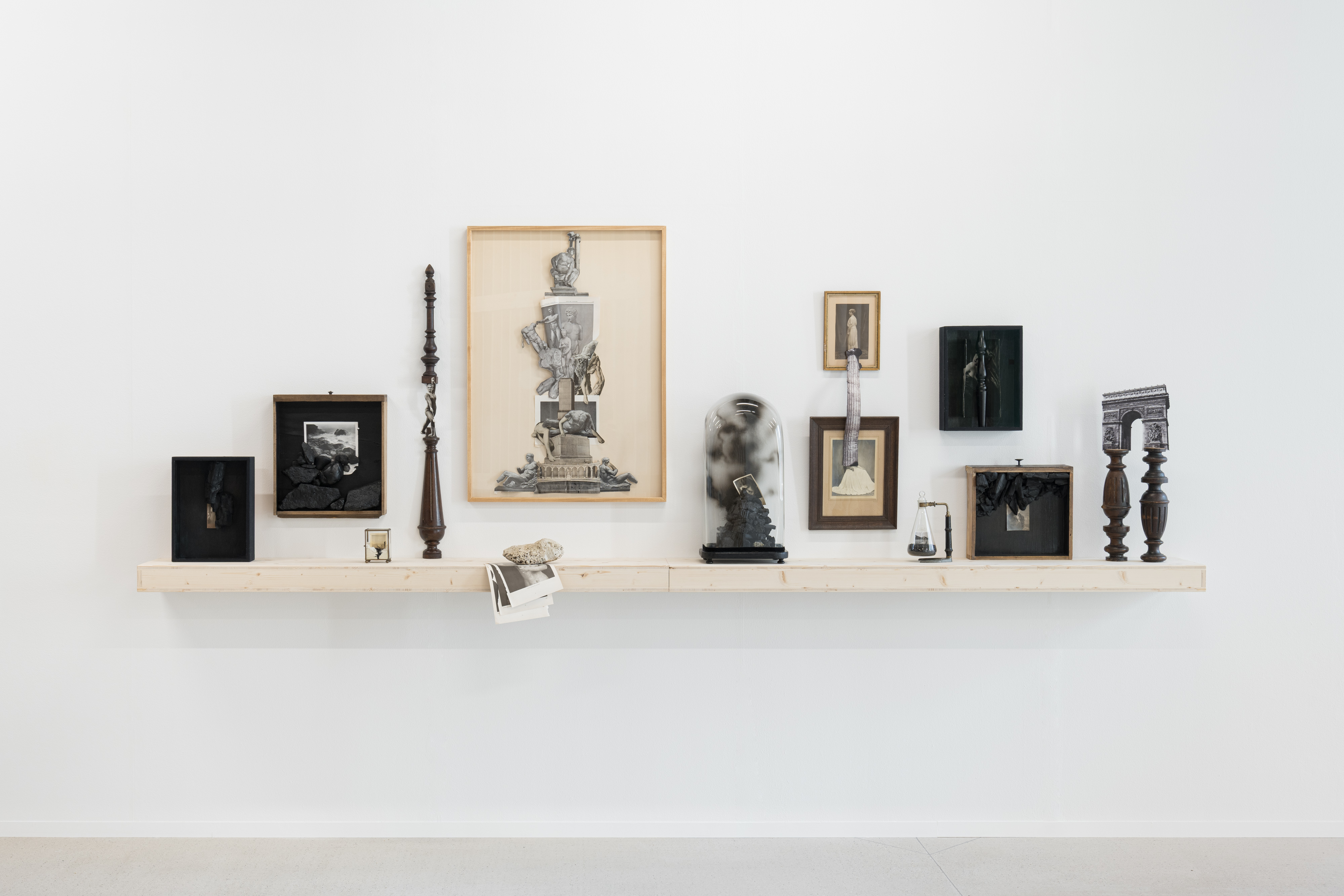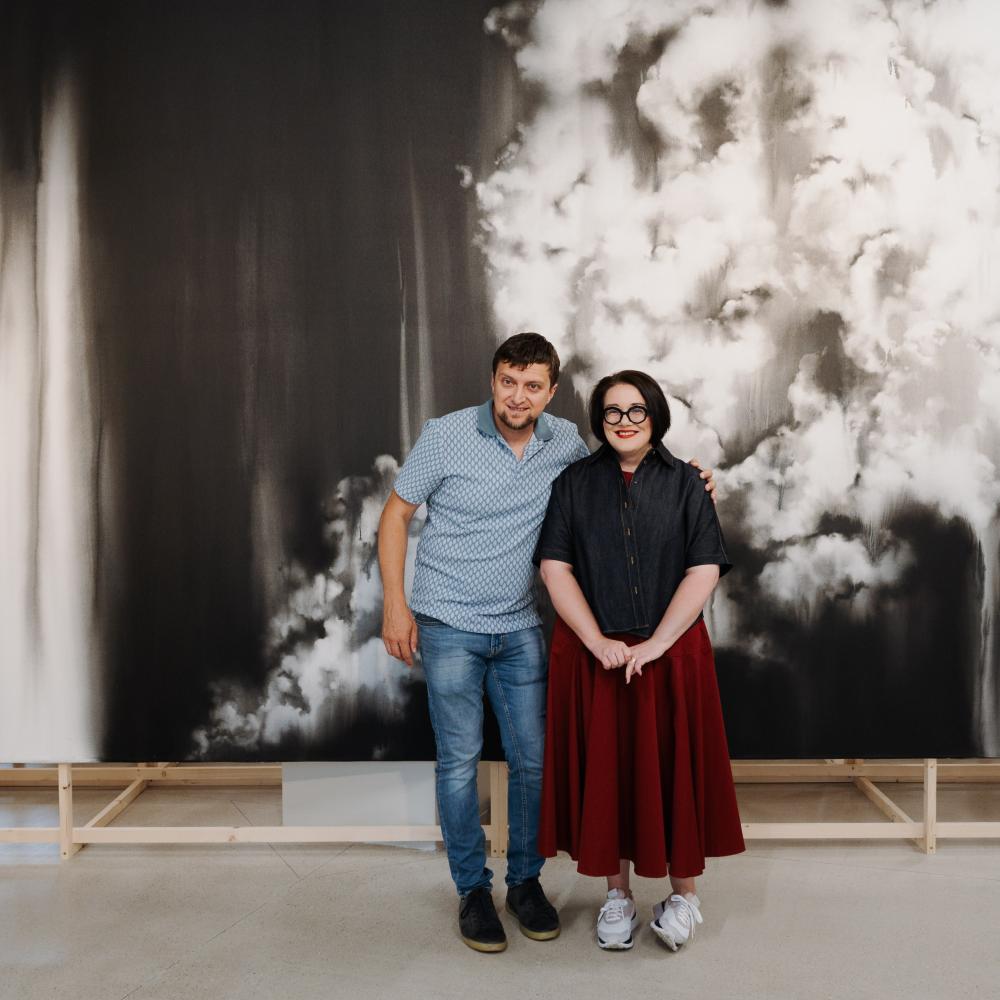
We closed last year's I Wish I Were Made of Stone exhibition with a voice. A voice in the form of the traditional guided tour, which was conducted by the exhibition curator Jan Kudrna together with the artist Lucie Tallová, and also a voice in the form of Zuzana Husárová's sound-poetic performance Lymph Tuned to the Moaning of White Marble, which preceded the tour. In it, the viewer was not only a listener, but also a witness to the transformation of space - a place where language began to flow like a fluid, changing rhythm, density and temperature.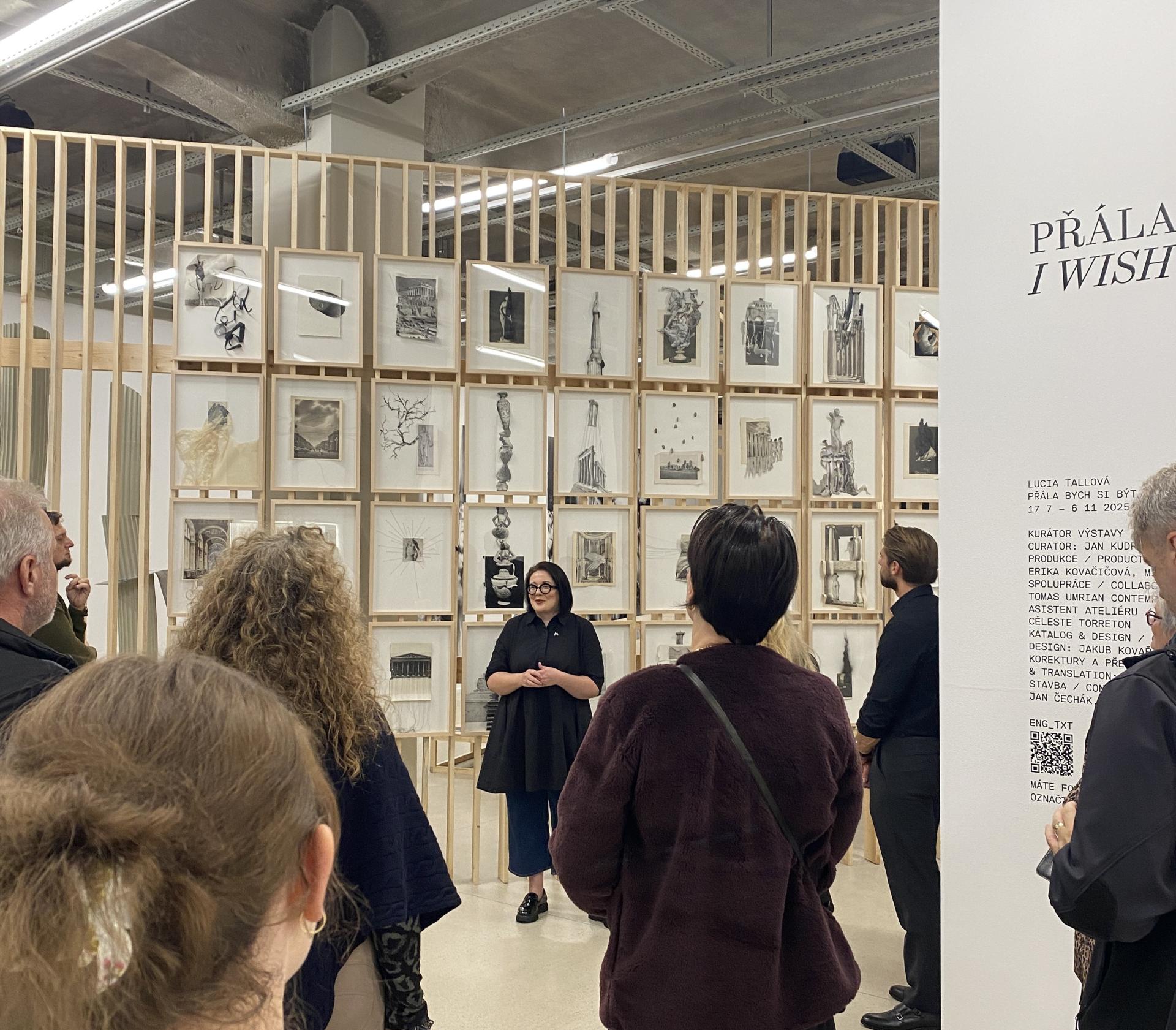
Zuzana Husárová is an author and theorist of electronic literature and digital media, working in experimental and sound poetry and poetic performance. She has long worked with voice, language and technology in her work, often in dialogue with other media. She has collaborated with visual artist Amalia R. Filipova, poet Olga Peková and programmer Ľubomír Panák. Using poems with titles Dawns, Fictions, Disturbances, Variations, Standards, she refers not only to the title of the exhibition itself, but also to the work of Lucie Tallová.
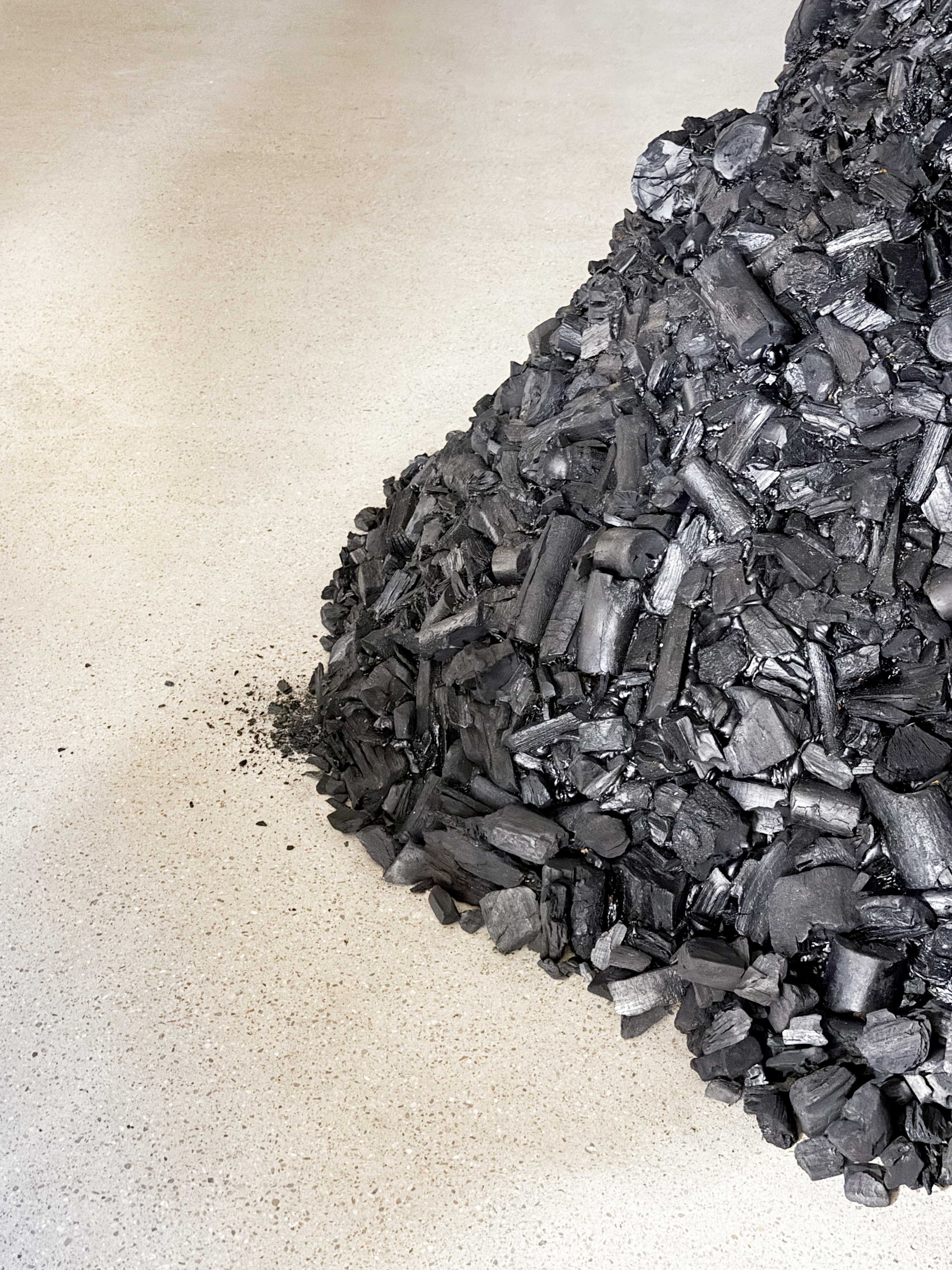
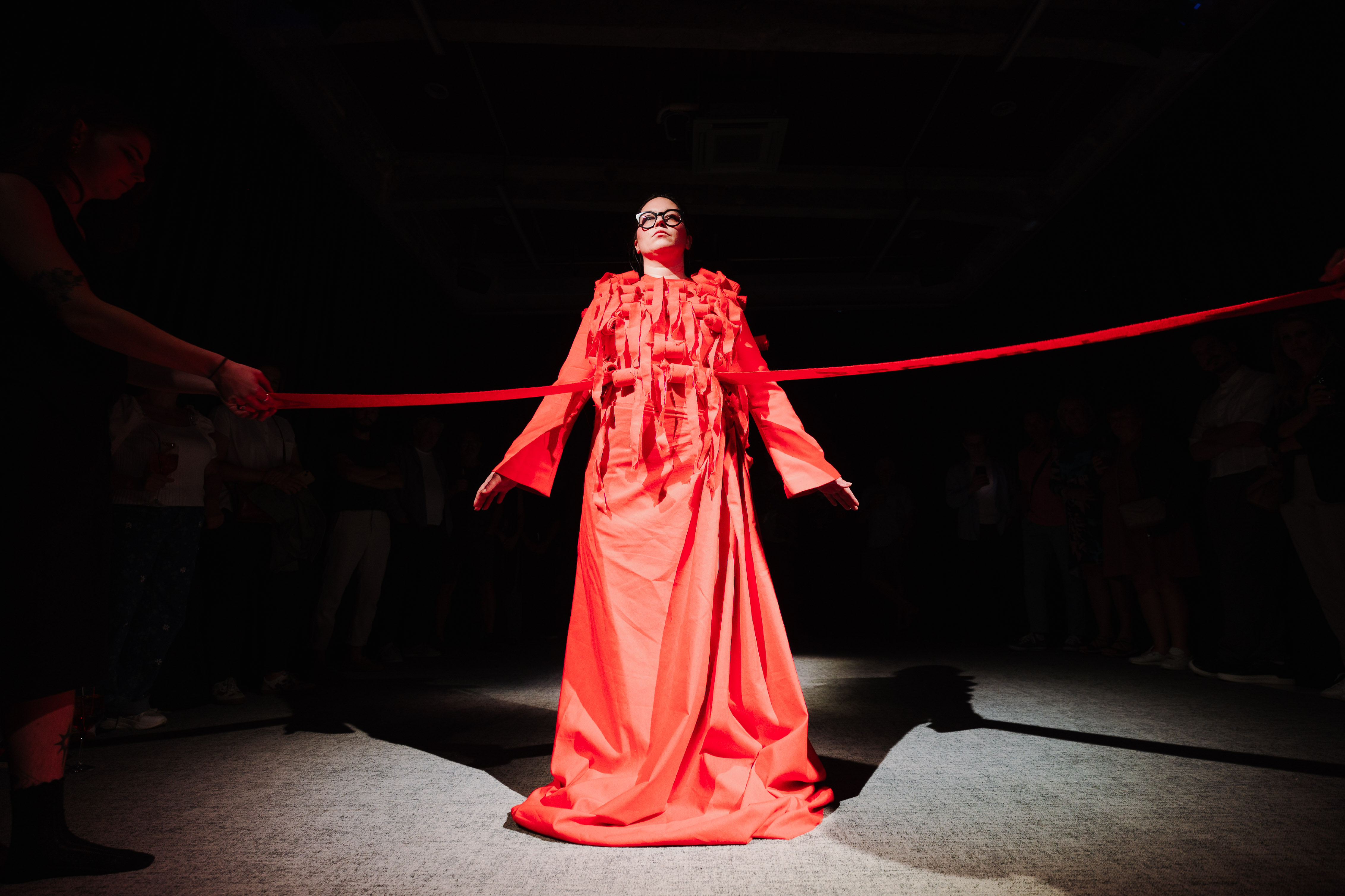
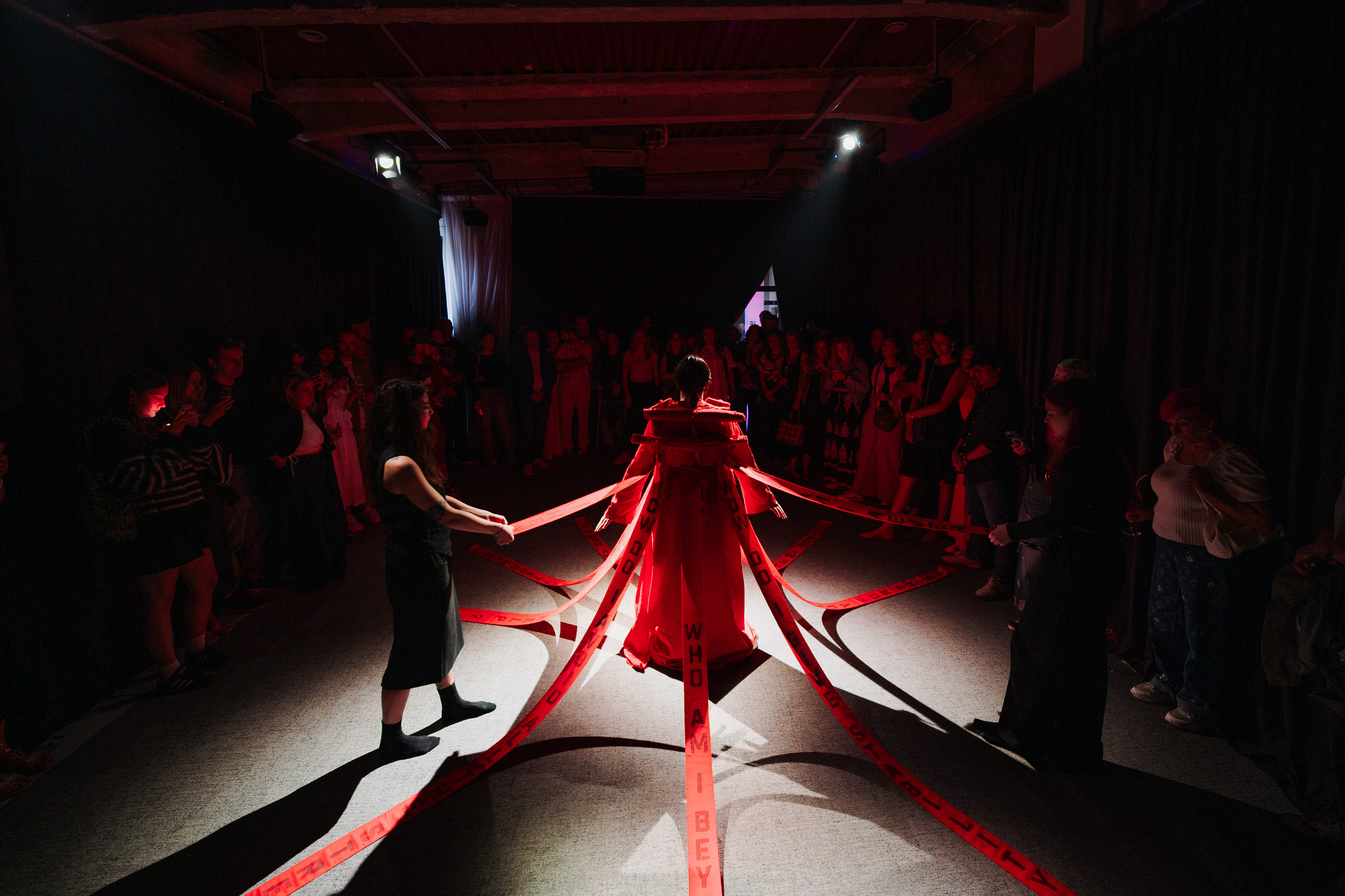
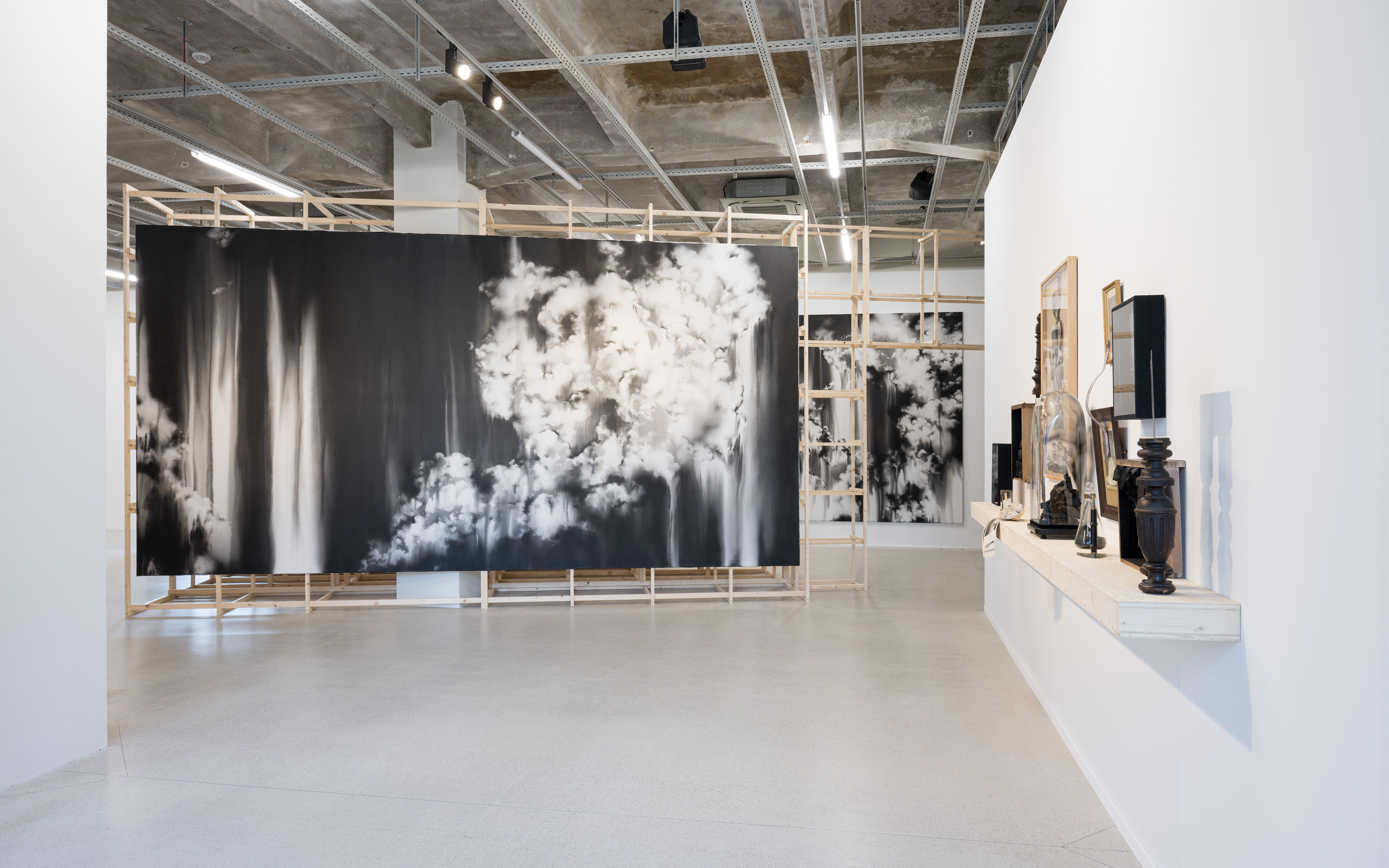
The sound-poetic performance combined voice, body and space into a flowing substance. During the course of the performance, the exhibition space gradually transformed and the exhibited artworks could be perceived in a new context and light. In her performance, Husárová develops themes of energy transfer, transformation and the tension between the human and the inhuman. The motif of lymph - as a symbol of flow and inner life - meets here with the idea of marble, a material that is solid, silent and seemingly inanimate. In the contrast between fluidity and stone, a field of resonances is created in which sound becomes a form of memory and movement. In the gallery space, the layers of voices became a separate organism - a stream of rhythmic words, glitch noises, chants and breaths that mirrored and distorted each other. Here, language became matter, sound became breath, and meaning became just one of many vibrational fields.
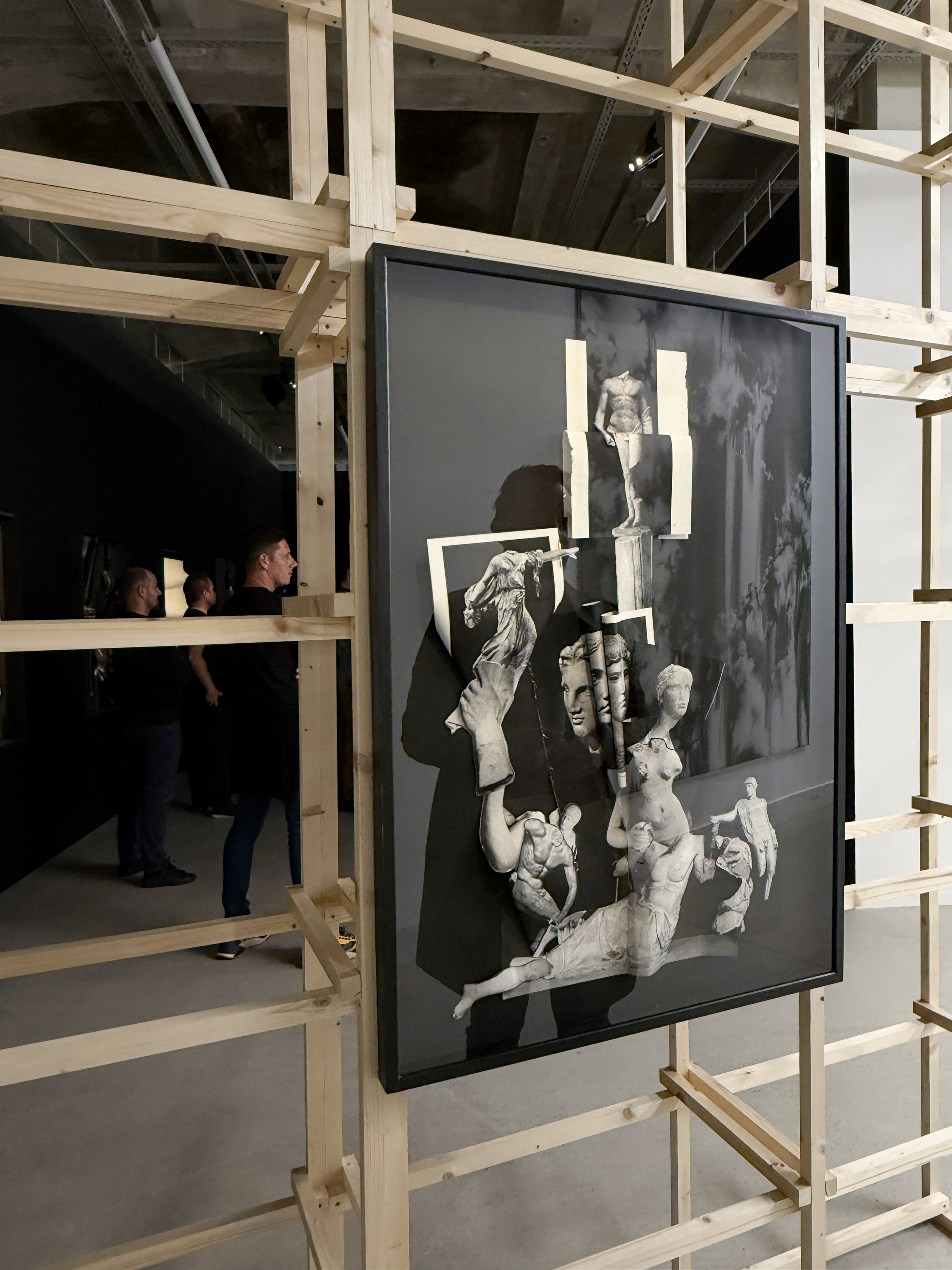
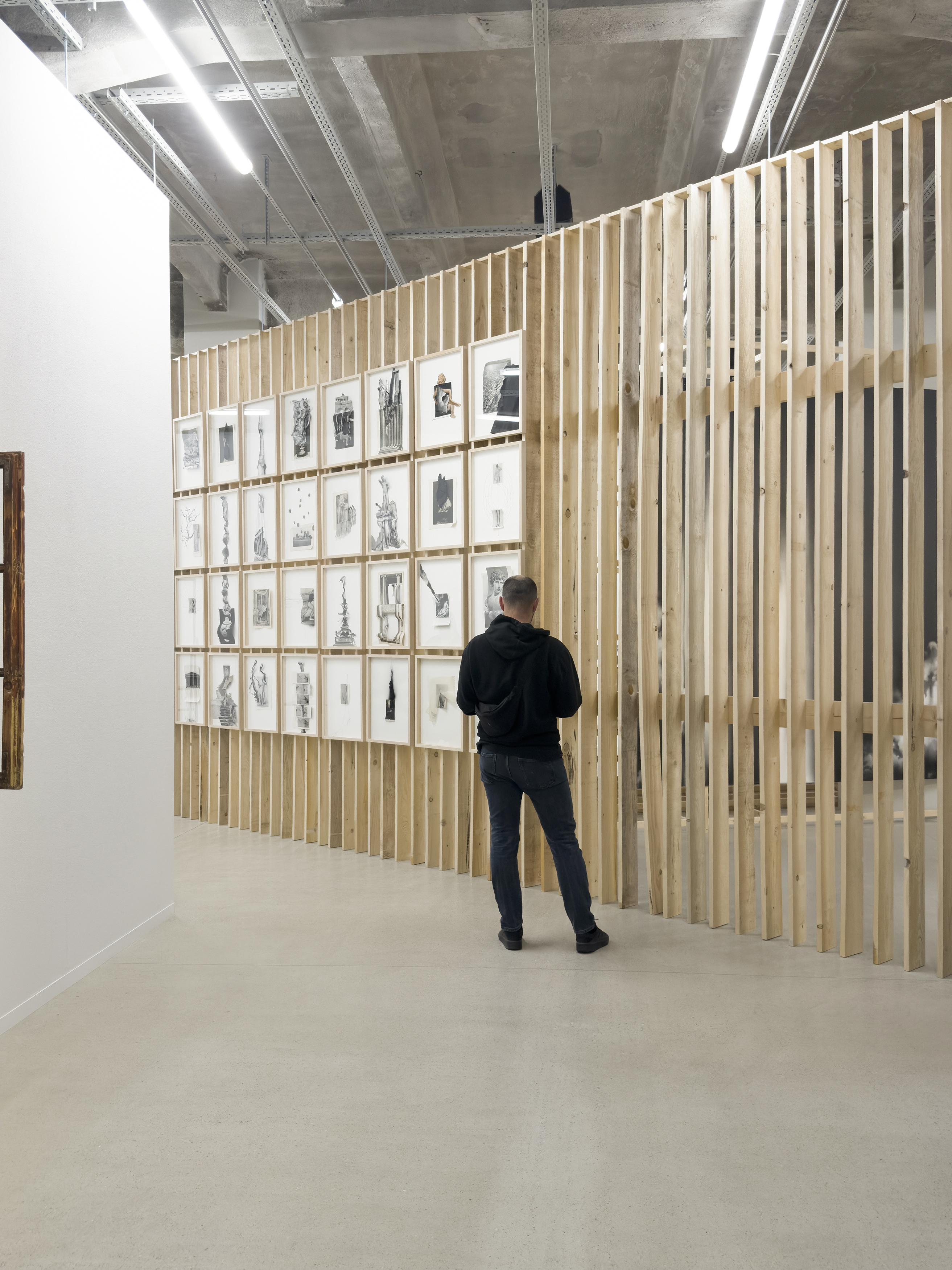
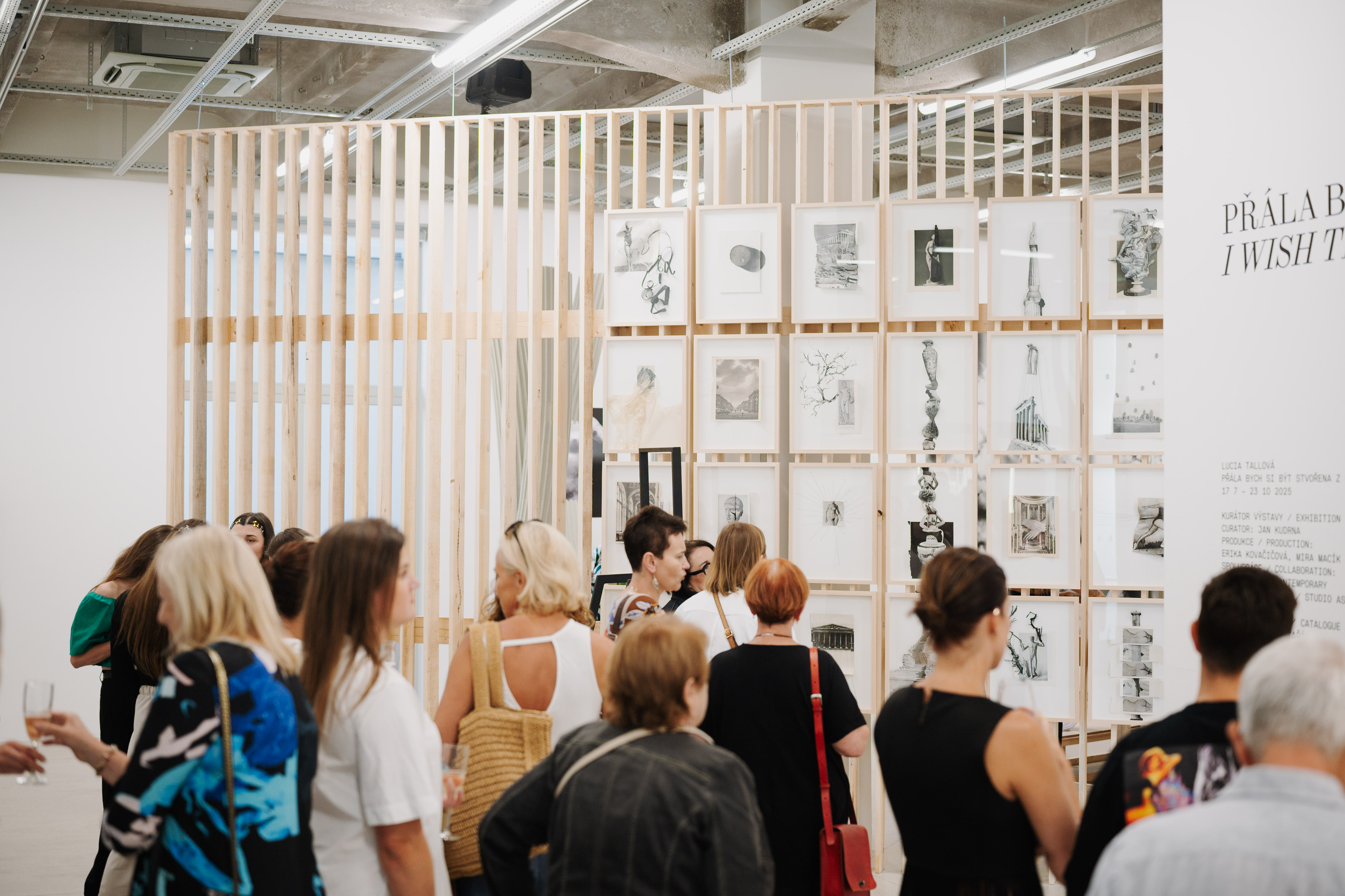
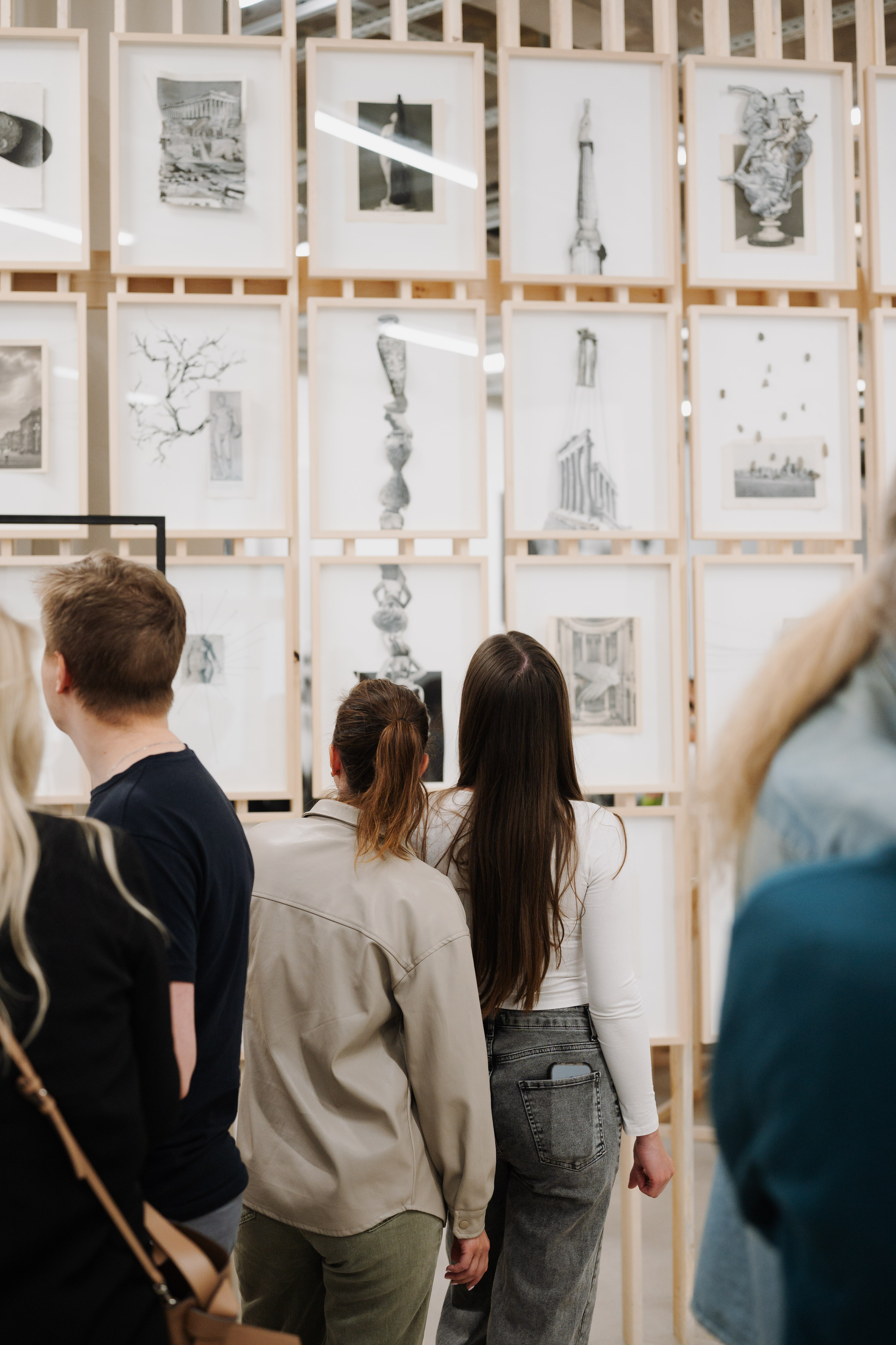
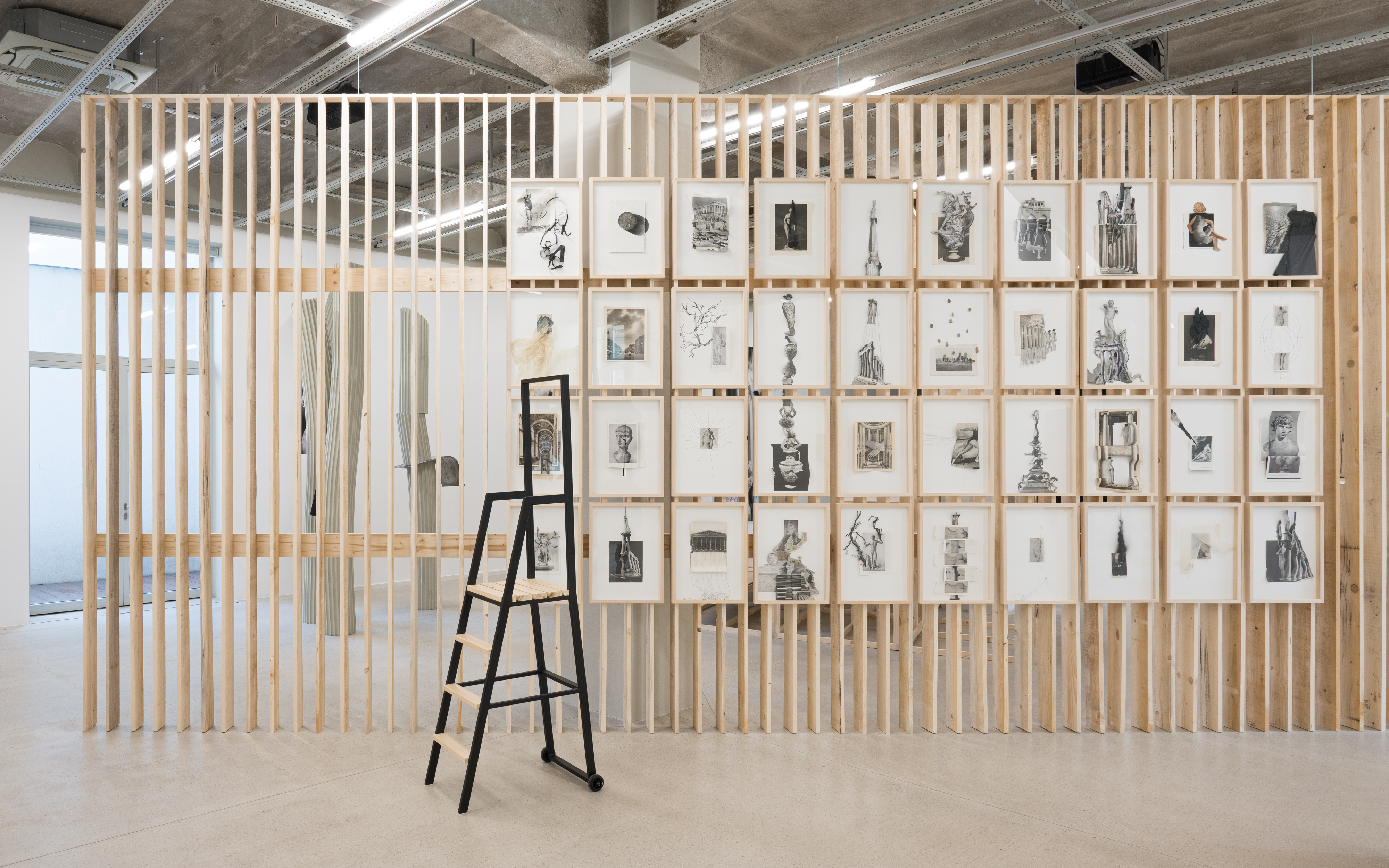
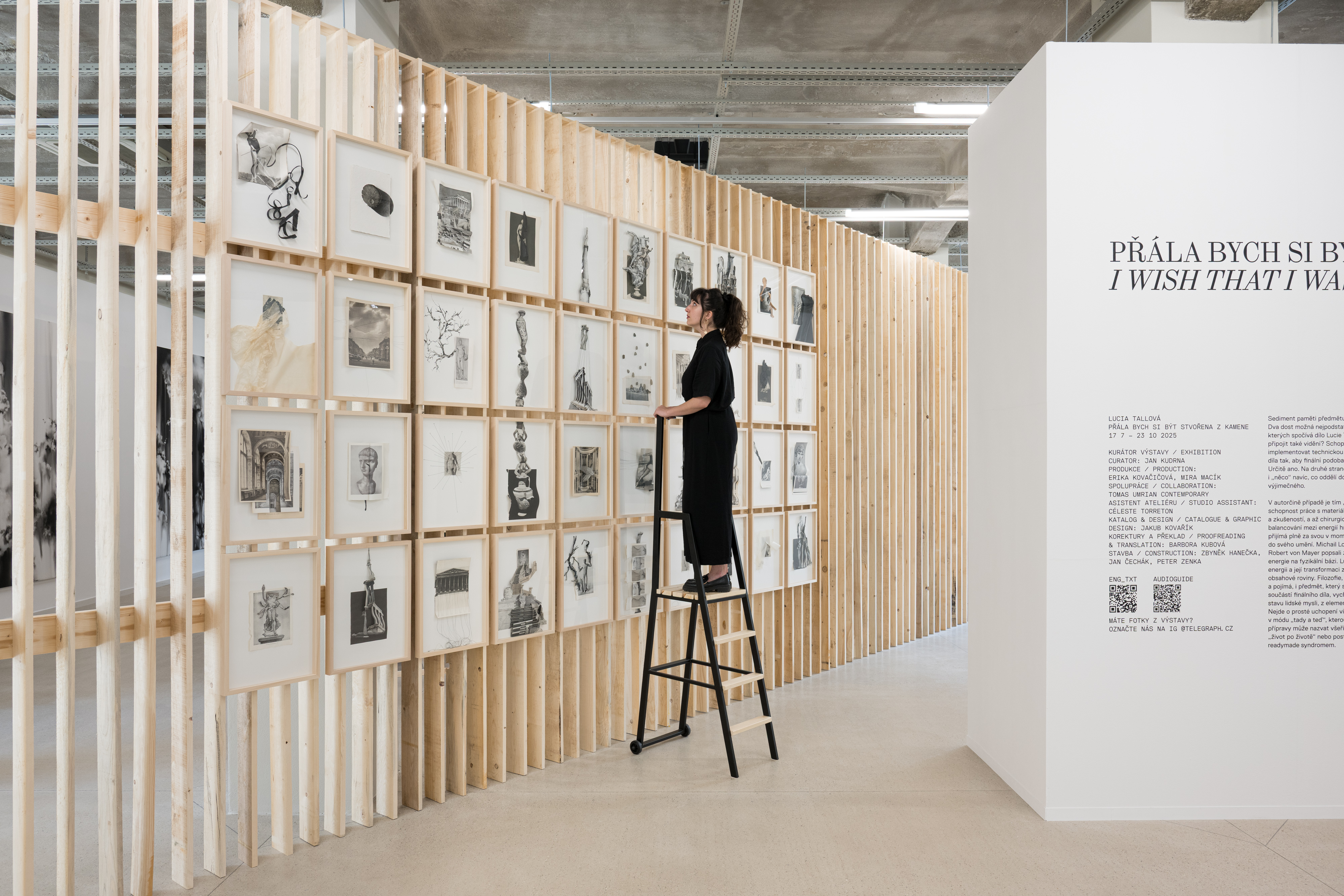
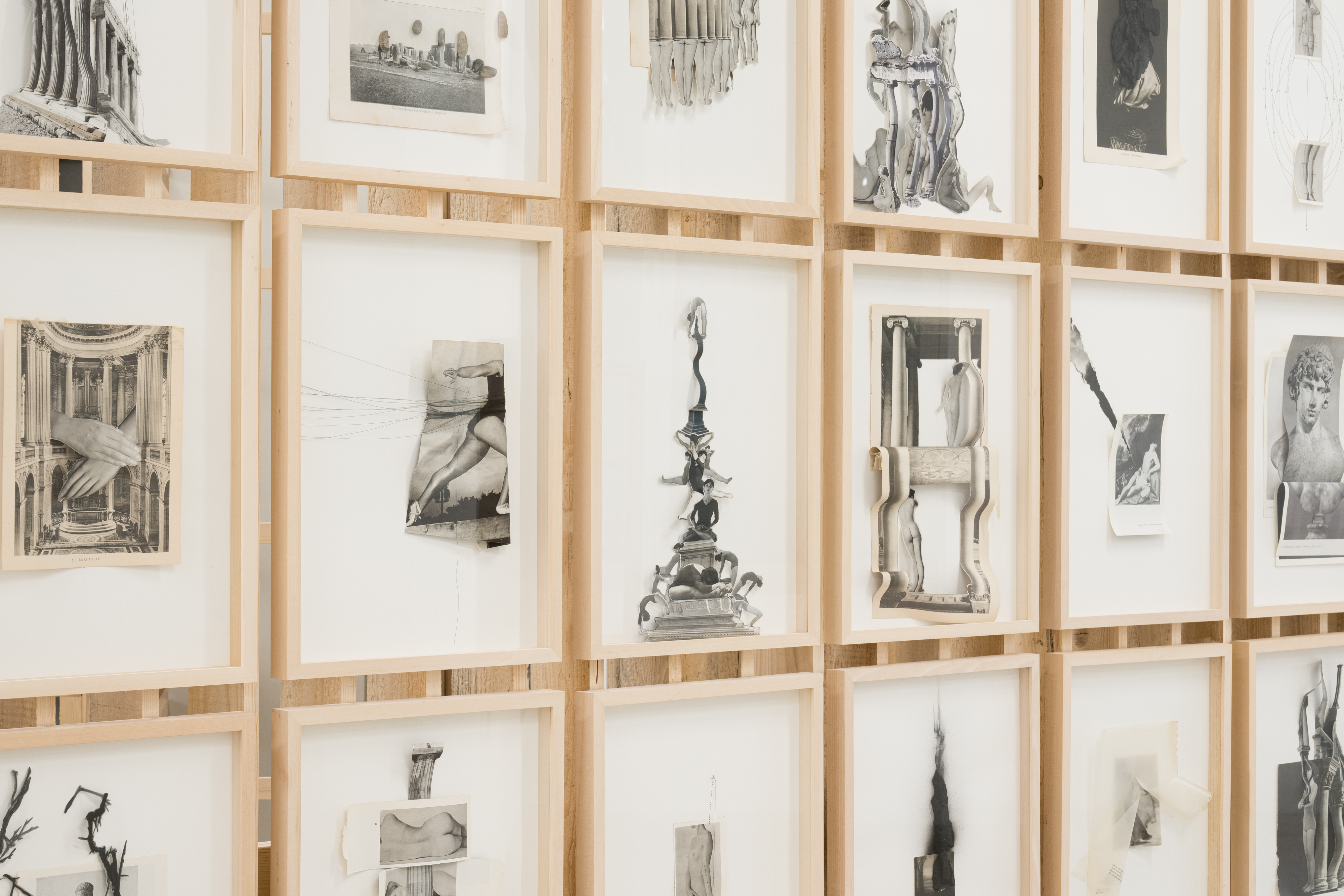
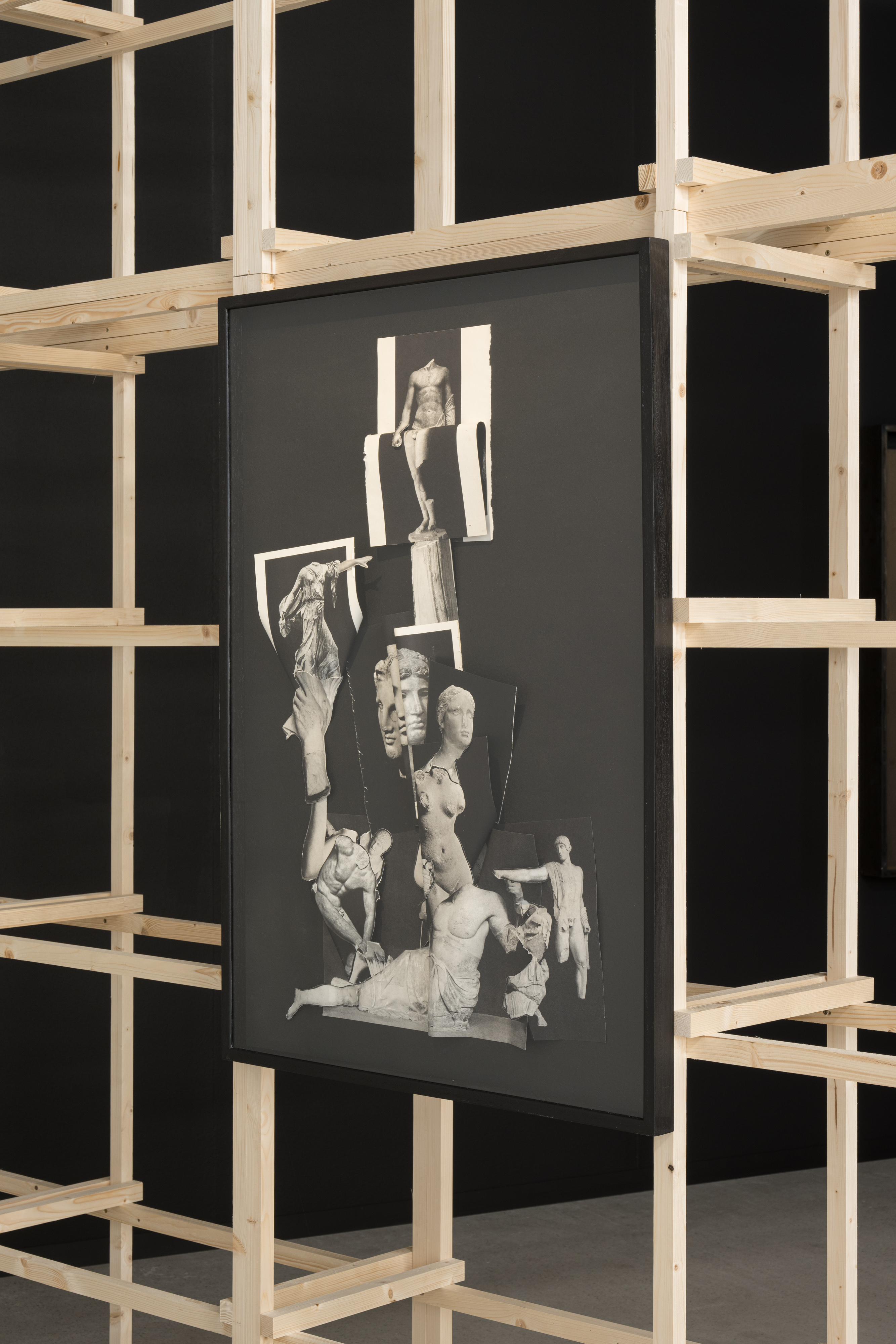
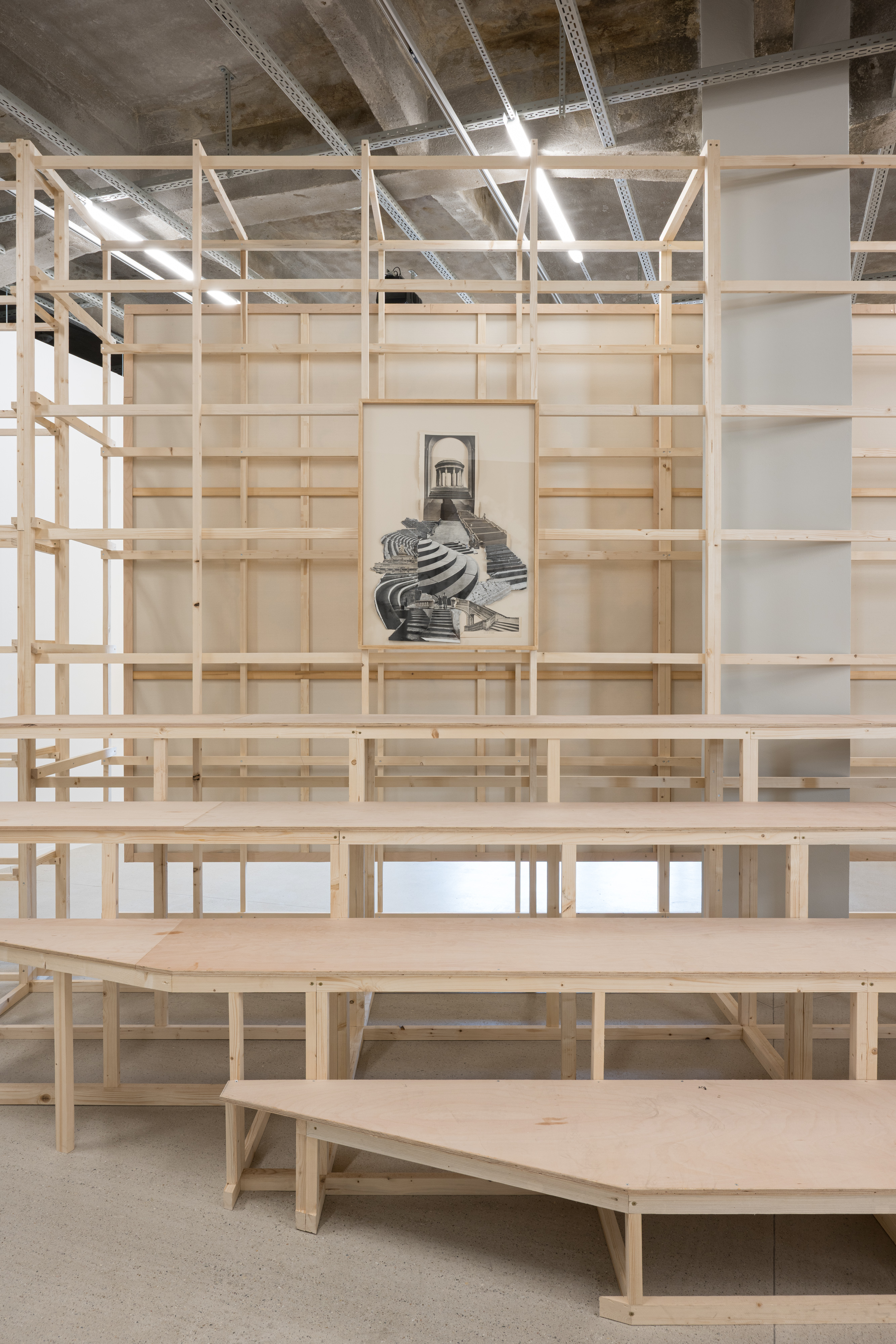
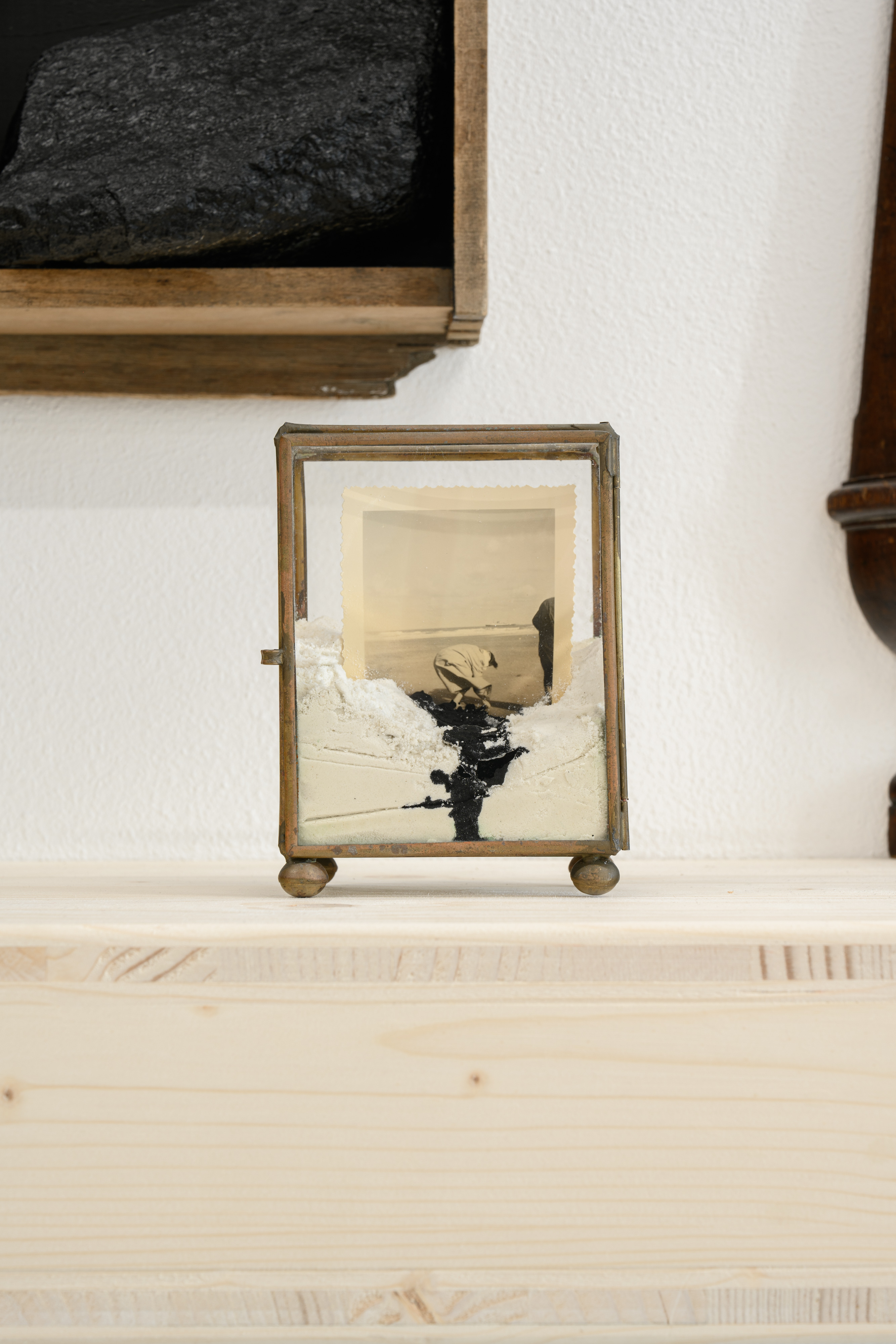
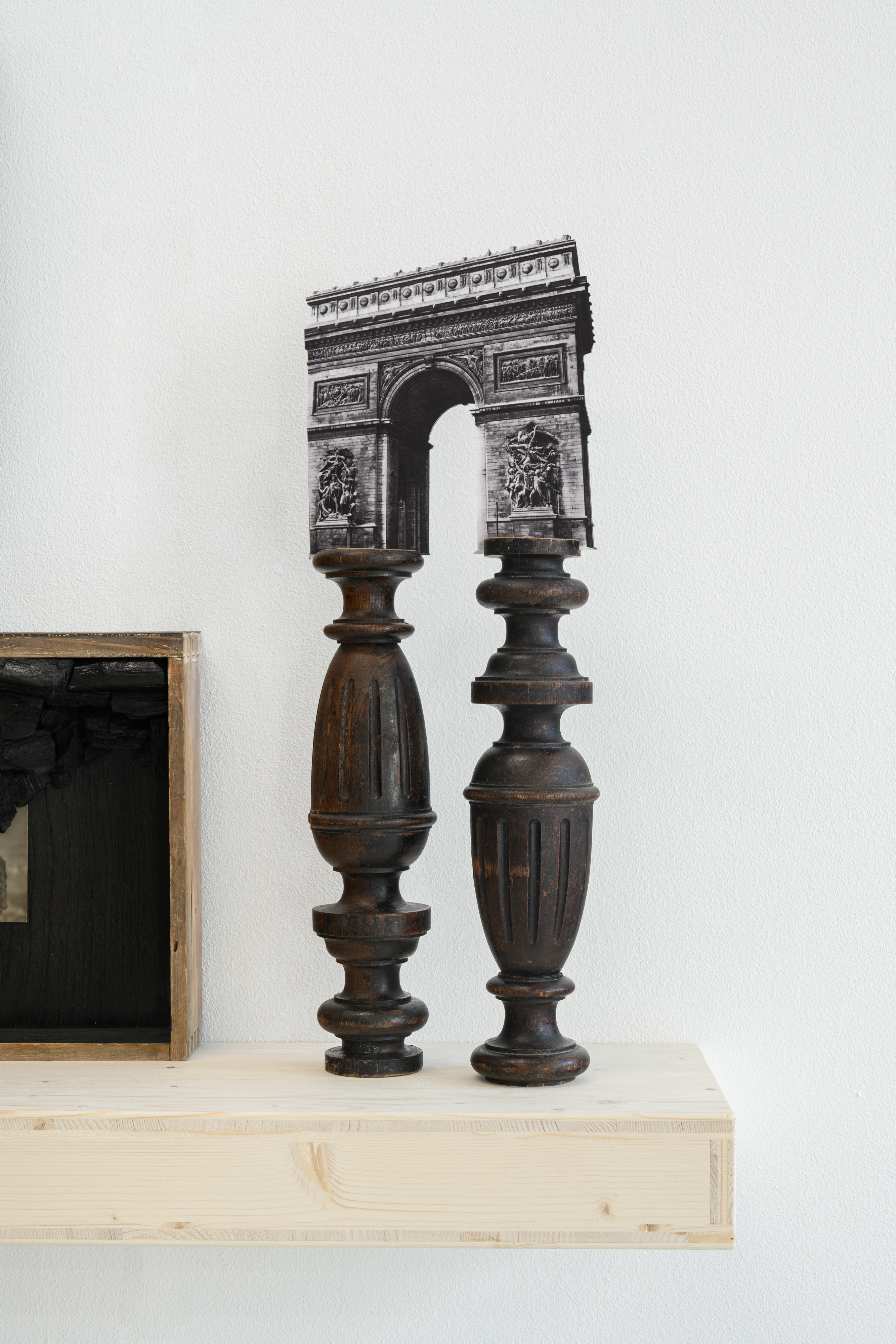
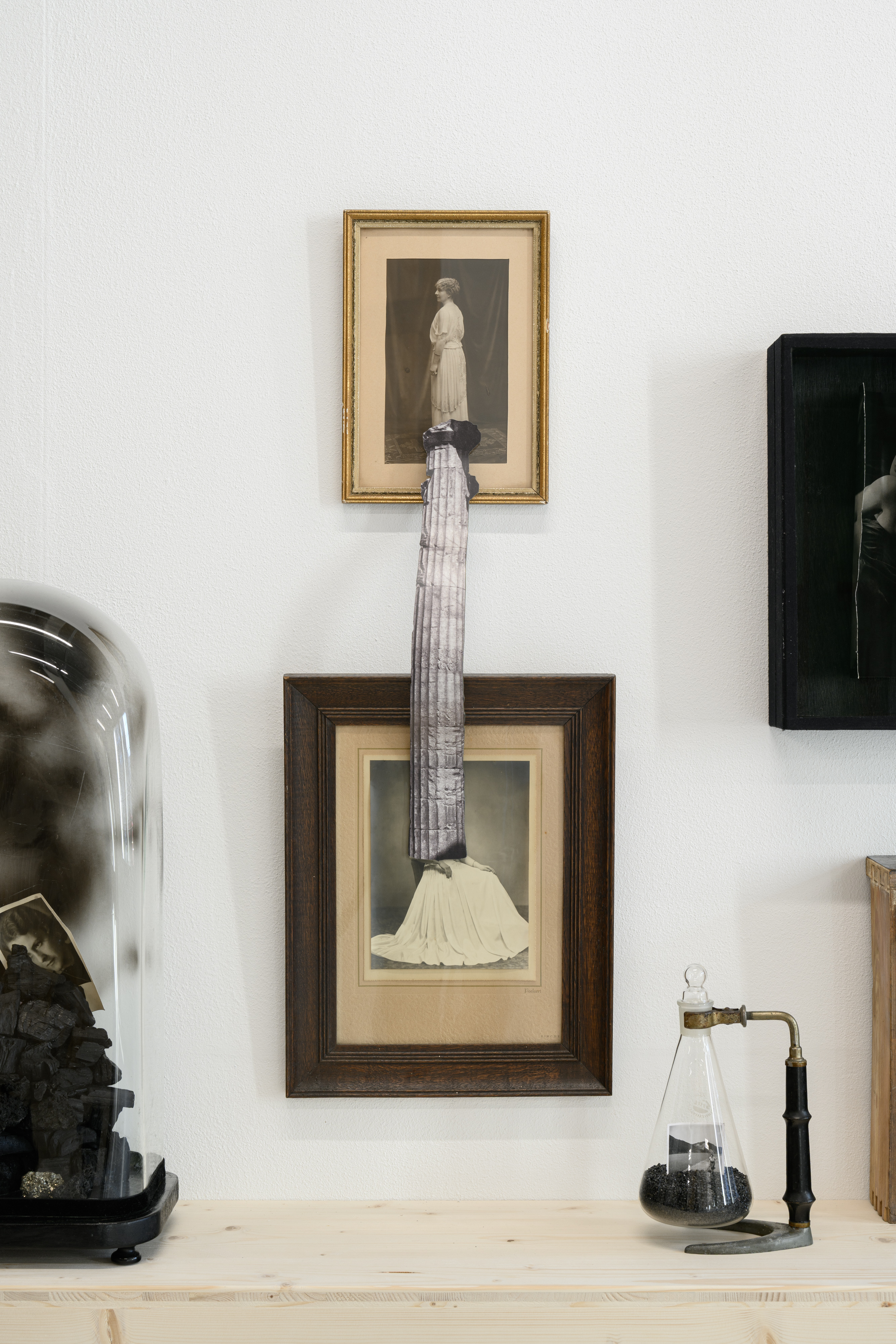
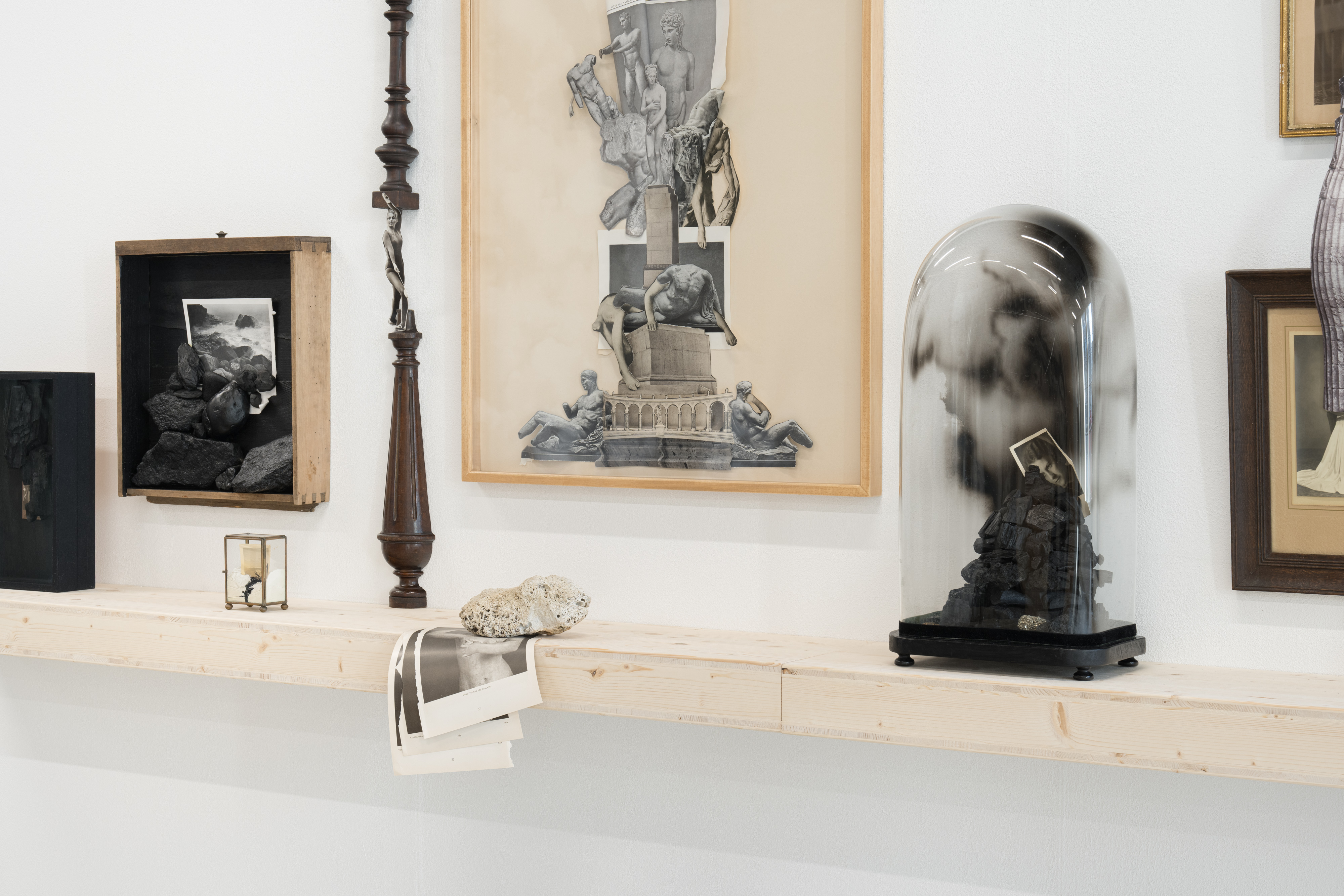
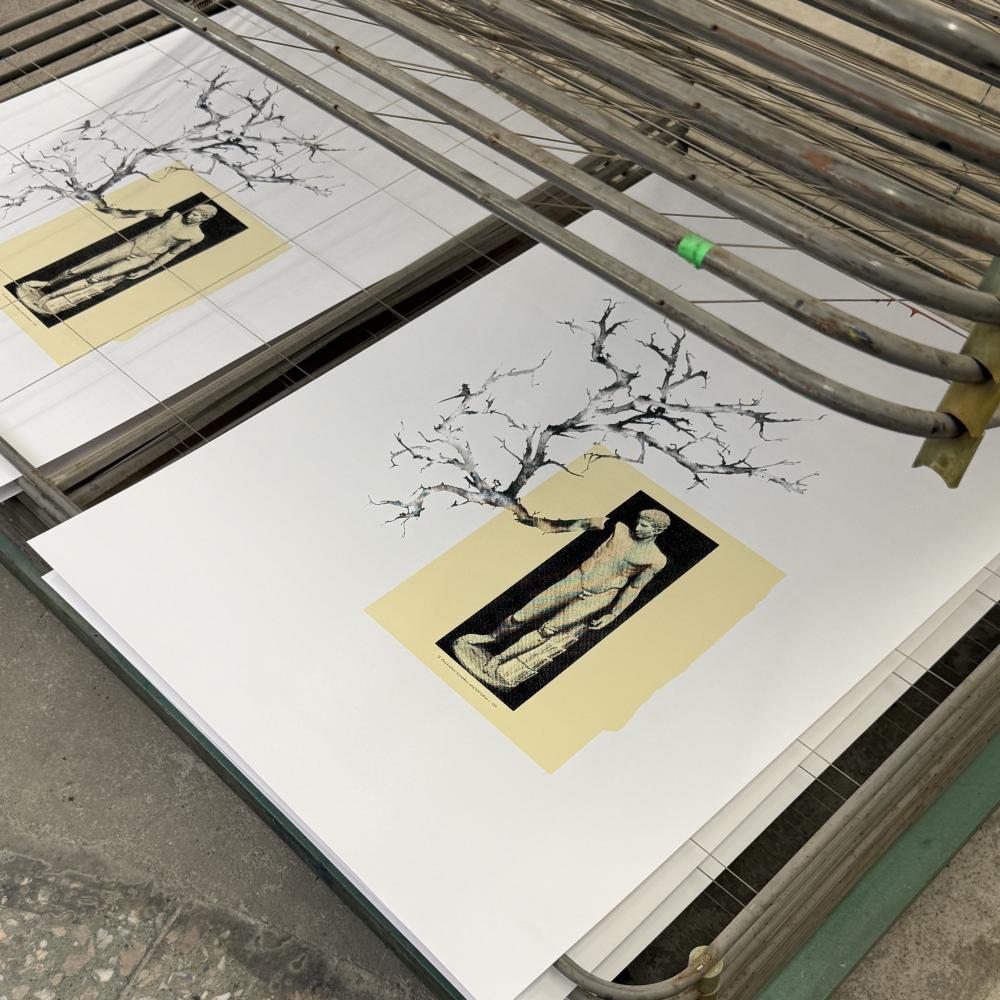
The work of Zuzana Husárová and Lucie Tallová connects on several levels. The collages that were part of the installation also appeared in the physical book Hypomnemata. Both artists also address themes of feminism, women's work and the changing roles of women in their work. They often find inspiration in ancient roots, stone and other natural materials. Also in the hard-to-grasp magic of the moment, which they try to capture, transform or retell. Similar to Tallová's work with collage, Husárová creates her poems by assembling various fragments - conversations, texts, her own thoughts, and different historical and geographical layers.
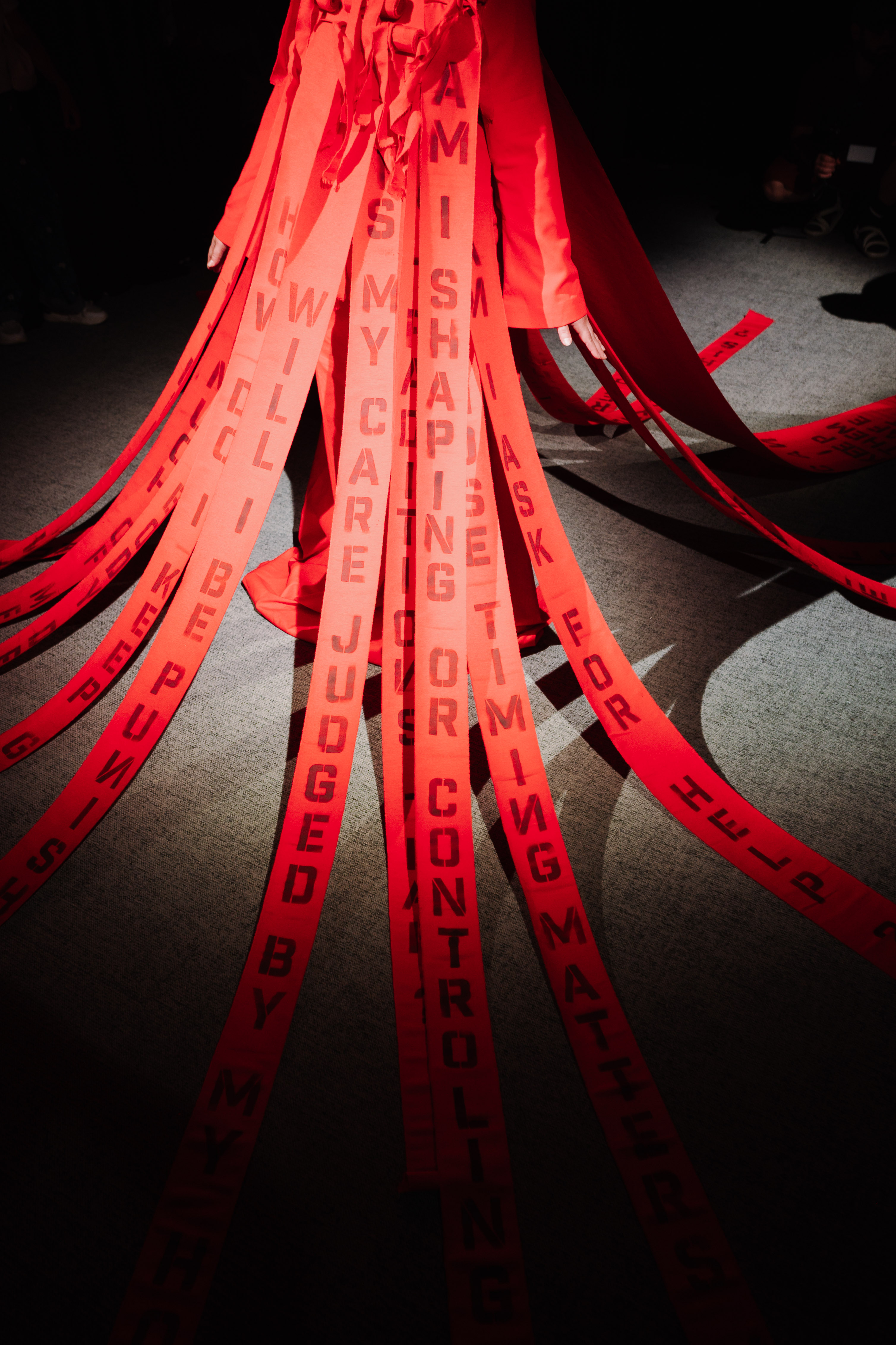
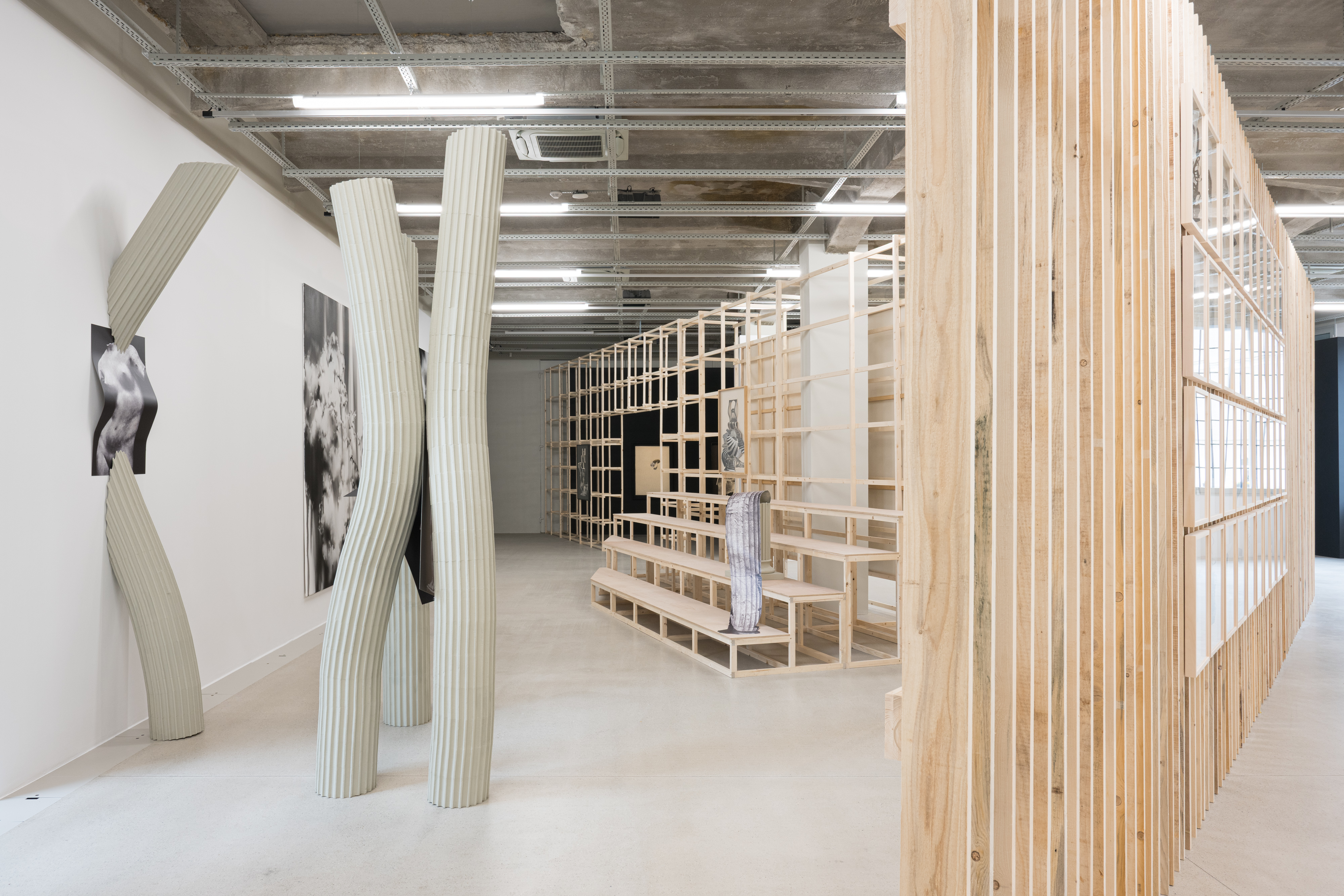
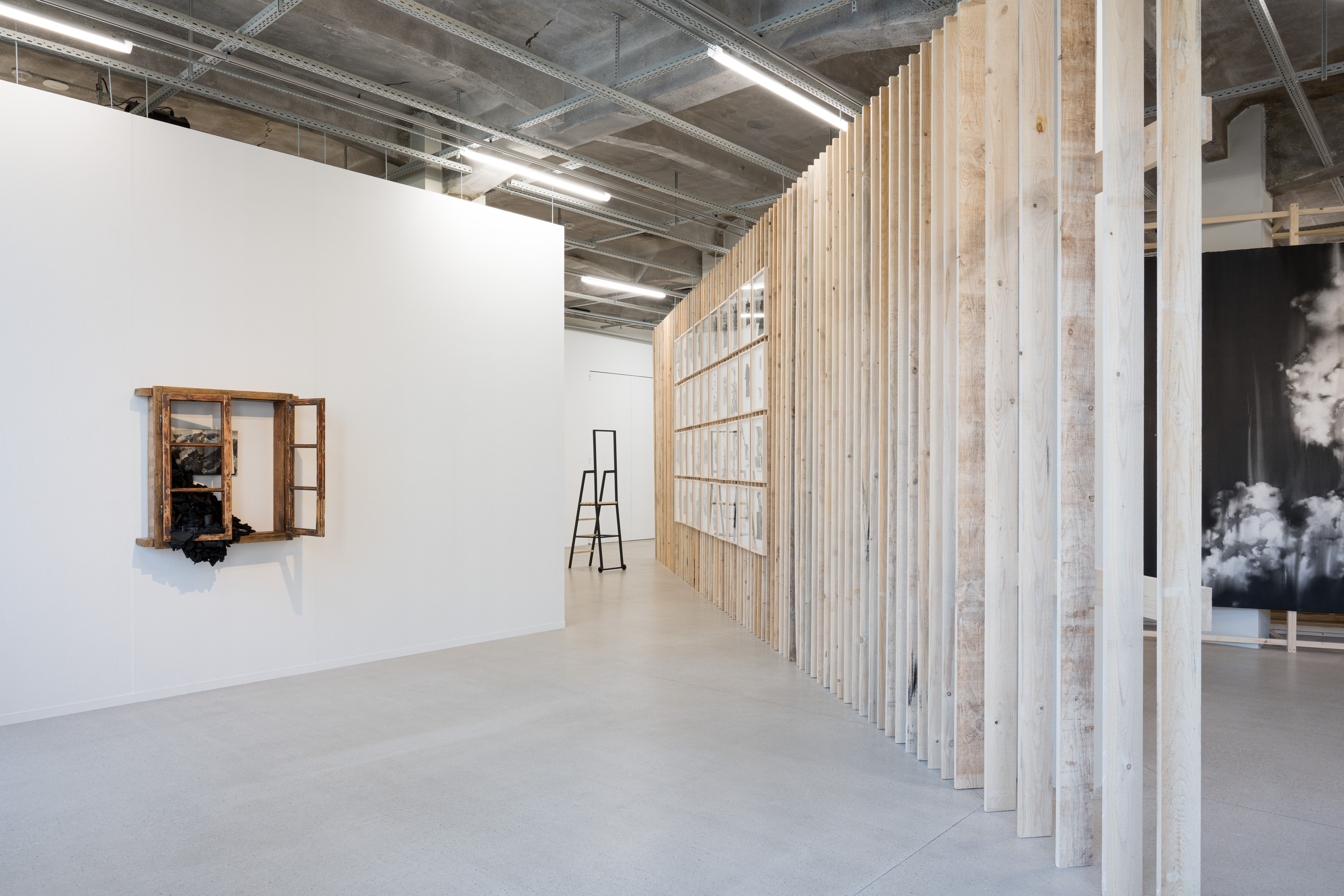
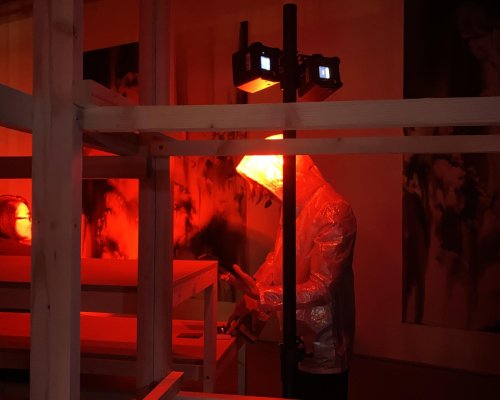
The performance included texts that Husárová developed into a sound-poetic environment during a live performance, changing in relation to the individual poems. The artist worked with the articulated architecture of the exhibition and also incorporated musical synthesizers, movement and costumes into the performance. The poem thus became a living organism. A sound form that came to life through a visual-sound-poetic performance.
The structure of the performance was conceived as a sequential journey of five poems across the exhibition space, unfolding in a clear dramaturgical sequence and in dialogue with the works on display.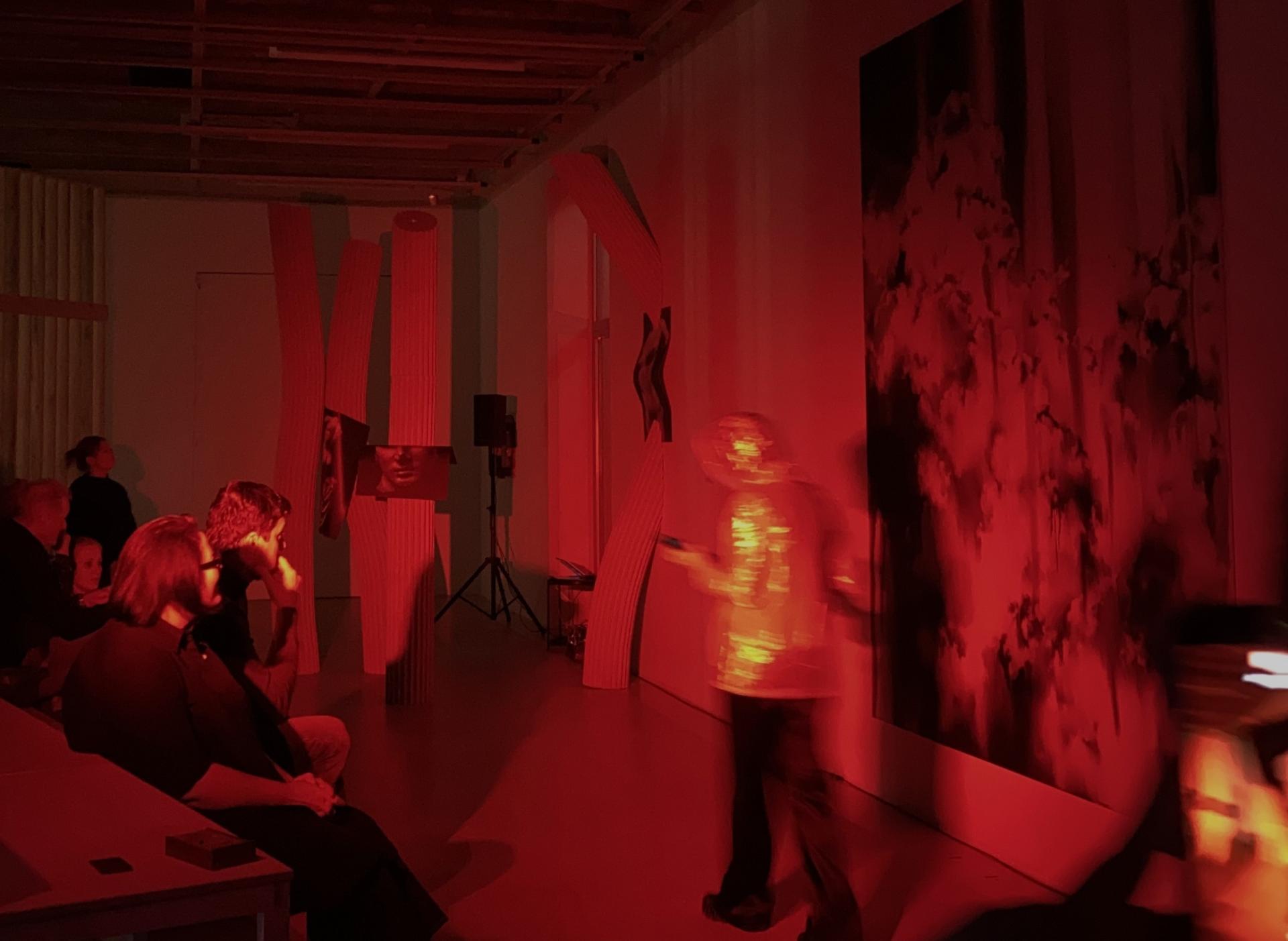
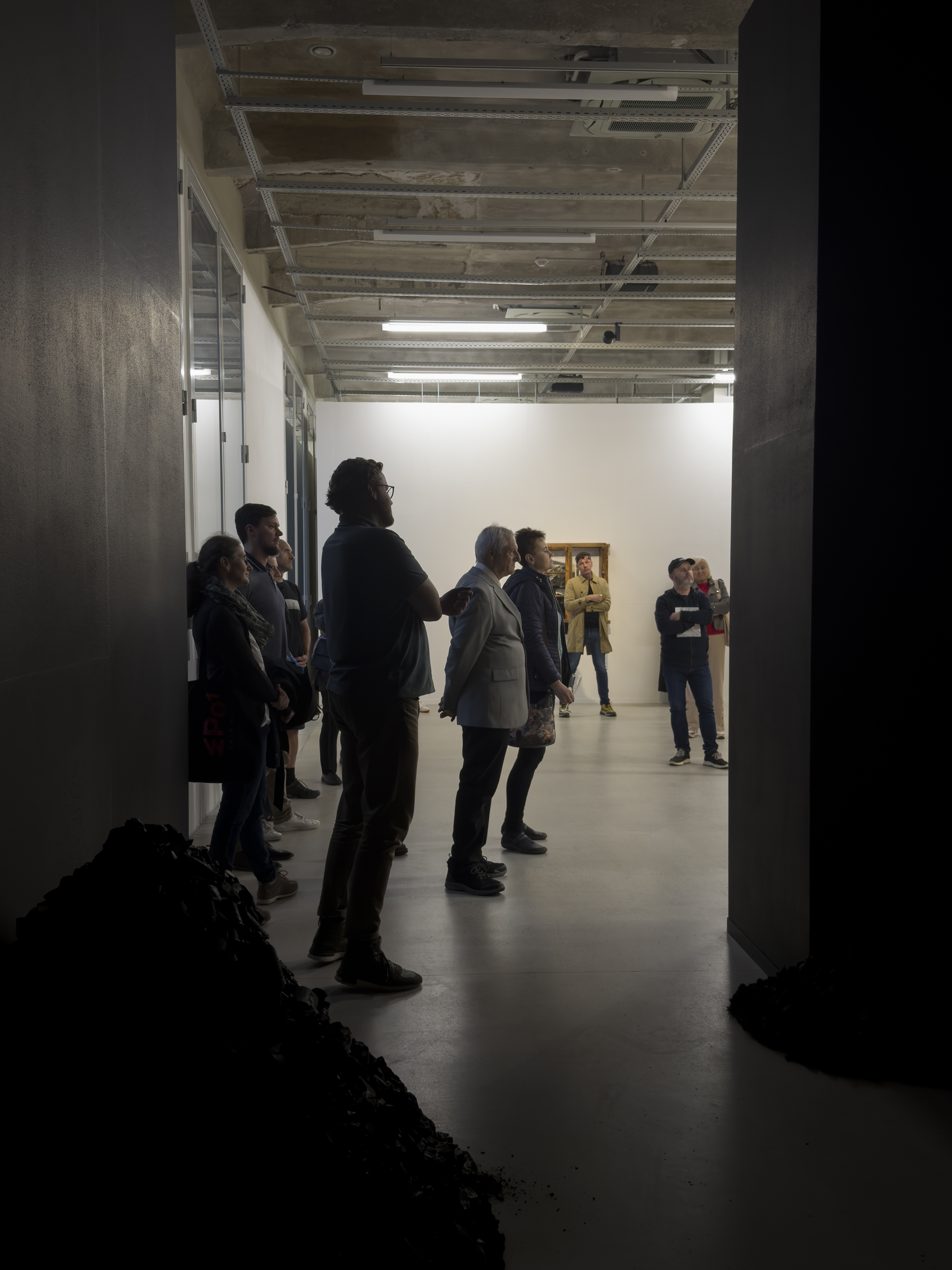
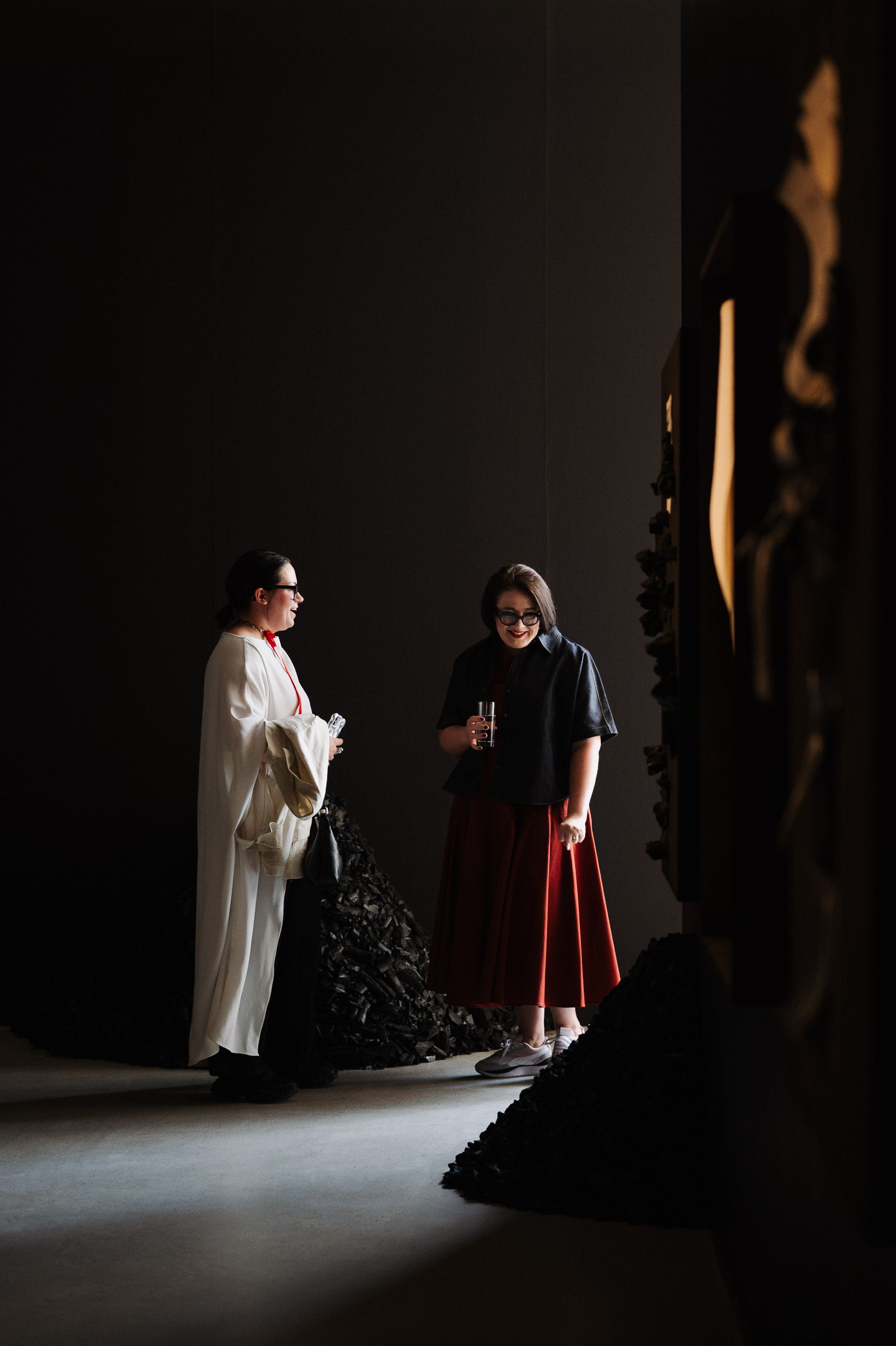
The opening section, a poem titled Dawn, took place in darkness, with only a small lamp illuminating the gallery. Through a poem about the space of darkness, the search for origins and truths, the purple-robed performer related the title and atmosphere of the exhibition, particularly through the motif of stone and marble.
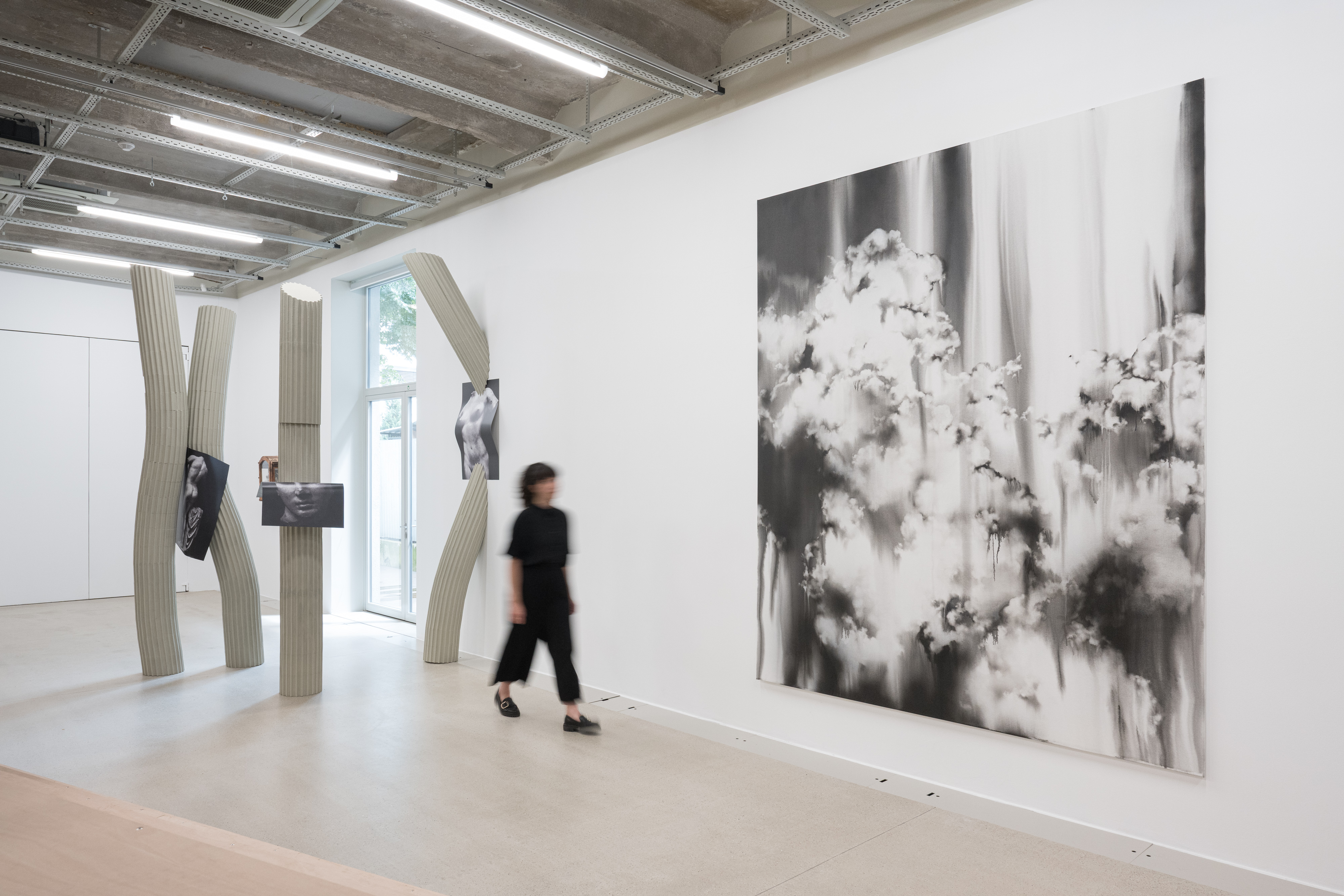
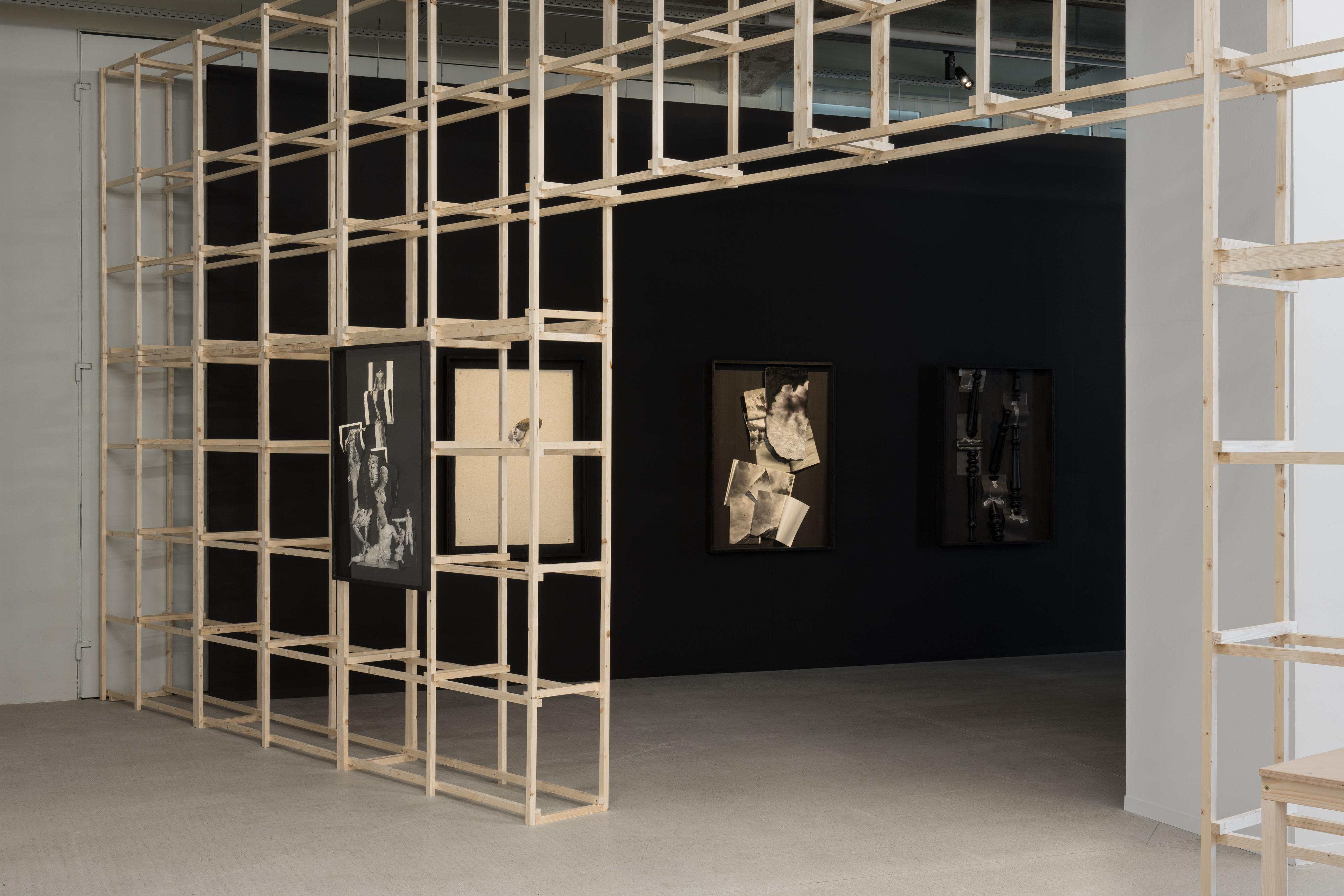
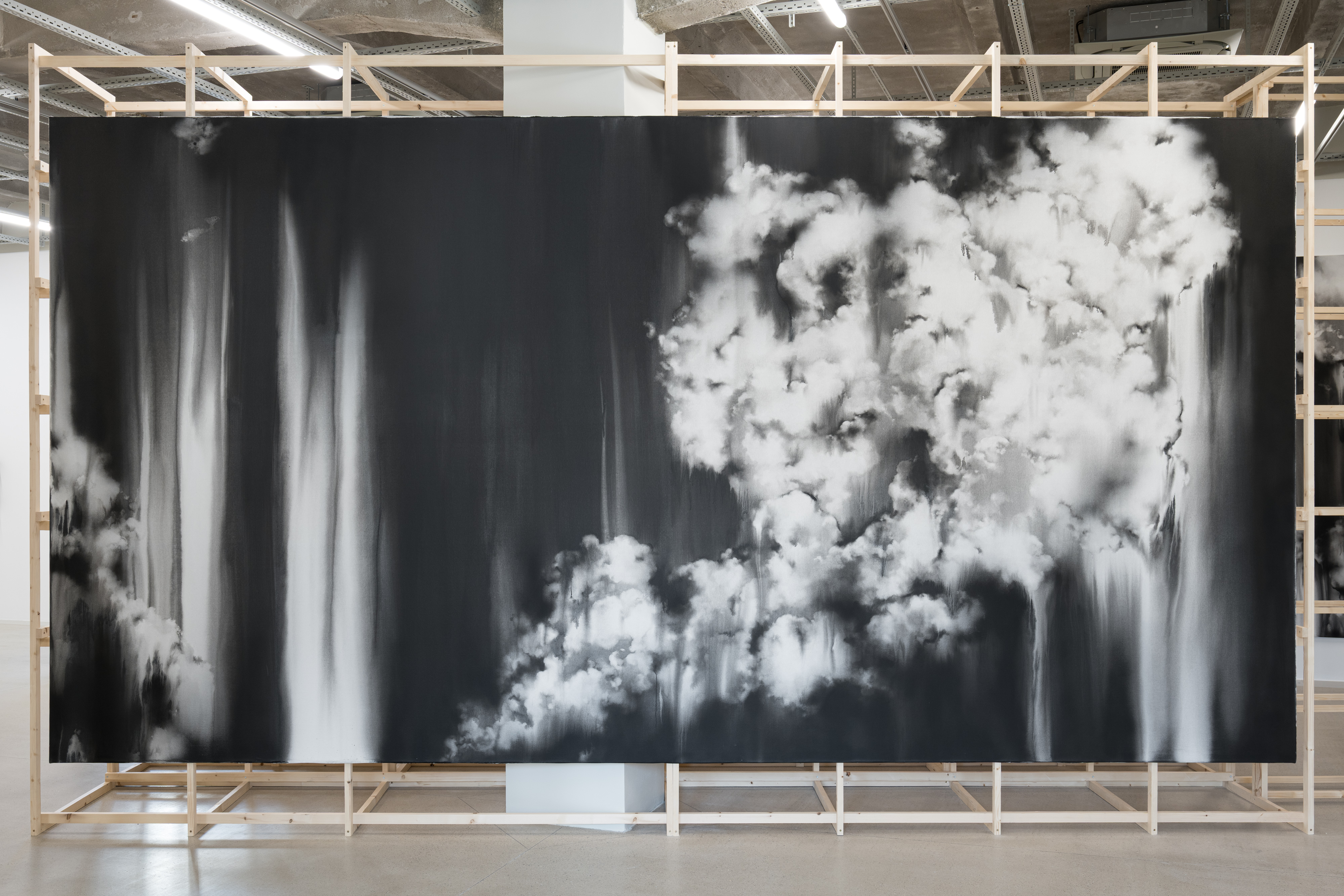
The following Fictions focused on the relationship between writing, image and constructed reality. The work with language here also resonated with the visual motifs of clouds and the theme of fictionality and the projection of meaning.
they are already dissecting the text
they are calculating a reality that was not
neither in the flows nor in the dark corners
on the screen dust, the average of the vectors of the two shadows, the sun nowhere
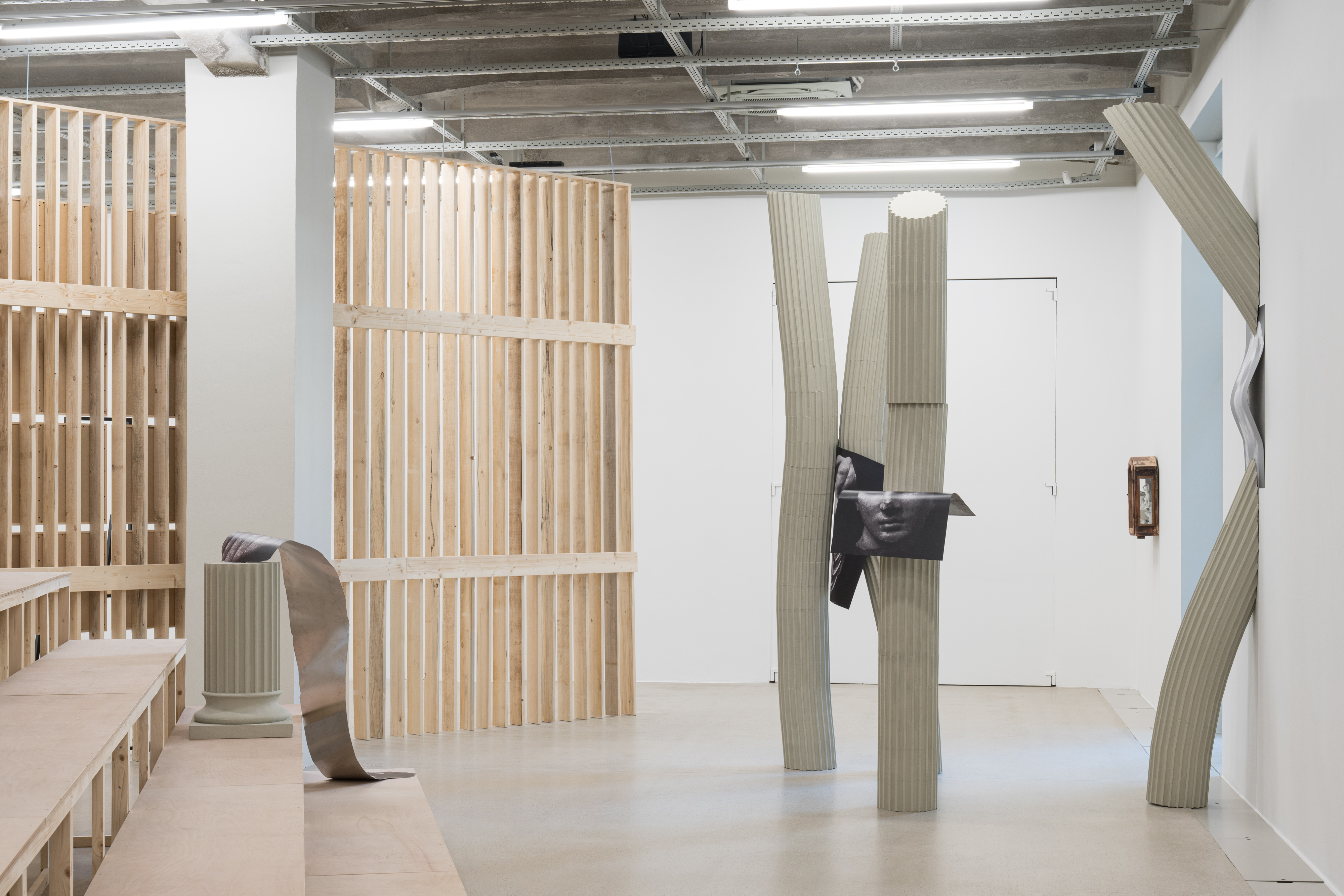
The Rushiki section thematized the skewing of attention in the contemporary world and the influence of social media on our everyday lives, in direct relation to the motif of caryatids and their distorted, tense positions.
In Variations the focus shifted to corporeality. Its transformations and layers , both human and artificial, and to questions of identity, progress and the relationship of the body to technology and history, in relation to the works placed in the darker corners of the exhibition.
according to Cavlieri, the body
is the overlap of an infinite number of planes
the layering of identity in a terminal culture
the subject or projection
archetypal mind-games
the sapphire blue of our surfaces
for intrusion
into the distances of history
unspoken, recorded, replayed
transgressions of bearing
The final poem Standards concludes the performance with a reflection on the image as the viewer's inner experience. The emphasis of the words shifted from external forms to internal perception, and the whole process symbolically closed from darkness and the search for origins to the image emerging within the human being.
The images are not on the canvas but in the human being, Gerhard Hoehme