Roman Ondak (*1966) is a conceptual artist who is one of the most recognized representatives of the contemporary Slovak art scene worldwide. He studied painting at the Academy of Fine Arts in Bratislava and completed study stays in New York, Kitakyushu, Munich and Berlin. He has presented his works at the most prestigious venues in the world, including solo exhibitions at the Tate Modern in London, the Museu de Arte Contemporânea in Barcelona, the Kunsthalle Prague and MoMA, which also has his work in its collections. In 2009, he represented Slovakia and the Czech Republic at the 53rd Venice Biennale with the groundbreaking project Loop . In his work, he responds to the legacy of action art and conceptualism of the 1960s and 1970s, focusing on performance art, spatial interventions and work with found objects. With subtle humor, poetry and hidden subtext, he transforms banal everyday situations into artistic gestures that explore human behavior, memory and perception of reality.
Within the exhibition Signal V, the author's work is represented by the work Morning , which develops his long-term interest in temporal layering, the transformation of everyday objects and working with the context of time. The key moment of Ondak's work is the deliberate uncertainty of the viewer through a small but significant conceptual change. He takes familiar things from our everyday life, but by shifting them in time or tearing them from their original environment, he gives them a completely new, universal dimension.
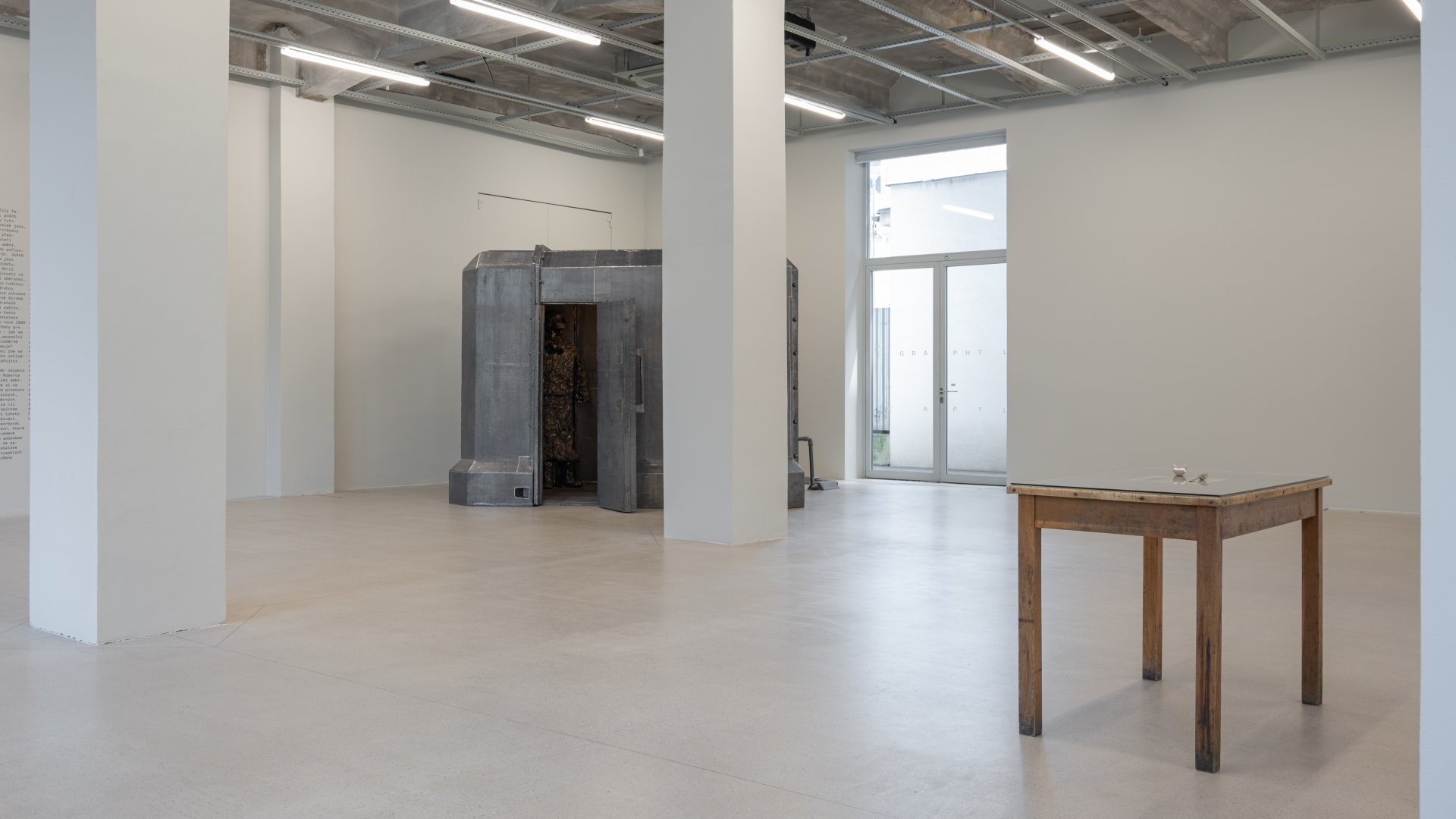
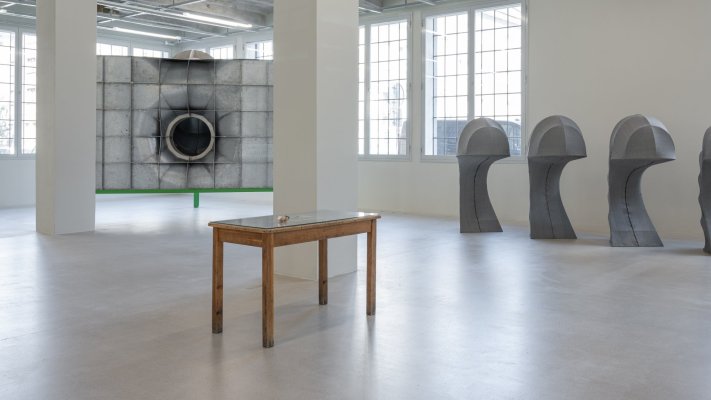
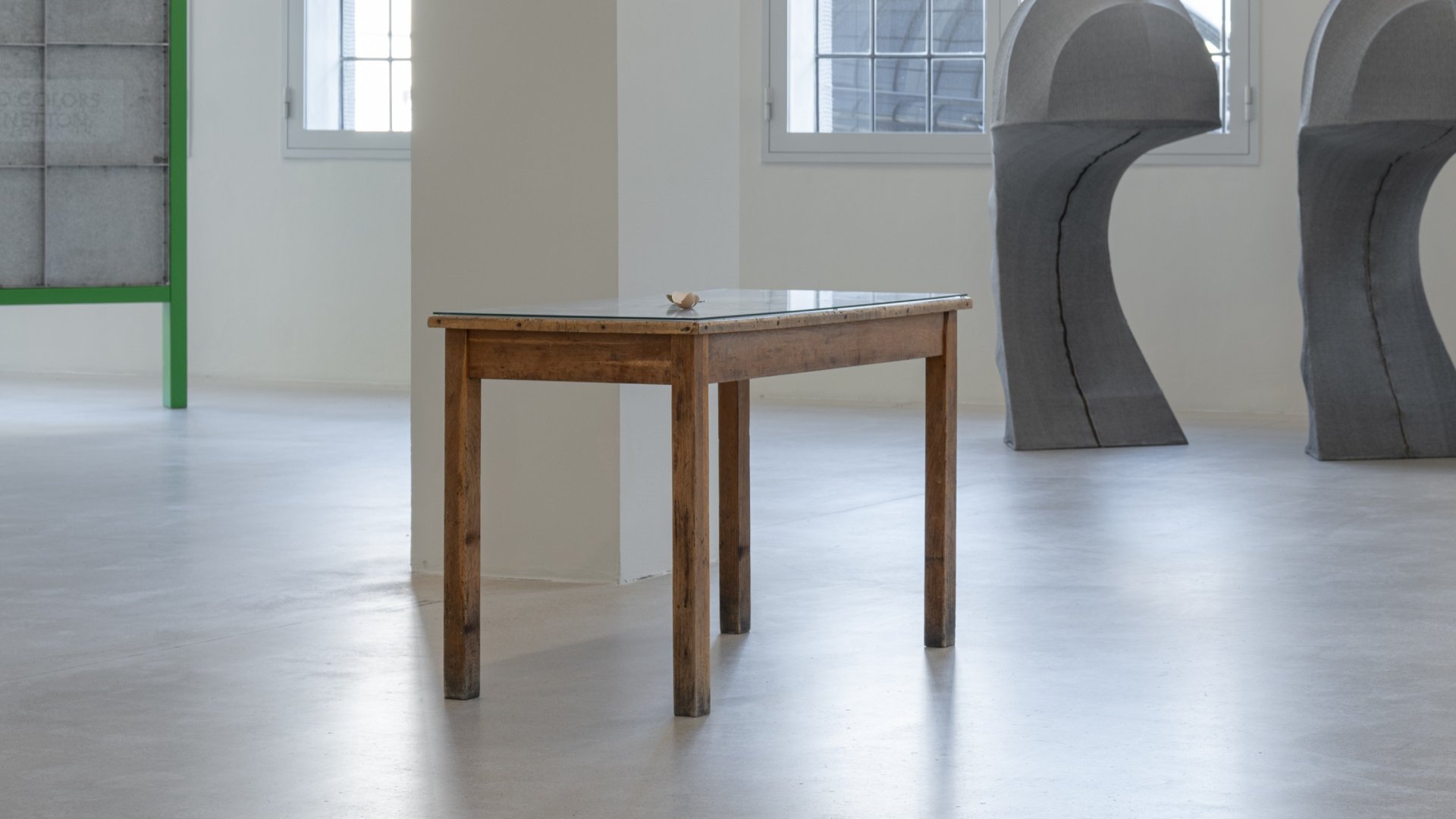
The installation is located in the Telegraph Gallery, more or less in the middle of the exhibition hall. At first glance, it looks like a completely ordinary table, which is additionally covered by glass. Only upon closer inspection does the viewer discover a drawing under the glass and on the tabletop itself, two real eggshells with a spoon. The drawing and real objects overlap here, creating the impression as if the drawn image has become reality.
The basis of the work is the author's early drawing of a simple still life, which he created while still a teenager. Several decades later, Ondak returned to it and connected it with real objects that served as a model for him at the time. What was originally a common part of everyday life and subsequently the motif of the drawing, thus returns in adulthood in a new role. As a ready-made part of a work of art.
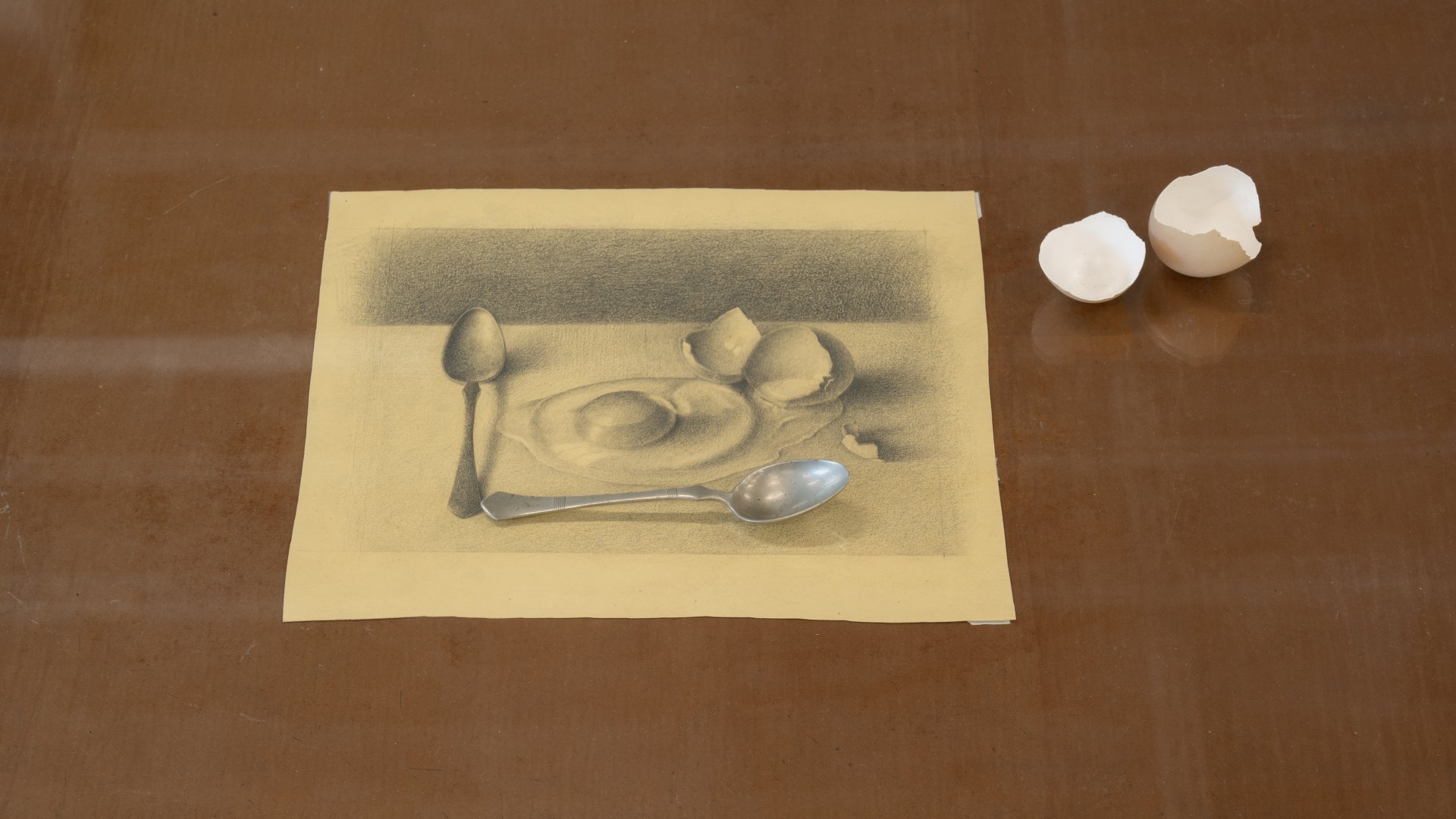
Morning therefore does not function simply as a transfer of a drawn still life into space. What is essential is the encounter between the original painting and the very things that preceded its creation. The drawing preserves a specific moment in the author's adolescence, while the real objects have physically bridged this time gap and reappear in the present. In a single object, the young Roman Ondak, who observed and drew the objects, meets an adult artist who returns to his own past and places it in a new context.
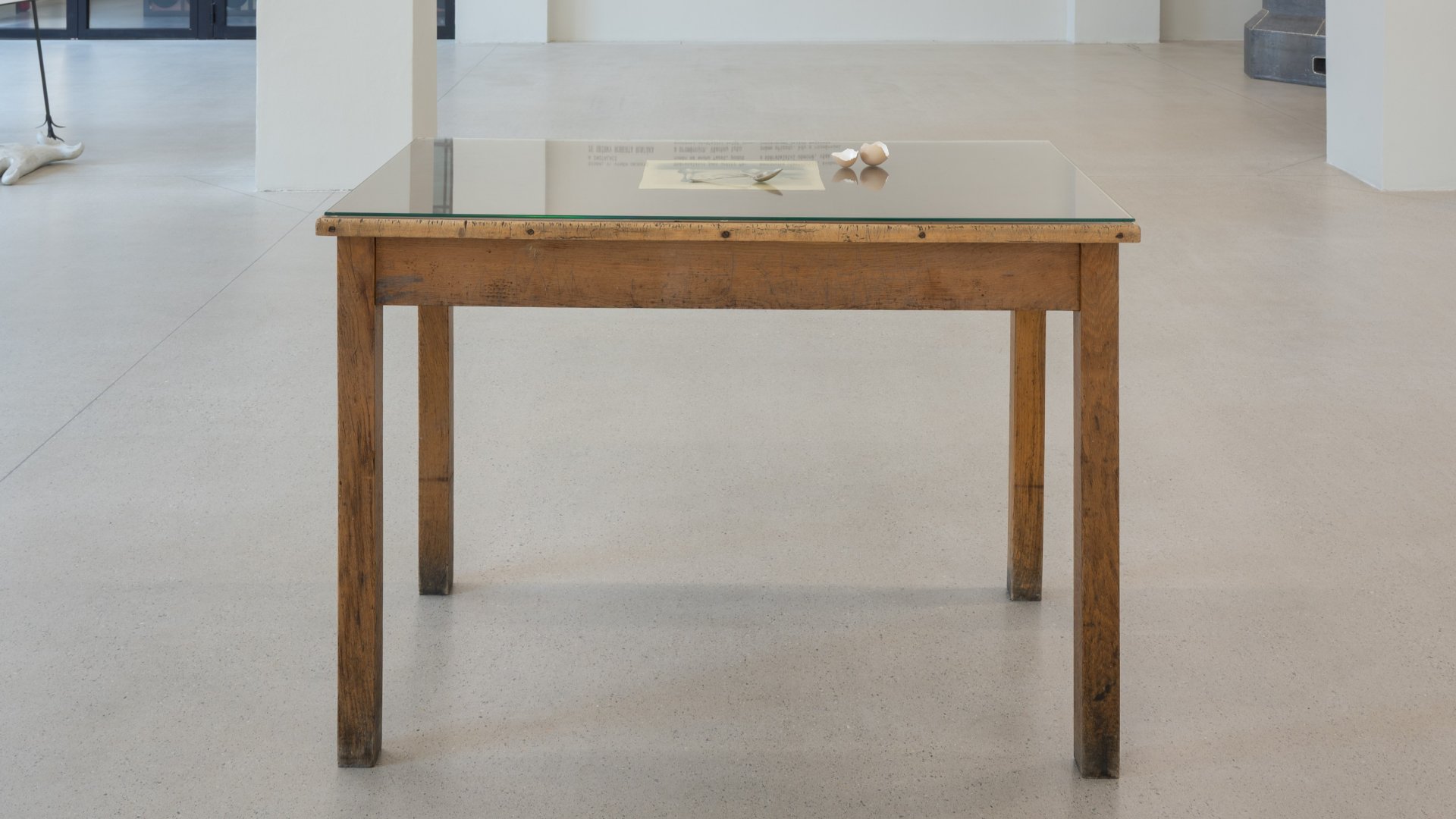
What was once a common part of everyday life appears in the gallery space years later, along with its own visual record. The work thereby disrupts the clear boundary between past and present, the real object and its depiction, and encourages the viewer to think about the ways in which we return to our own past and how our memories transform over time.
The exhibition Signal V: A Selection of Objects and Installations from the Robert Runták Collection can be visited at the Telegraph Gallery until October 1, 2026.