What is the telegraph for an artist?
Today it is 176 years since the world's first telegram was sent. Behind this world event is not a brilliant physicist, but an artist. Most people know him as the inventor of Morse code - a set of codes interpreting Latin letters, numbers and some special characters into dots and lines, or short and long signals. Samuel Finley Breeze Morse.
In 1825, the successful young painter founded the National Academy of Design in New York City, where he served as a professor of descriptive art. In the late 1920s and early 1930s, Morse embarked on a tour of Europe to learn about the new artistic movements popular in the Old World at the time. Although he had no technical training, Morse took an active interest in Europe in the new discoveries in electromagnetism. Inspired by the findings of his travels, he attempted to develop a long-distance messaging system based on this phenomenon upon his return to the United States.
After nearly six years of battling the stagnation of the American legislature, he finally succeeded in getting Congress to fund his project in 1843. A year later, the first telegraph line was built, 65 miles long from Washington to Baltimore. On May 24, 1844, the first ever Morse code telegram was sent over this line. The author of the text was the daughter of his friend, the government's patent commissioner, Anna Ellsworth, who first notified Morse that his patent for the telegraph had been approved. As a thank you, Samuel Morse promised the girl that he would send the world's first telegram in her honour, and suggested that she devise its contents herself. The text of the message contained a quotation taken from the Bible, "What hath God wrought? ("What hath God wrought?"). The government was quick to see the enormous possibilities that the invention of the telegraph brought, and telegraph lines gradually spread around the world. Morse never returned to the arts and devoted himself to patronage for the rest of his life.
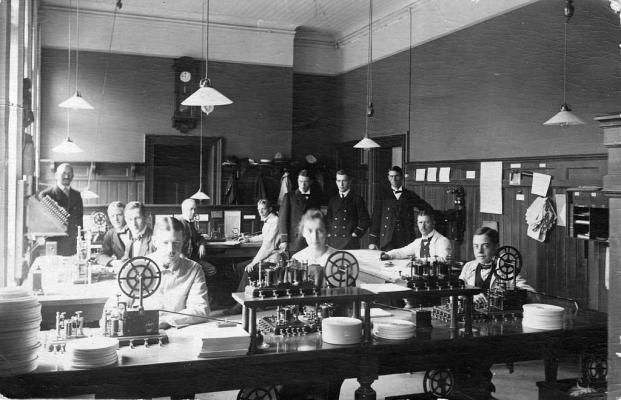
The building that houses the Telegraph was used as a telephone and telegraph factory in 1909. The machines, invented and perfected by the American painter Samuel Morse, revolutionised human communication. Even though telegrams have not been sent in the Czech Republic since 2010, the Telegraph continues to fulfill its original purpose: to spread information, send signals, and connect people.
By Sofia Taranenko