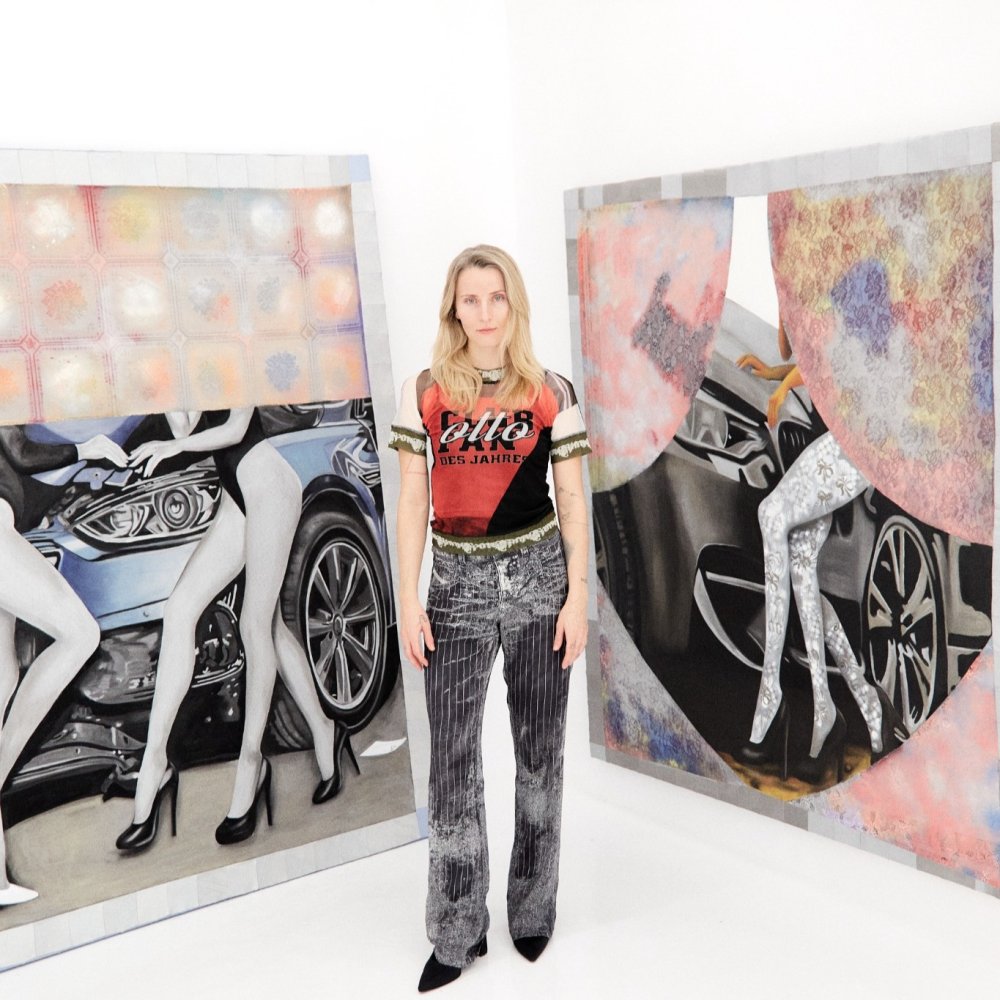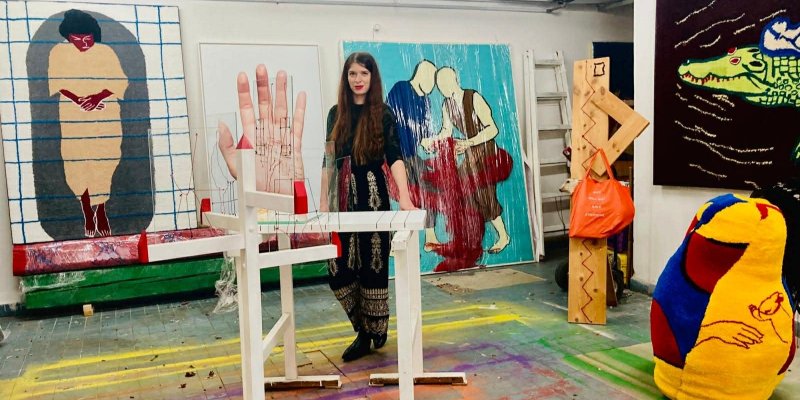
Karíma Al-Mukhtarová (*1989) studied with Jiří Kovanda at the Faculty of Art and Design in Ústí nad Labem, at Jiří David's Studio of Intermedia Confrontation at the UMPRUM in Prague and at Milena Dopitová's Intermedia at the Academy of Fine Arts in Prague, where she graduated in 2018. In 2019, she completed a several-month CEAAC internship in Strasbourg, France, and in 2023 she participated in a prestigious residency at Art Omi in New York. The main themes of her work include questions of identity and the process of socialization of the individual. Karima Al-Mukhtar's works are represented in a number of prestigious collections, such as the Prague City Gallery, the Alsha South Bohemian Gallery in Hluboká nad Vltavou, the Moravian Gallery in Brno, the Francis J. Greenburger Collection, COLLETT Prague | Munich and many others.
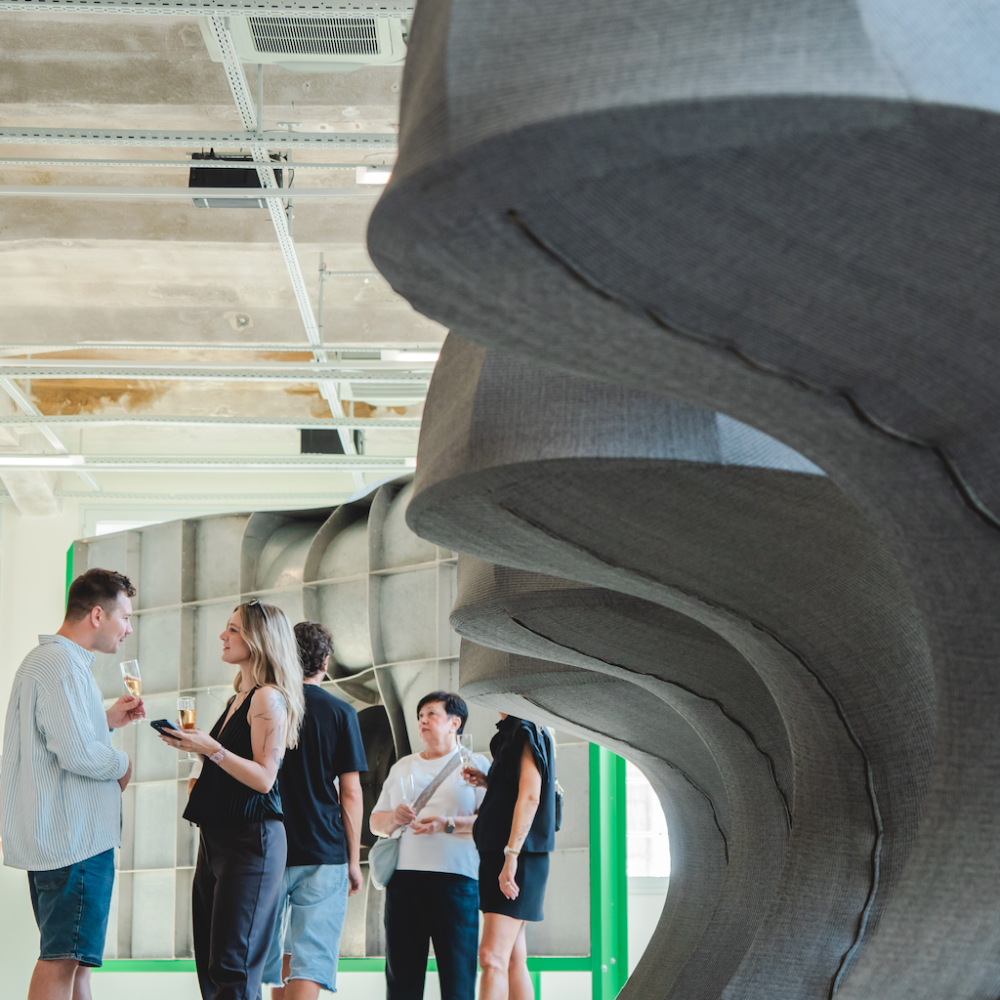
This interview was written on the occasion of her residency at the Telegraph in Olomouc, which will be accompanied by Open Studio on Wednesday, February 25, 2026 at 6:00 pm.
A residency can create a space for some distance from the normal rhythm of work. What is opening up or transforming for you at this point in your residency at the Telegraph?
Residencies have always created a space for me to step back from the normal rhythm of work. Often it's not even about geographical distance, but rather a change of scenery. Finding myself in a different context, surrounded by a different energy, naturally translates into the way I think and create. I personally find courage in residencies. All of the major turning points in my work have come about in these situations. Sometimes they are just sketches or ideas that I realize only in hindsight after I return, but they always prove to be fundamental.
What does it mean for you to have the background of another city and another studio for a while?
Changing the city and the studio means for me the possibility to step out of the established working patterns. The new environment allows me to look at my own work with more distance and to be more sensitive to what is important at the moment. A different studio often brings a different rhythm to the day, a different focus and an openness to experimentation.
How does your creative process work? How do you usually start a new piece and what inspires you the most when working?
Starting is always the hardest part for me. I'm quite strict with myself and often know in advance what the work should look like, but that doesn't necessarily go hand in hand with the result. That's why I tend to get nervous at the beginning of every job. The closest thing to me is the process itself. I work mostly with hand techniques, which I find meditative at the same time. I find inspiration mainly within myself.
You often work with long processes that require patience, such as embroidery or weaving. What does this pace give you that keeps you coming back to it?
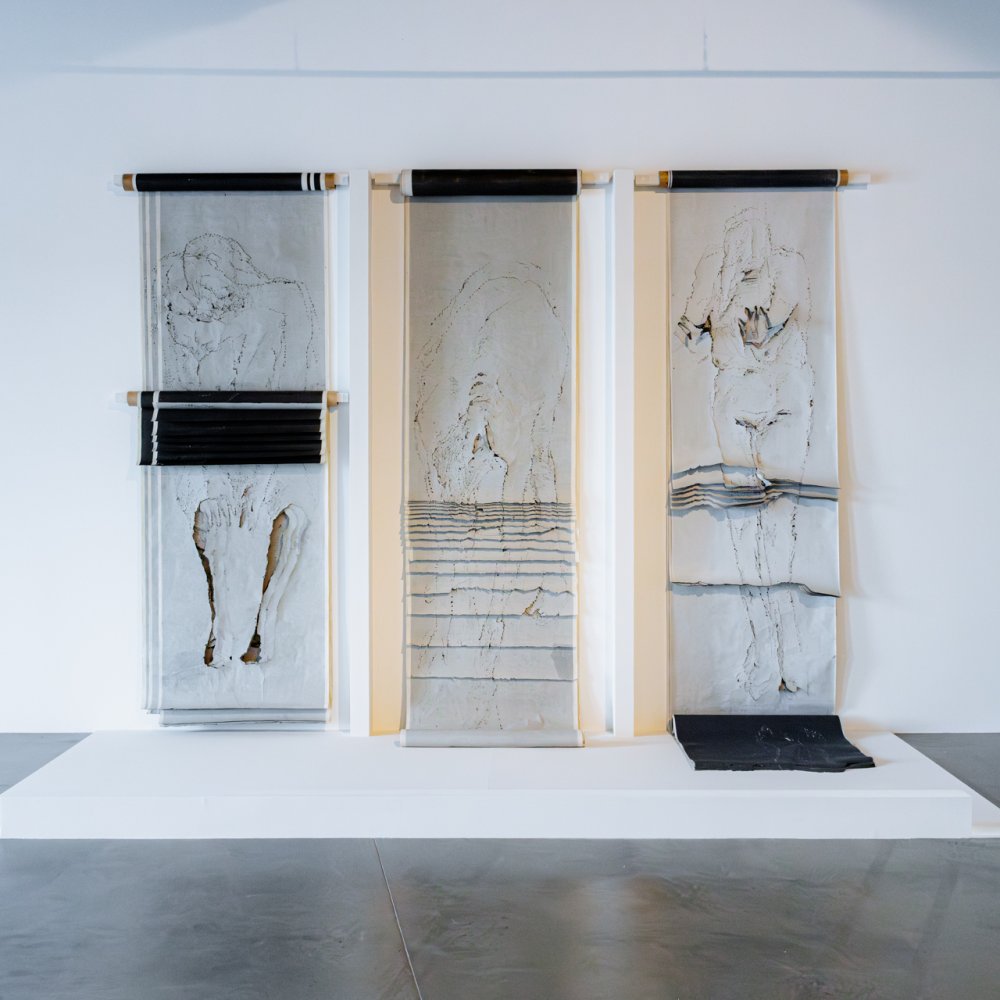
Working with slow, time-consuming techniques is a way for me to break free from the pressure for performance, quantity and perfection that often dominates today. This rhythm allows me to stop and give one thing my full attention. I see this as a form of richness - the ability to spend time with the material, with myself, to be in the process and not rush to the end result. But at the same time, this pace is challenging to justify in a gallery context. When I work with my hands, whether with a needle, a sewing machine, a weaving gun, or even a drill, something unique and unrepeatable is always created. It is in this uniqueness and in the small imperfections that I often find the beauty and meaning of the work.
Is there a particular reason that you transfer embroidery to other materials such as glass or wood?
I have been collecting various craft and hobby techniques for a long time. I am gradually learning them and then using them in the context of my own work. For me, the content of the work is always the most important and only then do I deal with the choice of materials. The choice of materials is therefore based directly on the content of each work.
Your work combines photography, objects, performance and craft techniques. How do you think about combining them and what does this combination allow you to express?
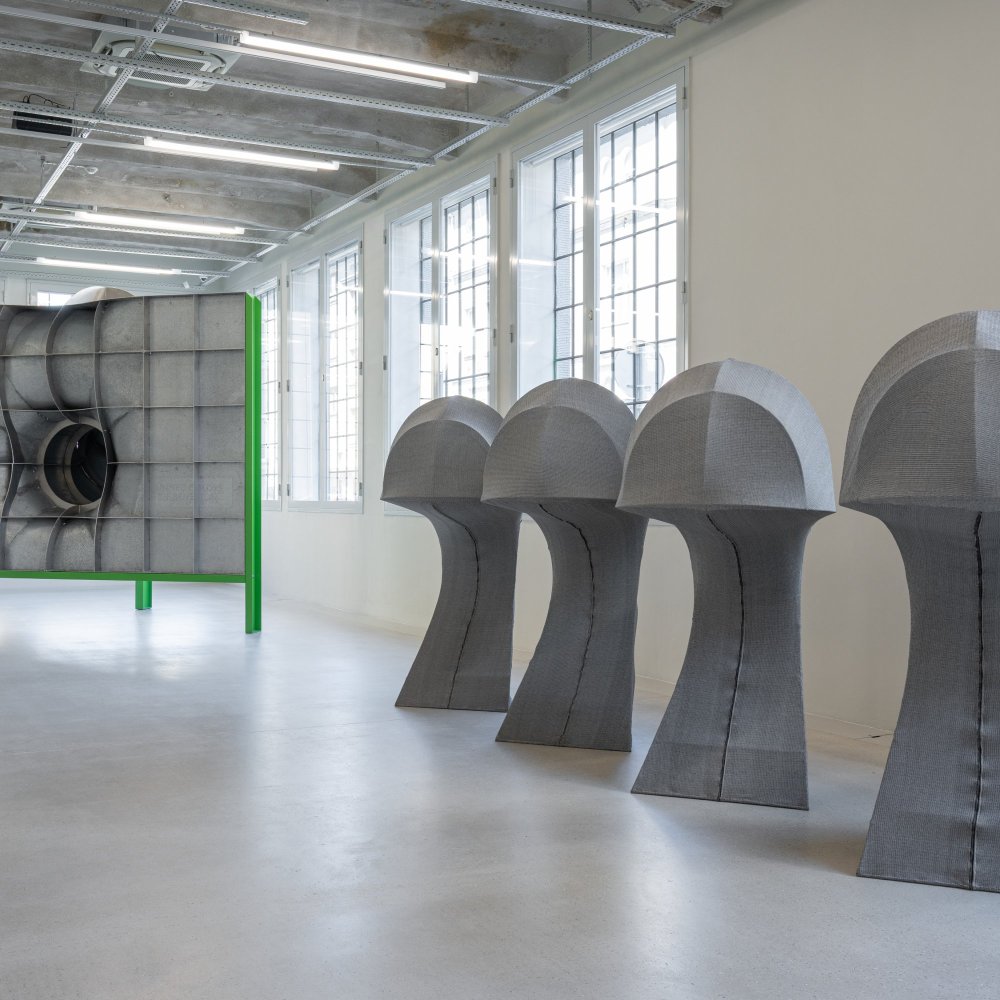
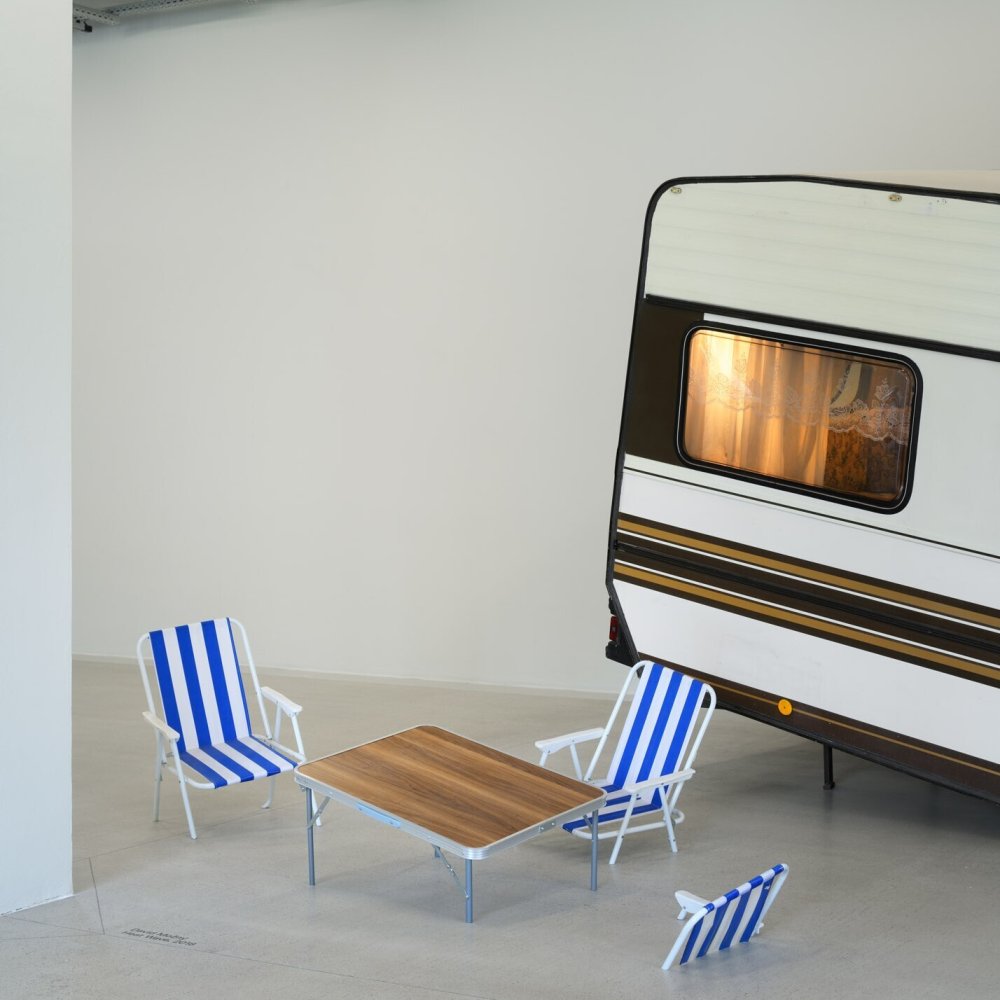
For many years I have worked in sets and I see the individual works as smaller parts that only begin to function within the whole - the installation. For me, each work is a record of a journey, a process or a quest. The combination of different media allows me to record these layers of experience in different ways and to connect them into a whole.
For example, in the Connection Almost Found series, I often explore the search for roots, connections to nature, and questions of timelessness.
There are recurring themes of identity and how others see us in your projects. What is it about these themes that has long appealed to you?
These themes come directly from my personal experience and my identity, which is hybrid. I work with what is intrinsic to me and what I've been experiencing for a long time, rather than current trends. The question of how others see us and how we shape ourselves in those views is an ever-present one for me, and it naturally translates into my work.
How do you connect personal symbolism to a broader cultural or geographical context in your current work, and what does this open up for you in the theme of identity?
I draw on personal symbols that are rooted in family memory, but move them into a broader cultural and geographical framework. In the Sweet & Sour project, which I am working on at the Telegraph, the tomato becomes the medium through which I explore cultural migration and hybrid identity. In this way, I see identity not as fixed, but as a process shaped by place, history and the transmission of meanings.
The technique of stitching directly into the palm of your hand appears repeatedly in your work, both in the 2013 performance Between and later in the exhibition Sometimes You Need To Lie Yourself. What originally led you to this technique and what significance does it have for you?
In the 2013 performance Between, I joined the hands of two acquaintances who were often in the same places but had never met in person. I stitched their fingers together and they had to free themselves from this connection, which also became an opportunity for them to meet each other. At the time, I had not yet recorded my thoughts in my palms and approached a formally similar type of work in a different way.
In the exhibition Sometimes You Need To Lie Yourself, palm stitching is paired with short, often very personal texts. What did you use to decide which messages to record in the palms?
The palm quilts are created continuously. A multitude of ideas come to each of us, appearing and disappearing just as quickly. I have tried to capture these fleeting moments through a bodily experience. The choice of texts is not pre-determined - the longer a certain theme comes back to me and the more intensely I think about it, the greater the need to not only name it, but to actually experience it.
Touching the body can evoke images of pain or injury for viewers. How do you personally perceive this moment?
I perceive body impact through experience rather than pain. Specifically, embroidery in the palms of the hands is not in itself painful. It was even a fairly common childhood game in the past. Of course, it can happen that one insensitively pricks oneself in a deeper layer of skin, and then the pain is already there. But even without the pain, a very specific sensation is present: you feel the movement of the thread under the skin, which is a strange, hard-to-describe sensation.
When you think about how your exhibitions are perceived, what would you like to see as the essential thing that stays with the viewer?
I consider a success to be the moment when something stays with the viewer. It doesn't matter to me whether it's a positive or negative reaction. I consider the worst to be quick forgetting.
What are your plans for the future and where can we see your work?
I have an open studio at the Telegraph coming up on February 25. From the end of March a larger body of my work will be on display in a group exhibition at the New Gallery in Prague. Then in April I will present one work in a group exhibition at Chemistry Gallery in Prague and in May a small ceramic work in a group exhibition at 8smička gallery in Humpolec. In June I will have a joint exhibition with Petra Švecová in Cifra Gallery in Czech Switzerland. In the summer I will have a residency in Istanbul and a research trip to London.